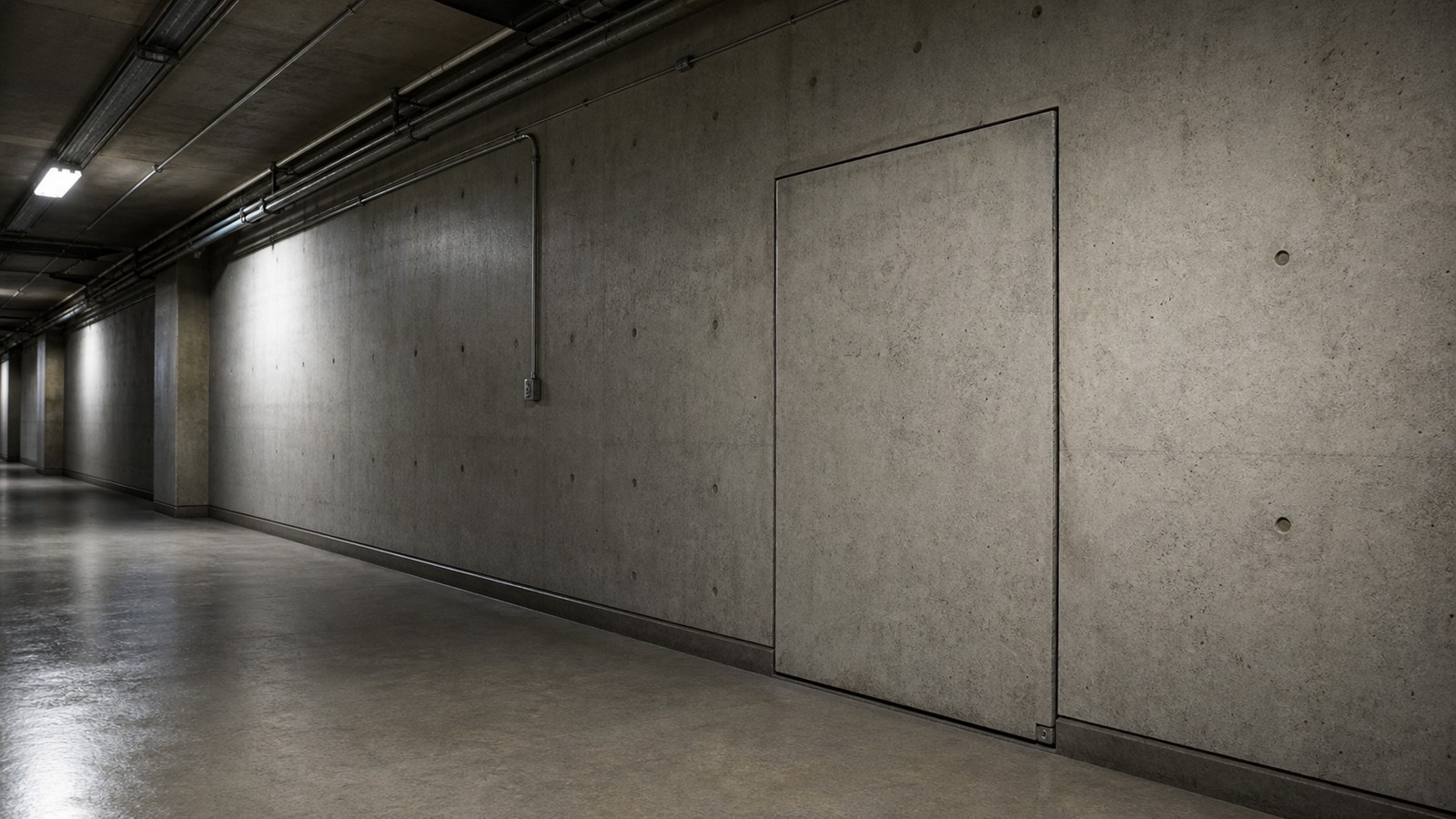
Concealed Base Access Is About Systems, Not Spectacle
Military bases and their concealed access points attract rumors of hidden tunnels, secret hangars, underground command rooms, and doors that disappear into the landscape. The real subject is broader and more practical. Installations need to control who enters, how supplies move, how sensitive areas are protected, how maintenance reaches infrastructure, and how operations continue during disruption. A concealed access point may be a camouflaged service route, a restricted interior door, a protected utility entry, or an emergency threshold. Its value comes from the larger security and logistics system around it.
A: Concealment can support security, logistics, emergency movement, and sensitive operations.
A: No, many are discreet surface, interior, utility, or service thresholds.
A: It is part of a wider system of authorization, readiness, safety, and control.
A: Yes, practical infrastructure may be more important than dramatic-looking features.
A: Restricted visibility invites people to imagine what lies beyond fences or gates.
A: No, present-day operational details should be avoided.
A: Not necessarily; hazards, restrictions, and preservation rules may remain.
A: Terrain, shadows, ordinary structures, and low profiles can reduce attention.
A: They preserve options when normal movement is disrupted.
A: Concealed base access is about controlled function, not spectacle.
Access Control Begins Before the Door
A military access point is shaped by perimeter design, surveillance, roads, terrain, patrol patterns, authorization procedures, and the purpose of the space beyond. The door itself is only one piece of the system. Concealment can help, but it cannot replace disciplined control around the entire approach.
This is why the most important threshold may not look dramatic. A plain service entrance inside a restricted zone can matter more than a theatrical hidden hatch. Its effectiveness depends on who can reach it, who can open it, and what movement it supports.
Concealed access is therefore best understood as layered security. Each layer limits visibility, prediction, and casual use.
Logistics Require Quiet Movement
Bases are working places. Food, fuel, tools, communications equipment, spare parts, medical supplies, vehicles, and documents all need controlled movement. Concealed or discreet access points can keep that movement away from public-facing routes or sensitive operations.
Supply access also needs durability. A route that is hidden but difficult to use will not support daily work. The strongest base access points balance protection with repeatable practical movement.
Camouflage Can Be Environmental
Some concealed access points rely on terrain, earthworks, vegetation, berms, low profiles, shadow, or ordinary utility structures. A door may be hidden because it resembles a service panel, sits behind a slope, or aligns with a feature that already belongs in the landscape.
Environmental concealment works best when it feels unremarkable. A highly elaborate disguise may draw attention if it looks out of place. Military concealment often favors boring surfaces, predictable maintenance forms, and routes that make sense only to authorized users.
That plainness can disappoint people looking for cinematic secrets. It should not. In a secure installation, dullness can be a design achievement.
The goal is not to impress visitors. The goal is to reduce unnecessary visibility.
Interior Thresholds Protect Specialized Areas
Many important access points are inside the base rather than at its outer edge. Communications rooms, armories, maintenance shops, operations centers, storage areas, medical facilities, and utility spaces may all require restricted interior doors. Some are visually discreet to reduce confusion and control traffic.
Emergency Access Must Stay Usable
Emergency routes can complicate concealment. A route may need to be protected from outside discovery while still being easy for trained personnel to locate and use under pressure. Hardware, lighting, signage within restricted zones, and rehearsed procedures all matter.
This practical reality limits fantasy. A truly invisible door may be impressive, but it can be dangerous if it delays authorized movement. Military access design has to consider stress, darkness, smoke, equipment, injuries, and communication breakdowns.
The best emergency access point is not the cleverest one. It is the one that functions when people need it.
Public Rumor Fills the Restricted Space
Because bases are restricted, people imagine what they cannot see. Stories of buried hangars, hidden doors, secret rail lines, and concealed command rooms often grow around real facts: large perimeters, unusual roads, guarded gates, visible antennas, or old construction.
Some installations truly have protected or underground features. Still, rumor should be separated from evidence. Restricted does not automatically mean extraordinary, and ordinary maintenance infrastructure can look mysterious from outside a fence.
Safety and Security Set the Boundary
Military sites should not be treated as exploration challenges. Restricted access protects people, operations, hazardous materials, historical artifacts, and legal boundaries. Even abandoned or former sites may contain unsafe structures, contamination, unexploded hazards, or fragile protected areas.
Responsible discussion focuses on broad architectural patterns, public history, and general design logic. It avoids operational details that could compromise active facilities or encourage unsafe behavior.
This boundary makes the subject more disciplined. It keeps the conversation about how concealed access works rather than how to bypass it.
That distinction is essential when the architecture is tied to real security.
Older Installations Leave Layered Access
Military sites often change purpose across decades. Training fields become storage areas, coastal defenses become historic sites, air facilities gain new infrastructure, and older buildings are adapted for different roles. Concealed access points can survive these changes as puzzling remnants of an earlier operational logic.
Camouflage Can Age Badly
A route that once blended into its surroundings may become obvious after vegetation is cleared, buildings are demolished, or lighting changes. Formerly discreet access can look strangely exposed when the original camouflage context disappears. Visitors to old installations may therefore misread what concealment originally meant.
The opposite can also happen. Later clutter, safety barriers, corrosion, or repairs can make an ordinary door look more mysterious than it was. Interpretation requires imagining the site when it was active, staffed, maintained, and operating under different assumptions.
Utility Systems Create Hidden Geography
Power, water, fuel, communications, drainage, heating, and ventilation all create access needs inside bases. Many concealed or restricted thresholds exist because infrastructure requires inspection and repair. These routes may feel secret, but their purpose is often maintenance continuity.
That hidden geography is essential. A base cannot function if technical spaces are unreachable, and technical spaces cannot be completely public. Concealed access helps keep systems available to specialists while limiting casual movement.
In this way, infrastructure shapes security from below the visible surface. The door to a mechanical space may be as important as a gate in the fence.
Operational Predictability Is a Risk
Concealed access can reduce predictable movement. If everyone always uses the same visible route, patterns become easier to observe. Discreet alternatives give authorized personnel more flexibility and make routine support less exposed.
Restricted Does Not Always Mean Hidden
Some military access points are clearly visible but restricted by guards, badges, locks, fences, or procedure. Others are visually quiet but located inside controlled zones. Concealment and restriction are related, but they are not the same thing.
This distinction matters because public stories often blur the two. A locked visible door may be more secure than a hidden door without strong controls. The access system matters more than the romance of invisibility.
Former Sites Need Careful Language
When bases become museums, parks, industrial sites, or ruins, concealed entrances can be reinterpreted for public audiences. Guides may explain tunnels, blast doors, storage rooms, and command areas in broad historical terms. That public storytelling can be valuable when it separates documented design from speculation.
Careful language also protects visitors. A former military door may lead to an unstable room, a sealed hazard, or a preserved area not meant for entry. Interpretation should encourage understanding rather than trespass.
The most useful stories respect the people who worked there and the risks that may remain.
Readiness Is the Hidden Theme
Whether the access point serves supplies, maintenance, emergency response, or restricted rooms, the underlying theme is readiness. The concealed door helps a base remain functional under ordinary pressure and extraordinary stress. That is a quieter story than rumor, but it is closer to the truth.
Documentation Turns Rumor Into History
When former military access points are interpreted publicly, records matter. Plans, declassified histories, engineering drawings, oral histories, and preservation reports can turn a mysterious entrance into a more precise story. They can show whether a route served ammunition, communications, drainage, fuel, personnel, or maintenance.
That evidence does not make the entrance less interesting. It makes the interest sturdier. A documented service passage may reveal more about daily readiness than a dramatic but unsupported tunnel legend ever could.
Access Points Serve People and Equipment
A concealed military access point has to account for bodies, tools, vehicles, stretchers, carts, cables, and protective gear. A doorway that works for one person in daylight may fail for a team carrying equipment during an urgent repair. Practical dimensions are part of security.
This is one reason hidden access can look unusually plain. Wide clearances, durable thresholds, drainage, ventilation, and simple hardware may matter more than visual cleverness. The architecture has to keep working after repeated use.
Equipment routes also explain why some access points appear in surprising places. The most logical path for a cable room, storage bay, or maintenance area may not align with the public image of a base. Concealment helps keep that technical logic from becoming unnecessary exposure.
Read this way, the concealed door becomes a piece of operational furniture. It is meant to be dependable, not enchanting.
Ordinary Maintenance Holds the System Together
Many base access points are mysterious only because maintenance is usually invisible. Technicians, engineers, logistics crews, and security personnel rely on routes that outsiders never see. Their quiet work keeps the installation ready, and concealed thresholds make that work possible without broadcasting it.
Concealed Access Reveals the Working Base
The public image of a base may be gates, fences, runways, barracks, or vehicles. Concealed access points reveal a different image: one of maintenance, circulation, supply, communication, emergency planning, and restricted expertise. They are less glamorous and more revealing.
A hidden base door matters because it connects spaces that must function reliably. It can protect a room, hide a route, support repairs, or reduce predictable movement. Its success is measured in readiness, not surprise.
That is why military concealed access is so often understated. The threshold becomes powerful by disappearing into a system that knows exactly why it is there.
Seen from that angle, the concealed access point is a reminder that defense is built from routines as much as from hardware. People have to inspect, repair, carry, communicate, and respond, often through routes designed to stay out of sight. The most interesting hidden base doors are not the ones that promise forbidden adventure. They are the ones that show how a complex installation protects its ability to keep working.
This also explains why responsible discussion stays broad. The architecture is fascinating without turning present-day access into a map. Concealed base entrances can be studied through history, preservation, logistics, and general design principles while still respecting the limits that real security requires.
That restraint leaves plenty to examine. A base is a network of people, materials, systems, risks, and routines, and concealed access points reveal how that network protects itself. They show that military architecture is often most revealing when it looks least dramatic. The route behind a quiet door may not answer every rumor, but it can explain how readiness depends on planned movement, durable infrastructure, and the everyday discipline of people who know where they are allowed to go. That practical reading is more useful than speculation because it shows how hidden access supports responsibility and long-term operational care.
It also gives former installations a more respectful public story. Instead of treating every concealed threshold as a puzzle to solve from the outside, visitors can see it as evidence of coordination, upkeep, and restraint. The mystery remains, but it is tied to function.