
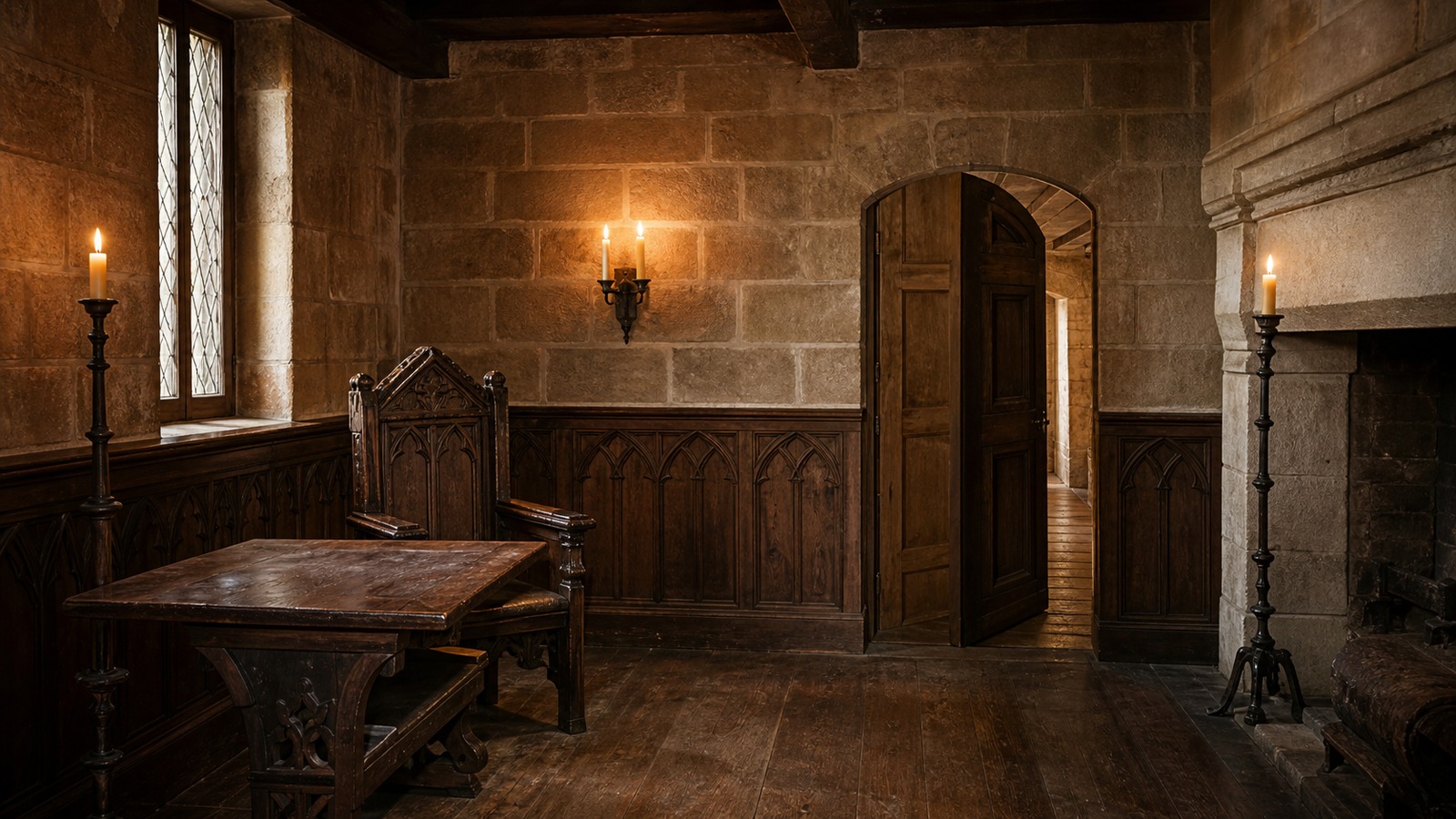
Castle Concealment Was Practical Before Romantic
Concealed doors in medieval castles and palaces are often imagined as dramatic escape routes and secret intrigues, and sometimes they were exactly that. More often, they were part of a larger world of defense, service, privacy, storage, worship, and household movement. A castle was not just a fortress; it was a residence, workplace, administrative center, symbol of power, and sometimes a stage for ceremony. Hidden or discreet doors helped people move through that layered life without exposing every route to every visitor.
A: They supported defense, service, privacy, ceremony, and controlled movement.
A: No. Many stories are exaggerated or added by later tradition.
A: A smaller secondary entrance used for practical or strategic access.
A: Often yes, because ceremony, privacy, and household service mattered more.
A: Thick walls allowed passages but made heavy alterations difficult.
A: They often knew practical routes essential to household work.
A: They show how privacy, worship, and status shaped movement.
A: Look for evidence, plausible structure, and historical context.
A: Yes, through materials and layered access rather than fantasy mechanics.
A: Concealed doors feel believable when they serve real routes and hierarchy.
Defense Shaped Many Hidden Routes
Medieval fortifications depended on controlled access. Narrow stairs, postern gates, wall walks, guard passages, and secondary doors could help defenders move while limiting attackers. Some routes were not hidden in the magical sense, but they were discreet, protected, or known mainly to those who served the castle.
A concealed or low-visibility door could matter during a siege. It might allow messengers, scouts, water access, or small movements between defensive zones. The point was not theatrical mystery. The point was survival under pressure.
Postern Doors Offered Quiet Movement
A postern was a smaller secondary gate or door, often less prominent than the main entrance. It could support routine service movement or urgent escape, depending on the site. Because it was smaller and more controlled, it naturally became associated with secrecy.
Not every postern was hidden, and not every story about escape is reliable. Still, these doors show how medieval access often worked in layers. The main gate was public power; the smaller route was practical control.
That distinction helps separate real architecture from later romance. Castles needed many kinds of movement, and some of them were deliberately quiet.
Royal Privacy Required Discreet Doors
Palaces and high-status castle rooms often needed routes for private movement. Nobles, household officers, servants, guards, clergy, and messengers did not all use the same spaces in the same way. A discreet door near a chamber, chapel, wardrobe, or service stair could protect privacy and ceremony.
Servants’ Access Kept Households Working
Large medieval households were busy machines. Food, fuel, water, clothing, bedding, messages, documents, and guests had to move through the site. Discreet doors helped work happen without forcing every servant, cart, or delivery through the most formal rooms.
This kind of concealment was social as much as architectural. The door could mark who was expected to be seen and who was expected to remain background. Access revealed hierarchy.
Stonework Made Hiding Both Hard and Useful
Thick stone walls can hide passages, stairs, and small chambers, but they also make alteration difficult. A concealed door in a stone setting usually had to work with existing structure: embrasures, wall thickness, timber screens, paneling, fireplaces, stair turrets, or changes in floor level.
Heavy materials also affected operation. A hidden stone slab sounds romantic, but many practical doors were timber, iron-banded wood, or framed openings concealed by finish or placement. The mechanism had to suit the material.
This physical reality matters. Medieval hidden access was shaped by masonry, labor, climate, tools, and maintenance, not only imagination.
Chapels and Chambers Had Private Links
Important residents often needed access between domestic rooms and worship spaces. A lord, lady, or royal household might use a private route to a chapel, gallery, or viewing space. These links could support devotion, status, and controlled appearance.
Palaces Used Concealment for Ceremony
In palaces, hidden or discreet doors could support the choreography of court life. Servants appeared when needed, musicians reached galleries, attendants moved between chambers, and important figures entered or withdrew without disrupting formal order.
Ceremony depends on timing. A door that allows someone to appear at the correct moment can make power feel effortless. The hidden work behind that appearance is part of the palace machine.
Escape Stories Need Skepticism
Many castles attract stories about secret tunnels to monasteries, rivers, forests, or neighboring estates. Some sites did have concealed routes or later smugglers’ passages, but legends can grow far beyond evidence. Underground escape tunnels are especially prone to exaggeration because they are exciting to imagine.
A careful reader should ask practical questions. How long was the route? How was it ventilated? Who maintained it? Could it survive water, collapse, and discovery? Did records mention it? Romantic stories are enjoyable, but architecture has limits.
The strongest historical claims usually connect to visible remains, documents, archaeology, or plausible building logic. Mystery alone is not proof.
Concealed Doors Protected Valuables
Castles and palaces stored documents, plate, weapons, clothing, relics, money, and household goods. Small hidden cupboards, secure rooms, or discreet access points could protect valuable or sensitive items. Not every concealed door led to a passage; some led to storage.
Power Was About Knowing the Routes
In a castle or palace, knowing the hidden or private routes could mean knowing how the household really worked. Guards knew defensive paths. Servants knew service access. Nobles knew private chambers. Builders knew structural voids. Access knowledge was a kind of power.
This explains why concealed doors remain fascinating. They suggest that official architecture is not the whole story. The public hall may announce authority, but the side door reveals how authority moves when ceremony is over.
Later Renovations Complicate the Story
Many medieval castles and palaces were altered for centuries. A concealed door may be medieval, Tudor, Georgian, Victorian, or modern restoration. Paneling could cover earlier openings. Romantic restorers sometimes added theatrical features. Tourism can also reshape how hidden spaces are interpreted.
Dating matters. A door in a medieval building is not automatically medieval. Understanding the period of the opening changes the story it can honestly tell.
This does not make the feature less interesting. It makes it more layered. Old buildings often contain many centuries of concealment, adaptation, and storytelling.
Modern Homeowners Borrow the Mood
Castle-inspired hidden doors often use paneling, stone surrounds, heavy timber, iron hardware, arches, and library walls. The appeal is atmosphere: weight, history, privacy, and the feeling of a route known only to a few.
The Best Lesson Is Layered Access
Medieval castles and palaces teach that concealed doors are most believable when they serve layered access. Some routes are public, some formal, some private, some defensive, some domestic, and some strictly practical. Hidden doors fit into that hierarchy.
A real home can use the same principle in a quieter form. A concealed pantry, office, wine room, safe room, or service space should clarify how the household works. It should not only imitate a romantic castle feature.
History Is Stronger Than Legend When It Has Use
Concealed doors in medieval castles and palaces remain compelling because they sit between fact and imagination. They can be defensive, ceremonial, domestic, secretive, or simply efficient. They can also attract legends that say more about modern desire than medieval reality.
The most satisfying way to view them is through use. Who needed the door? What route did it shorten? What did it protect? Who was allowed to know about it? Those questions make the architecture richer than any single escape-tunnel fantasy. A concealed medieval door is exciting not only because it hides something, but because it reveals how power, labor, privacy, and fear moved through stone.
That practical curiosity does not flatten the romance. It deepens it. A real service stair used by tired workers, a private chapel link used before dawn, or a small postern guarded in bad weather can be more evocative than an unsupported legend because it connects the hidden door to actual human pressure.
Wall Thickness Created Real Opportunities
Medieval masonry could be massive, and that thickness created useful voids. Stairs could coil inside towers, cupboards could occupy recesses, and small passages could run through or beside structural walls. These spaces were not always secret, but they could be invisible from the ceremonial room. The building’s strength also created its hidden circulation.
Household Privacy Was a Daily Concern
Privacy in a castle or palace did not mean the same thing it means in a modern house. Important people were often surrounded by attendants, guards, petitioners, clergy, relatives, and guests. A discreet door could help regulate who came close and when.
That regulation mattered for comfort, politics, and dignity. A ruler who could withdraw without crossing a crowded hall controlled appearance. A household officer who could reach a chamber quickly controlled service. A guard who knew a side route controlled response.
Hidden access therefore belonged to daily governance. It was part of how a large household kept rank, labor, and ceremony from colliding at every moment.
Romance Grew After Use Changed
Many concealed doors become more mysterious after their original use disappears. A service path is closed, a stair is blocked, a chamber is repurposed, or a route is forgotten by ordinary visitors. Later generations encounter the leftover opening and imagine intrigue. The legend may be new, but the fascination begins with a real change in use.
Modern Interpretations Need Honesty
Historic sites do not have to drain the wonder from concealed doors, but they should distinguish evidence from tradition. Visitors can enjoy a legend while also learning what the building physically shows. A blocked doorway, worn threshold, or narrow stair deserves careful explanation.
That honesty makes the hidden feature stronger. Instead of one dramatic claim, the door can tell several stories: how the site functioned, how it changed, how people later imagined it, and why hidden access still captures attention. The result is richer than a simple escape tale.
Castles Used Concealment to Manage Distance
Distance inside a castle or palace was not only measured in steps. It was also measured in rank, permission, danger, and ceremony. A room might be physically close and socially far away. A discreet door could shorten the path for one person while keeping another person outside the proper boundary.
This is why hidden access belongs so naturally to fortified and royal spaces. The building had to decide who approached power, who served it, who defended it, and who waited. Concealed or secondary doors helped make those decisions physical.
That layered distance is one of the most useful ideas for modern designers. A hidden door should clarify a relationship between spaces. It might separate work from rest, guests from storage, or public rooms from private retreat. The medieval model is not only style; it is access with hierarchy.
Small Doors Can Explain Large Systems
A tiny door in a castle wall can say more about the building than a grand hall if it reveals how the place actually operated. It may point toward kitchens, guards, storage, chapel routes, or private chambers. Those modest thresholds help modern visitors understand the castle as a living system rather than a static monument. The hidden door becomes a practical clue to a much larger world of movement, where authority depended on people reaching the right place quickly without always passing through the most visible rooms. That quieter circulation is often where the building feels most human, especially when worn stone or timber still shows repeated use by people whose names rarely survived in the formal record but whose paths shaped daily power behind the scenes every day afterward.


