
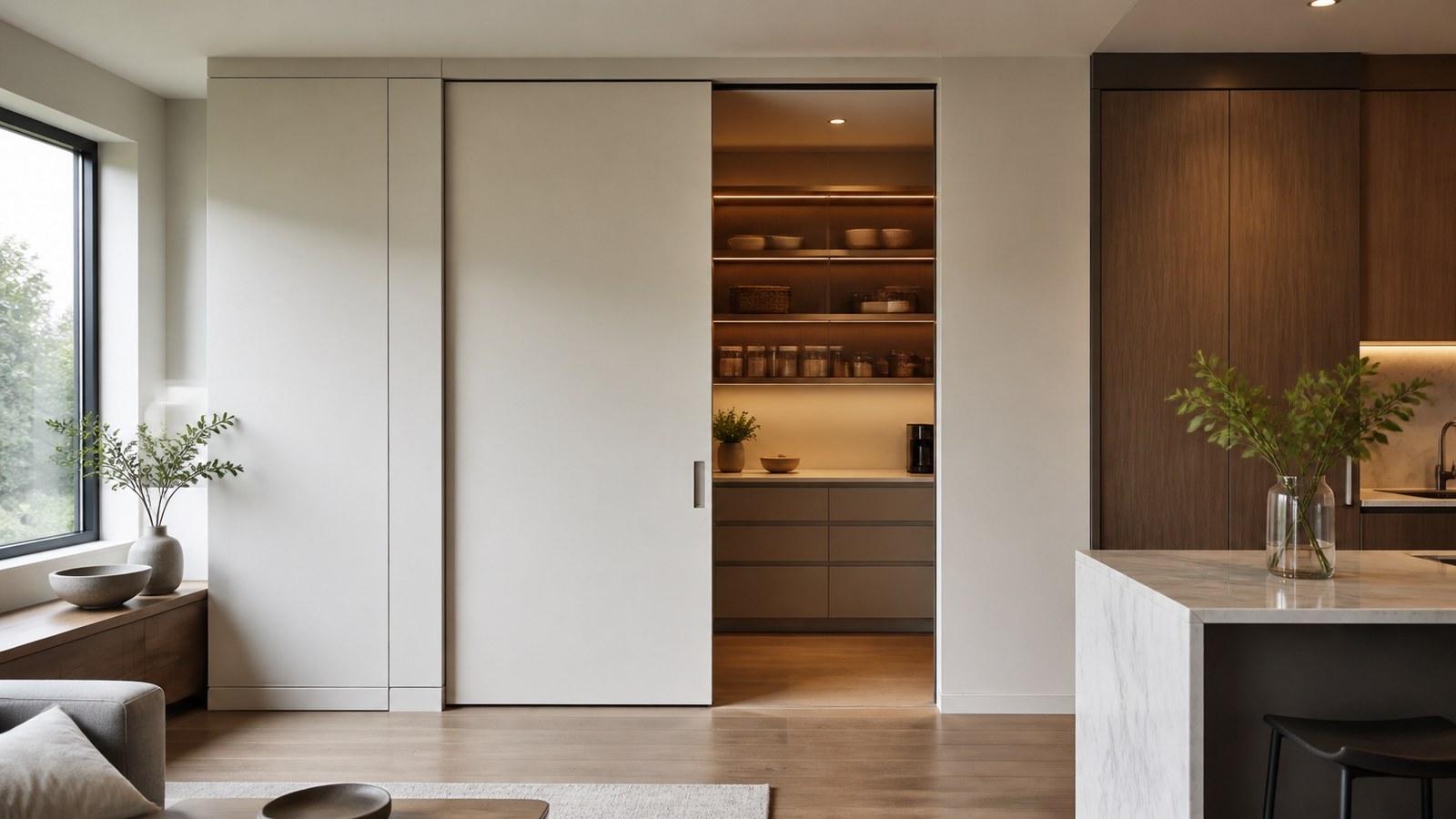
Sliding Doors That Give Space Back
A concealed sliding door is one of the most practical hidden-door options because it removes the swing arc from the room. Instead of opening into a hallway, bedroom, pantry, office, or bathroom, the panel glides into a pocket, behind a wall, or across a surface designed to receive it. The result can feel sleek and surprisingly spacious. But sliding concealment is not automatic. Tracks, pockets, guides, handles, wall thickness, sound control, and service access all have to be resolved if the door is going to look stylish and work smoothly every day.
A: They can be, but privacy seals and lock choices need extra attention.
A: Pocket doors disappear more fully, while surface sliders are often easier to retrofit.
A: Yes, with recessed ceiling tracks, valances, or millwork details.
A: They usually block less sound than hinged doors unless upgraded with seals and mass.
A: Yes, if the hardware is rated for the mirror's finished weight.
A: Rollers, guides, stops, and soft-close parts may need adjustment over time.
A: They can if the pocket frame is poor, but quality hardware and framing help.
A: Use an edge or recessed pull that remains comfortable and clears the pocket.
A: They can be very quiet visually, especially when the panel matches the surrounding wall.
A: Forgetting that the door needs somewhere clear to slide.
Pocket Doors for the Cleanest Disappearance
A pocket door slides into the wall cavity, leaving the opening clear. When the panel also matches the wall or trim, the door can nearly disappear when closed and vanish completely when open. This is useful for bathrooms, closets, pantries, laundry rooms, and small offices where a swinging door would consume valuable space.
The clean look is strongest when the pocket is part of the original design. New walls can be framed to hold the track, protect the cavity, and keep the opening rigid. Retrofits can still work, but they require more investigation because the wall may already be carrying utilities or structure.
The pocket has to be planned carefully. Plumbing, electrical, blocking, insulation, and wall structure may compete for the same cavity. A pocket door added without enough depth can become flimsy, noisy, or difficult to repair. In new construction, it is much easier to plan the pocket correctly.
Surface-Sliding Panels for Retrofits
When a wall cannot accept a pocket, a surface-mounted sliding panel may be better. The panel slides across the wall, often on a hidden ceiling track or a track concealed by a valance or millwork. If the panel matches the wall, cabinetry, or wood finish, it can still feel concealed.
This approach needs a clear receiving wall. Artwork, switches, outlets, trim, and furniture can block the slide path. The panel also remains visible when open, so the design should make that parked position look intentional rather than accidental.
Hidden Tracks and Bottom Guides
The track is the heart of a sliding door. Exposed barn-door hardware rarely feels concealed, even if the panel is attractive. Contemporary hidden sliders often use recessed ceiling tracks, top-hung systems, or millwork valances that make the movement feel integrated.
Track quality also affects how the door feels. A concealed slider should move with steady resistance, not wobble, grind, or coast unpredictably. Good rollers and accurate installation are part of the style because smooth movement is what makes the hidden panel believable.
Bottom guides keep the panel from swinging, but they should not create a trip hazard or collect dirt. Some guides are floor mounted; others are concealed in the door bottom. The right choice depends on panel size, flooring, traffic, and how clean the finished look needs to be.
Panel Materials That Stay Stable
Sliding panels need to remain flat. Warped doors rub, reveal uneven gaps, and feel cheap. Engineered cores, stable MDF, laminated panels, and properly built wood frames usually perform better than thin slabs. Large concealed panels may need internal reinforcement to stay straight.
Finish weight also matters. Mirrors, stone veneer, tile, acoustic layers, and heavy wood can exceed what a light sliding system can carry. Choose the hardware after the final panel weight is known, not before.
Handles That Do Not Break the Illusion
Sliding doors require something to grip, especially when they close flush. Recessed pulls, edge pulls, routed finger channels, and push-to-release systems can keep the face clean. The pull must be comfortable enough for daily use and shallow enough to clear pockets or overlapping panels.
Test the pull with the door almost closed, not only when it is fully open. Many sliding doors become awkward in the last few inches of travel. A beautiful panel that cannot be gripped easily will collect fingerprints and frustration.
For bathrooms and bedrooms, privacy hardware complicates the design. A concealed slider may need an integrated lock, occupancy indicator, or soft close. These details should be chosen early because they affect door thickness and edge preparation.
Sound and Smell Control
Sliding doors often seal less tightly than hinged doors. That may be fine for closets and pantries, but it matters for bathrooms, offices, media rooms, and laundry areas. Brush seals, overlapping jambs, acoustic gaskets, and heavier panels can improve performance, but sliding systems usually need realistic expectations.
For rooms where privacy is critical, compare a sliding concealed door with a hinged concealed door before deciding. Saving floor space is valuable, but it should not undermine the room’s purpose.
Sliding Doors in Kitchens and Pantries
Concealed sliding doors are especially useful in kitchens because they can hide pantries, appliance garages, coffee stations, and prep areas without blocking circulation. A panel that slides behind cabinetry or into a pocket can keep the kitchen clean while allowing fast access during cooking.
They can also separate a working kitchen from a more polished entertaining area. During preparation, the panel stays open and the pantry works hard. Afterward, it closes into the surrounding cabinetry and the room returns to a simpler composition.
Durability is important here. Kitchen sliders face fingerprints, steam, food splashes, and frequent use. Finishes should be wipeable, tracks should avoid collecting crumbs, and handles should work when hands are full.
Maintenance Access Matters
A concealed track looks beautiful until a roller needs adjustment. Sliding systems should include a way to reach rollers, stops, guides, and soft-close parts. If the track is buried behind finished plaster with no access, a small repair can become a major disruption.
Keep product information and adjustment instructions with the home records. Future maintenance is easier when the system is not a mystery. A sliding door can feel seamless without being impossible to service.
Where Sliding Concealment Works Best
Sliding concealed doors are strongest in tight spaces, long walls, cabinet runs, and rooms where swing clearance is precious. They are less ideal where the wall beside the opening is crowded or where tight acoustic privacy is required. The style should be selected because it improves the room, not only because it looks clever.
When planned well, a concealed slider makes space feel calmer and more flexible. It opens without invading the room, closes without adding visual clutter, and supports modern living in areas where every inch matters. The best version feels less like a door trick and more like a wall that knows how to move.
That means measuring the room in use, not only on paper. Think about open drawers, dining chairs, laundry baskets, cabinet doors, and people passing through at the same time. A sliding door saves space only when the rest of the layout can keep functioning around it.
Think About the Parked Position
Every sliding door has a second state: where the panel lives when it is open. Pocket doors solve this by disappearing into the wall, but surface sliders need a visible parking zone. That zone should be designed with the same care as the closed position, especially in rooms where the door may stay open for long periods.
Furniture placement, artwork, switches, and outlets all affect that parked state. If the panel covers something important, daily use will feel compromised. A concealed slider saves space only when both its open and closed positions are resolved.
Use Concealment to Simplify Small Rooms
Small rooms benefit from sliding doors because the missing swing arc changes how the space can be furnished. A compact office can gain a better desk position, a bathroom can feel less cramped, and a pantry can open without blocking a work aisle. In those situations, concealment is not merely visual. It gives the room back usable square footage.
Detail the Edges for Everyday Handling
The edges of a concealed sliding door take a surprising amount of abuse. Hands search for the pull, panels brush against guides, and the leading edge meets the jamb over and over. Durable edge banding, smooth finger pulls, and protected finishes keep the panel looking intentional after repeated use.
Soft-close hardware can also protect the edges. A heavy panel that slams into its stop will quickly feel less refined, even if the wall looks beautiful. Smooth movement is part of the visual calm.
Coordinate Privacy With Room Function
Sliding doors are excellent for space, but they are not always the strongest privacy choice. Bathrooms, offices, and bedrooms may need upgraded seals, heavier panels, or alternate layouts if sound and odor control matter. A closet or pantry can accept a looser seal; a private call room may not.
Before choosing sliding concealment, decide what the door must block and what it merely needs to hide. That distinction keeps the project from solving a space problem while creating a privacy problem.
In some cases, the answer is a hybrid detail: a sliding panel for the visual wall, plus overlapping jambs, soft seals, or a secondary stop that improves closure. The goal is not perfection everywhere. It is matching the door’s performance to the room’s real expectations.
Let the Mechanism Stay Serviceable
A concealed slider should not trap its own hardware. If rollers need replacement or a soft-close part fails, the homeowner should not have to destroy the surrounding finish to reach it. The cleanest design still needs a practical service path.
Use Sliding Only Where It Improves the Plan
A sliding concealed door is tempting because it feels clever, but the best reason to choose one is spatial improvement. It should make furniture placement easier, circulation clearer, or storage access smoother. If a hinged concealed door would seal better and work just as well, sliding may not be the right answer.
When sliding is right, it feels almost inevitable. The panel moves where the room has space, the track stays quiet, the pull is easy to find, and the wall returns to calm when the door closes. That combination of space-saving and polish is what makes concealed sliders so appealing.
Finish With Movement in Mind
Paint, veneer, wallcovering, and trim all need to survive movement. A sliding panel is touched at the edge, guided at the floor, and viewed while moving, so the finish must look good in motion as well as when closed. Durable edges and smooth alignment keep the style from wearing out quickly.
Test the Door at Real Speed
Sliding doors are often tested slowly during installation, but daily use is less careful. Open the panel while carrying laundry, close it with one hand, and try it when the room is dim. Those tests reveal whether the pull, guide, and soft-close system are truly ready for everyday life.
A concealed slider should feel graceful even when no one is treating it delicately. That means the track should stay aligned, the guide should feel steady, and the handle should be easy to find by touch. Good sliding doors are designed for ordinary motion, not showroom motion, because the room will be used by people moving quickly through real routines, daily and repeatedly.


