The Hidden Door Is a Universal Invitation
Secret doors capture human imagination across cultures because they combine two basic experiences: the known room and the unknown beyond it. A wall that opens suggests that reality has depth, that ordinary places may contain other possibilities, and that some knowledge is reserved for those who notice carefully. The form changes from palace passages to folktale thresholds, from temple chambers to children’s hideouts, from spy stories to modern bookcase doors. The appeal remains familiar. A secret door turns space into promise.
A: They combine privacy, discovery, transformation, power, danger, and play.
A: No. They also express refuge, ceremony, status, storage, and design calm.
A: They offer control, discovery, and a world scaled to imagination.
A: They place wonder, danger, or transformation beyond a concealed entrance.
A: Restricted access makes authority feel spatial and mysterious.
A: Yes, when they pair delight with practical use.
A: The concealed threshold makes separation feel intentional.
A: No. Quiet integration can be more satisfying than theatrical surprise.
A: The visible world always leaves people imagining what lies beyond it.
A: It promises that ordinary space may still contain another possibility.
Every Door Already Suggests Transformation
Doors are ordinary, but they are never meaningless. They divide inside from outside, public from private, safe from unsafe, sacred from everyday, work from rest, and childhood from adulthood. A secret door intensifies that symbolism because the threshold is not offered openly. It must be found, trusted, opened, or earned.
That is why hidden doors appear so naturally in stories. Crossing one can mark a change in knowledge or identity. The character who finds the door sees what others missed and enters a space that alters the plot.
Architecture becomes narrative. The wall is no longer a limit; it is a question.
Folklore Loves the Hidden Threshold
Folktales and legends often place wonder behind concealed entrances: caves, garden doors, mountain openings, hidden rooms, sacred chambers, and impossible houses. The threshold separates the everyday village or home from a realm of danger, treasure, spirits, wisdom, or transformation.
Power Has Always Used Restricted Access
Secret doors also fascinate because they are connected to power. Palaces, temples, castles, courts, and elite houses often used private routes, restricted rooms, and service circulation. Even when the door was practical, it created unequal knowledge. Some people knew the hidden path; others saw only the formal room.
Across cultures, that unequal access becomes symbolic. The secret door can represent authority, privilege, forbidden knowledge, or survival. It asks who may pass and who must remain outside.
Children Understand the Appeal Instantly
Children often grasp secret doors before they know architectural history. A closet becomes a portal, a blanket fort gets a hidden flap, a gap behind furniture becomes a private den, and a small crawl space becomes a kingdom. The appeal is not only secrecy. It is control over a world scaled to imagination.
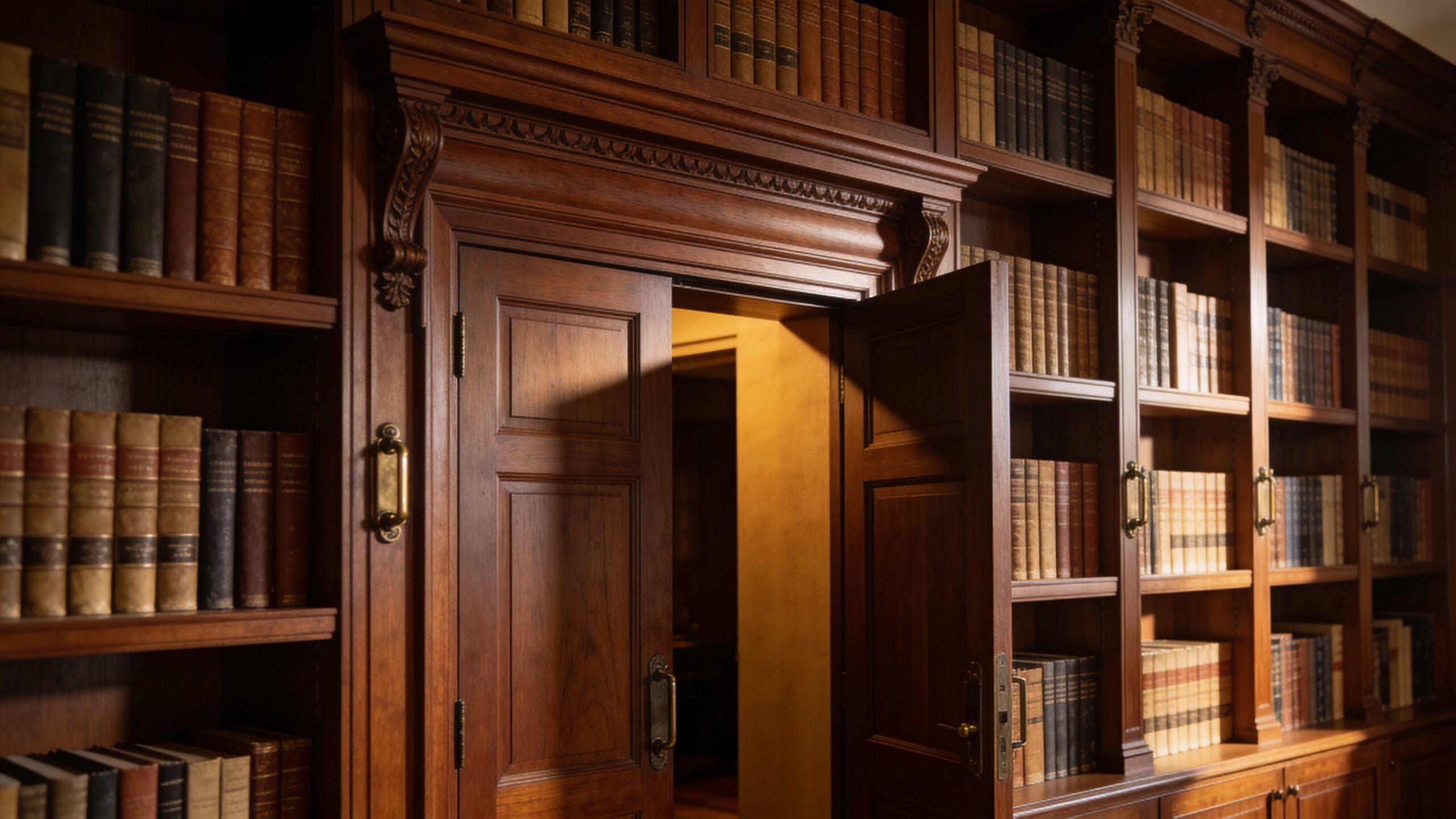
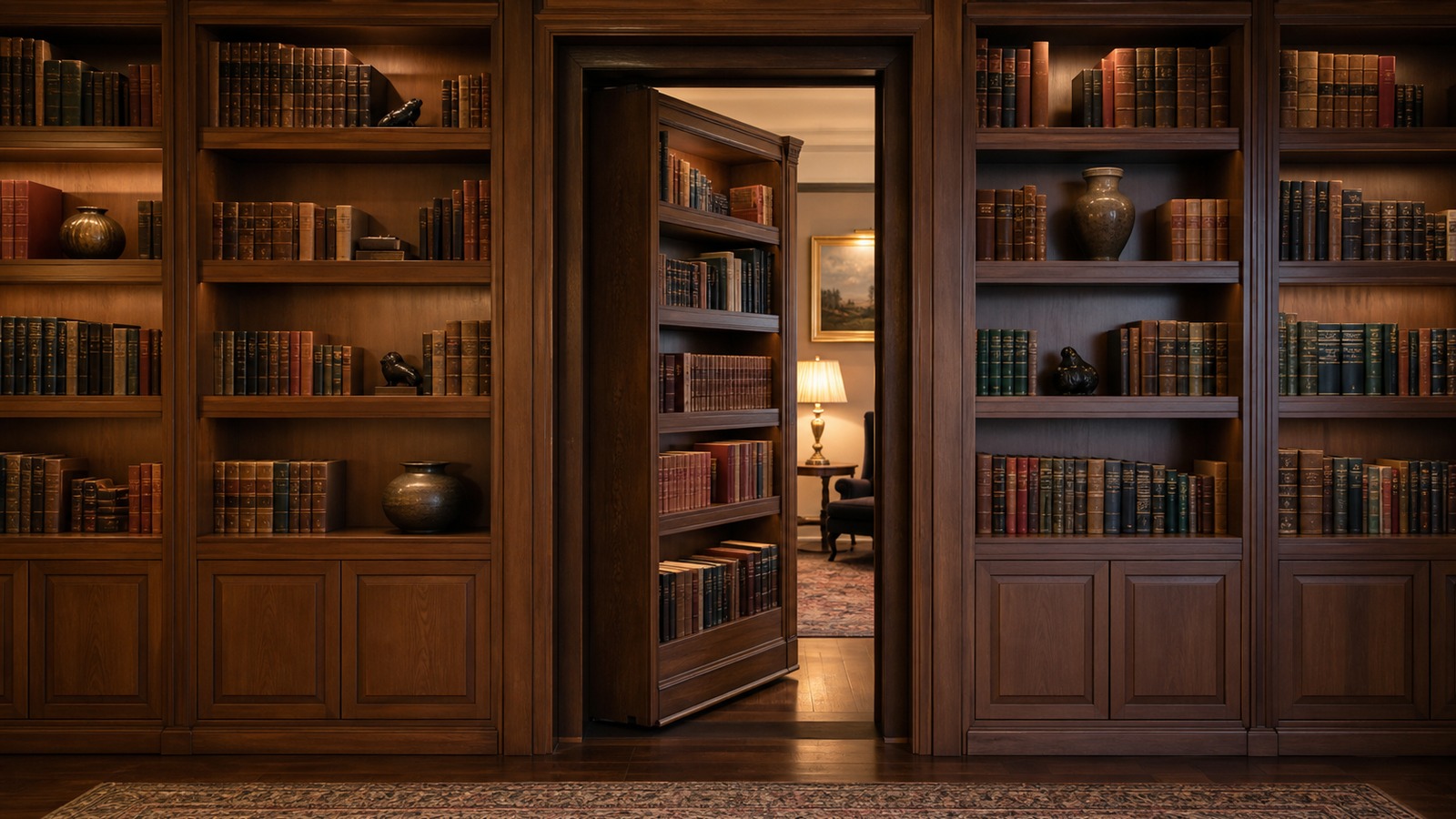
This childhood experience helps explain why adult hidden doors remain emotionally charged. They recall the pleasure of finding a place that feels personally discovered. A bookcase door in a modern home may be sophisticated, but part of its charm is still connected to play.
The best designs honor that feeling without becoming childish. They allow delight while still serving real privacy, storage, or circulation needs.
That blend of usefulness and wonder is rare, which is why the idea stays alive.
Hidden Doors Make Privacy Visible
Privacy is abstract until architecture gives it a boundary. A hidden door makes privacy visible in a paradoxical way: it shows that a private zone exists by hiding the way in. That tension is deeply appealing because people want both refuge and mystery.
In homes, a concealed office, reading room, pantry, or safe room can express the desire for a space set apart from ordinary demands. In public buildings, hidden service routes or private chambers show how complex social life is managed behind the scenes.
Religious and Sacred Spaces Add Reverence
Many cultures connect hidden or restricted thresholds with sacred meaning. A chamber may be reserved for ritual objects, clergy, initiates, or moments of ceremony. The hidden entrance protects not only things, but also reverence. It marks a boundary between common sight and special access.
Danger Makes the Door More Intense
Secret doors gain emotional force when danger is present. Escape passages, hiding places, wartime panels, smuggler routes, and refuge doors turn concealment into survival. The hidden threshold becomes a response to pressure, not a decorative flourish.
These stories travel because every culture understands vulnerability. A door that protects someone from danger is more than a clever mechanism. It is a material form of hope.
That seriousness sits beside the playful side of secret doors. The same architectural idea can support delight in one setting and survival in another. This range gives the hidden door unusual emotional depth.
Mystery Rewards Careful Attention
A secret door suggests that attention matters. The person who notices the seam, pattern, draft, shadow, or unusual shelf has read the room more carefully than others. That reward is satisfying because it turns perception into discovery.
This is one reason hidden doors work so well in games, literature, films, museums, and themed environments. They invite the audience to look again. They make space participatory.
Modern Design Keeps the Fantasy Practical
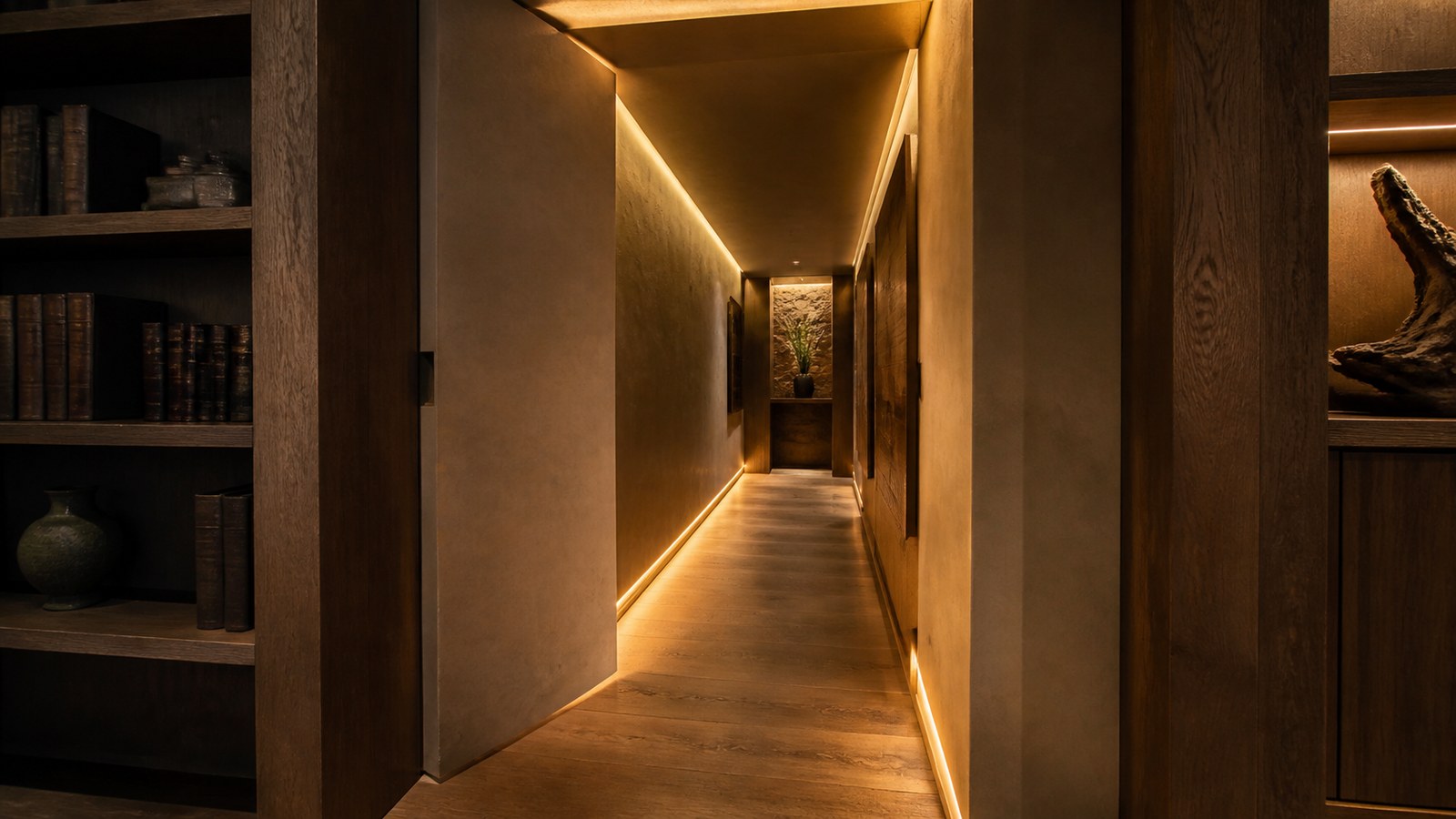
Contemporary hidden doors often combine old fantasy with modern needs. A flush panel can hide a pantry. A bookcase can conceal an office. A mirrored wall can cover a closet. A paneled hallway can reduce visual clutter while preserving access. The secret remains delightful because it also solves a problem.
Across Cultures, the Pattern Repeats
The specific images vary: hidden courtyards, sacred chambers, mountain caves, palace passages, servant doors, garden gates, underground rooms, library panels, and concealed closets. What repeats is the structure of desire. People imagine that the visible world is not the whole world.
That desire can be spiritual, political, playful, fearful, romantic, or practical. A secret door gives it form. It lets culture build a boundary between what is known and what might still be revealed.
The hidden door also respects contradiction. It is closed and inviting, private and theatrical, practical and symbolic. Few architectural features carry so many opposing meanings so easily.
That flexibility explains why the idea adapts to different cultures rather than belonging to only one tradition.
The Door Lets a Place Keep a Secret
People are drawn to places that seem to hold something back. A building with a secret door feels less flat, less fully explained. It has memory, intention, and depth. Even when the hidden room is only a pantry or office, the existence of the door changes how the rest of the space feels.
That effect is powerful because humans do not experience architecture as geometry alone. We attach stories to rooms, suspect histories behind walls, and imagine what might happen if a familiar surface opened.
The Imagination Wants a Threshold
Secret doors endure because imagination likes thresholds. A threshold gives wonder a shape and makes discovery feel possible. It says that another space may exist nearby, close enough to touch but hidden enough to deserve attention.
That is why the idea works in a medieval castle, a modern apartment, a sacred legend, a spy film, a child’s game, or a luxury library. The details change, but the emotional gesture remains. The wall opens, and the world becomes larger.
In that moment, architecture does something unusually generous. It makes room for the possibility that ordinary life contains more than it first reveals.
The Lasting Appeal Is Hopeful
For all their associations with danger, secrecy, and power, secret doors often carry a hopeful feeling. They suggest that there may be another way through, another room waiting, another version of the place not yet revealed. That hope can be playful, as in a child’s hidden den, or serious, as in a refuge door. It can be aesthetic, as in a beautifully quiet wall, or spiritual, as in a threshold reserved for sacred access. The common thread is the belief that space can still surprise us.
This is why the image travels so well across cultures. People everywhere understand walls, boundaries, privacy, fear, play, and discovery. They understand the wish to protect something precious and the thrill of finding something withheld. A secret door gathers those feelings into one architectural gesture. It is simple enough for a storybook and complex enough for palaces, temples, theaters, homes, and memorials.
That range keeps the hidden door from becoming a narrow design gimmick. It belongs to psychology, folklore, history, craftsmanship, and everyday practical life all at once. When a secret door is designed well, it does more than conceal an opening. It honors the human belief that familiar rooms can still contain depth, that boundaries can move, and that discovery remains possible even in places we thought we already knew.
That belief is why the same idea can feel intimate in a small home and monumental in a public legend. The scale changes, but the gesture remains recognizable. Someone stands before an ordinary surface, notices a clue, and realizes the space has kept something in reserve. Few architectural moments are so simple or so generous.
A Secret Door Makes the World Less Finished
Part of the attraction is that a secret door makes the world feel less finished. It interrupts the assumption that a room has already explained itself. There may be a passage behind the shelf, a garden beyond the wall, a chamber behind the panel, or a private memory inside a familiar house. That possibility gives architecture a sense of future discovery, even when the building is old.
Across cultures, people return to that idea because it gives shape to curiosity. It says that perception can deepen, that attention can be rewarded, and that the visible arrangement of things is not always the final one. In design, that can become a beautiful hidden pantry or study. In story, it can become a portal, refuge, trial, or revelation. Either way, the hidden door keeps a little room open for wonder.
The Same Gesture Holds Many Meanings
The reason secret doors travel so easily across cultures is that the gesture is simple while the meanings are flexible. A concealed threshold can protect a sacred object, hide a fugitive, amuse a child, organize a household, dramatize a film, or make a modern wall feel calm. Few features can move between reverence, danger, play, and utility without losing their identity.
That flexibility lets each culture and each building adapt the hidden door to its own concerns. In one place it may speak of ritual access. In another it may speak of class, service, privacy, or survival. In a contemporary home it may speak of storage and delight. The doorway remains recognizable, but the story around it changes.
That is why secret doors never feel completely used up. They are not a single style or trick. They are a way of imagining that space has layers, and that some of those layers are waiting for the right person, moment, or question. Their appeal survives because they let people hold practicality and wonder together. A door can hide a pantry and still recall a folktale threshold. It can organize a home and still awaken the old pleasure of discovery. Across cultures, that combination keeps the hidden door emotionally alive. It gives builders a practical tool, storytellers a threshold, and ordinary people the pleasant suspicion that familiar rooms may still have something more to offer. That suspicion is gentle, hopeful, and remarkably persistent. It keeps the world from feeling fully explained, which is part of its enduring gift to imagination in every age and every kind of room where people dream together at home.