
Political Hidden Entrances Sit Between Security and Symbolism
Concealed entrances used by political leaders are rarely the theatrical secret passages of popular imagination. In real official buildings, discreet access is more often about continuity, privacy, emergency planning, controlled movement, staff work, and the need to protect public functions without turning every threshold into a spectacle. A political leader’s doorway can be practical and symbolic at the same time. It may support security teams, ceremonial schedules, family life, official meetings, or evacuation planning while remaining largely invisible to visitors who experience the public face of government.
A: They can support security, privacy, schedules, emergency planning, and staff movement.
A: No, many are ordinary restricted doors, service routes, or private corridors.
A: Often they need discreet circulation because they are both homes and workplaces.
A: Specific operational details can affect real security and privacy.
A: They hide working access so formal spaces remain visually composed.
A: Yes, but function and evidence should guide interpretation.
A: It helps an institution keep moving while protecting people and public rituals.
A: Yes, they often explain the quiet doors behind official ceremony.
A: No, curiosity should stay within authorized tours and public information.
A: Official architecture must balance visibility, privacy, safety, and trust.
Public Power Needs Private Routes
Political buildings are designed to be seen. Residences, capitols, ministries, governor’s houses, and ceremonial halls project legitimacy through entrances, staircases, balconies, gates, and reception rooms. Yet the same buildings also need private routes that keep leaders, staff, records, guests, and security teams moving without constant public exposure.
A concealed entrance can protect that separation. It allows the public building to remain composed while private work continues behind the scenes. The point is not always secrecy from citizens; often it is basic operational control inside a building that carries symbolic weight.
This double life gives political hidden entrances their tension. They belong to democratic visibility and private continuity at once.
Security Is About Continuity
When leaders move through official spaces, the goal is not only personal protection. Security also protects government continuity, schedules, communication, decision making, and the many staff roles that support leadership. A discreet entrance can reduce crowding, limit predictable routes, and make movement less disruptive.
Good design avoids turning every secure route into visible drama. The best access systems often look ordinary because ordinary movement is easier to maintain. A door that blends into a staff corridor may be more useful than a door that announces itself as important.
Residences Have Backstage Architecture
Official residences are both homes and workplaces. They may include family rooms, staff areas, kitchens, meeting rooms, secure offices, ceremonial spaces, guest suites, and service corridors. Concealed or discreet entrances help these uses coexist without every movement crossing the public route.
That separation can protect privacy in a very human way. A leader’s family, visiting officials, maintenance crews, and household staff should not always move through the same spaces used for ceremonies or media events. Hidden access can make a hybrid building livable.
Backstage routes also preserve the dignity of public rooms. Food, equipment, files, flowers, chairs, and security details can move quietly while a formal reception appears effortless. The concealed entrance supports the performance of order.
In that sense, political hidden doors resemble theater doors. The public sees the scene; the building quietly handles the labor that makes the scene possible.
Ceremonial Buildings Hide Working Doors
Government architecture often values symmetry and procession. Grand rooms are meant to direct attention toward speeches, ceremonies, negotiations, or national rituals. A visible service door in the wrong place can break that composition, so working access is often tucked behind paneling, side corridors, screens, or secondary stairs.
Emergency Planning Changes Door Meaning
Some concealed entrances are understood most clearly as emergency infrastructure. They may support evacuation, shelter access, secure movement, or alternate routes when ordinary doors are unsafe. Their importance comes from being available under stress, not from being dramatic in daily life.
Emergency routes have to be known, maintained, and usable. A hidden door that no one can open quickly is a liability. Security planning therefore depends on training, communication, keys, hardware, lighting, and rehearsed procedures as much as on architecture.
That practical discipline is easy to miss from outside. The public may imagine a secret tunnel, while the building manager sees inspections, clearances, and access control.
The Ethics of Looking Matter
Concealed political entrances should be discussed with care. Public curiosity is natural, especially around powerful buildings, but operational details can affect real security. The safest and most useful approach is to focus on publicly documented history, broad design principles, and architectural roles rather than sensitive present-day routes.
This restraint does not make the subject less interesting. It makes it more honest. Political hidden entrances are compelling because they show how buildings manage trust, privacy, danger, ceremony, and labor without exposing every mechanism.
Myths Grow Around Official Buildings
Official buildings invite rumor because they combine power and restricted access. A locked side door becomes a secret escape route. A staff passage becomes a hidden command network. A blocked stair becomes evidence of intrigue. Some stories may preserve real fragments; many inflate ordinary access into legend.
Fame intensifies the effect. The more important the building, the more meaningful every closed door can seem. People naturally assume that a leader’s residence or office contains hidden layers beyond the public tour.
Good interpretation starts with function. Does the door serve staff movement, privacy, emergency access, preservation, or ceremony? Once those possibilities are considered, the story becomes richer and less overheated.
The myths are still useful because they reveal how people imagine power. A concealed entrance becomes a symbol of decisions made just out of sight.
Movement Has to Look Uneventful
For political leaders, discreet movement often works best when it appears uneventful. A calm transfer from one room to another can protect a schedule, reduce public disruption, and keep attention on the official purpose of the day. Concealed entrances help by making movement feel like part of the building’s ordinary rhythm.
Historic Buildings Complicate Modern Needs
Many official buildings were designed long before modern security expectations, media attention, accessibility standards, and communications infrastructure. Adding discreet access to a historic residence or ceremonial hall can require careful compromise. The building must support modern protection without losing the character that makes it publicly meaningful.
That tension often leads to subtle solutions. A door may be worked into existing paneling, an old staff route may be adapted, or a secondary corridor may be upgraded while keeping public rooms visually unchanged. Concealment becomes a preservation tool as well as a security tool.
Staff Knowledge Makes the Route Work
A hidden entrance is only useful if the right people know how it functions. Security teams, household staff, event coordinators, maintenance workers, and senior aides may each understand different parts of the route. Their knowledge turns a quiet threshold into a dependable part of daily operations.
This knowledge is practical, not glamorous. It includes timing, door hardware, clearances, lighting, communication, and what to do when a route is blocked. The concealed entrance is supported by habits that rarely appear in public photographs.
Those habits also reduce mistakes. A discreet door should not surprise the people responsible for a leader’s movement; it should help them do their work smoothly.
Privacy Supports Human Continuity
Political leadership can make ordinary life unusually visible. Discreet entrances help preserve some human boundaries around family, rest, informal meetings, medical needs, and private conversation. That privacy is not the opposite of public service; it can help people sustain the role over time.
Public Trust Requires Limits on Secrecy
Because political buildings belong to public life, hidden access can raise understandable questions. Citizens may wonder what is being concealed and why. The answer depends on the balance between legitimate privacy, responsible security, preservation, and democratic accountability.
That balance is delicate. Some broad history can be shared through tours, archives, and official interpretation. Sensitive present-day details should remain protected. A mature reading can accept both transparency and limits without turning every closed door into suspicion.
Architecture Can Lower the Temperature
Visible security can sometimes make a public event feel anxious. Discreet routes can reduce that tension by moving complicated work away from the main room. Staff can solve problems, guests can be guided, and leaders can arrive without forcing every practical detail into the public scene.
This quiet support can make ceremonies feel more dignified. It protects the public moment from backstage friction. The hidden entrance works well precisely because it does not demand attention.
In political architecture, calm is often an achievement. The concealed route helps the building maintain that calm while still meeting serious responsibilities.
Stories Should Stay Evidence-Led
Political hidden entrances will always attract speculation, but the best stories stay close to evidence and purpose. A documented staff corridor, historic service door, or broad emergency principle can be fascinating without revealing sensitive specifics. The more carefully the subject is handled, the more clearly the architecture can be understood.
Records Give Responsible Context
Archives, restoration notes, public tour interpretation, memoirs, and building histories can help explain old political access routes without exposing current security details. They show how a room was used, why a route was altered, and how official buildings adjusted to changing expectations. That kind of context gives curiosity a responsible frame.
It also prevents every closed door from becoming a conspiracy. A record may reveal that a hidden threshold served kitchen staff, ceremonial preparation, private family movement, or preservation. The explanation can be ordinary and still important because it shows how public architecture actually works.
Design Makes Accountability Practical
Concealed entrances in political buildings can seem to conflict with public accountability, but design can help separate necessary privacy from unhealthy secrecy. Clear institutional rules, documented maintenance, authorized access, and broad public interpretation all shape how hidden routes are understood. A door can be private without being unaccountable.
This distinction matters in official architecture. Leaders need protection and privacy, yet public buildings also need legitimacy. The hidden entrance sits at the point where those needs meet, which is why it should be read with care rather than suspicion alone.
Good design also reduces improvisation. When a building has planned discreet routes, staff are less likely to create awkward workarounds that disrupt public rooms or compromise safety. The concealed entrance can make official life more orderly.
In the end, these doors are most interesting when they reveal the discipline behind public ceremony. They show that trust depends on structure as much as on visibility.
They also remind us that public institutions are physical places, not abstract symbols alone. A government building must host ceremonies, answer crises, preserve records, protect people, and handle daily maintenance. Discreet entrances help those ordinary demands coexist with the public meaning of the building.
A Hidden Entrance Can Be Ordinary and Important
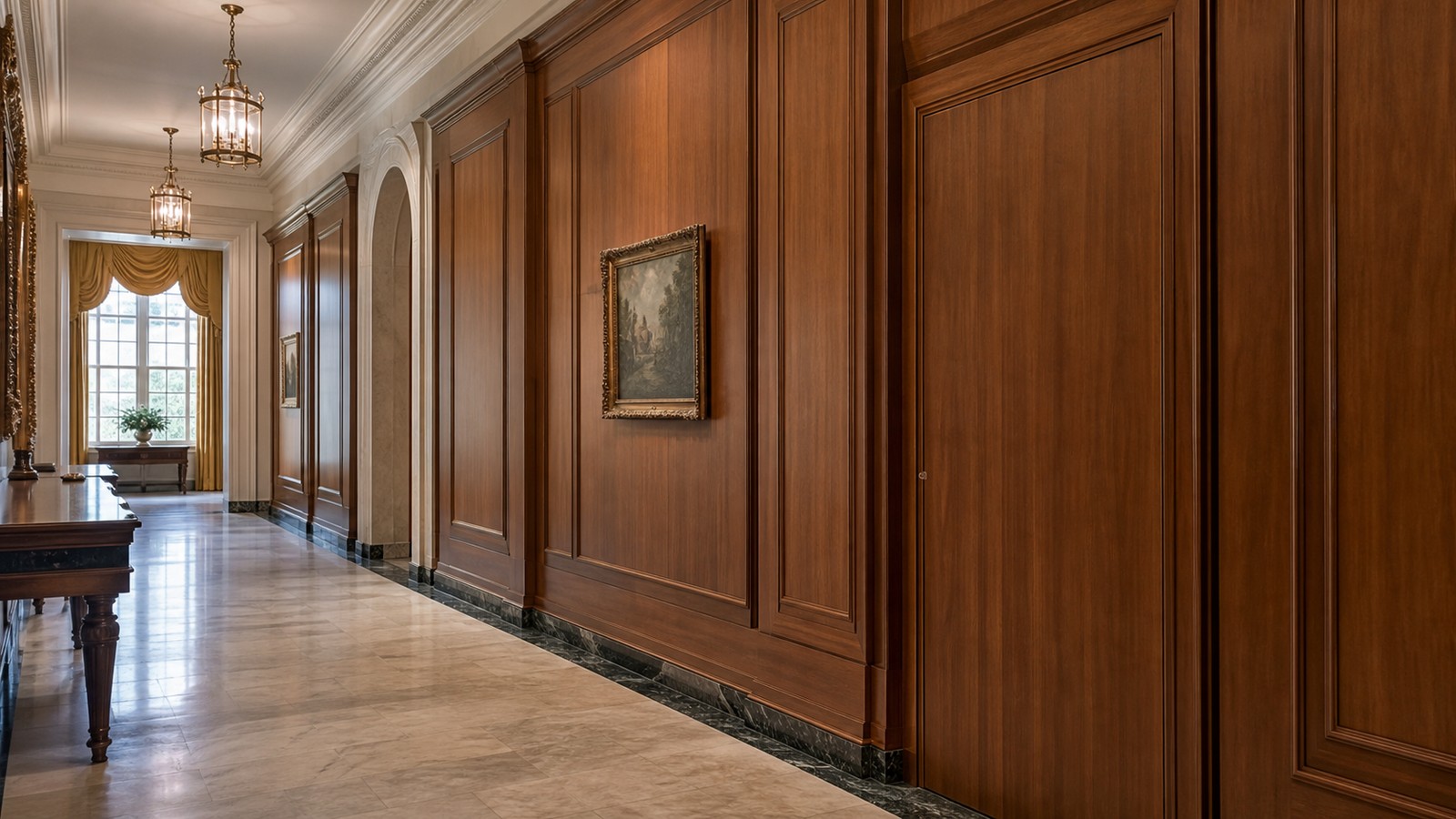
The most realistic concealed political entrance may be a plain door in a service hall, a disguised panel near a formal room, or a secondary route through a residence. It does not need cinematic mechanics to matter. Its importance lies in what it allows the institution to keep doing.
That ordinary quality is part of the lesson. Political power depends on thousands of practical details: movement, privacy, timing, protection, maintenance, and continuity. A hidden entrance is one small piece of that larger choreography.
Seen carefully, these thresholds do not only hide leaders. They reveal how official architecture balances visibility with the private work required to keep public life functioning.
The best reading is neither naive nor cynical. A concealed entrance can protect legitimate needs while still belonging to a building that carries public meaning. Understanding that tension is what makes the doorway worth studying in the first place for careful readers today.


