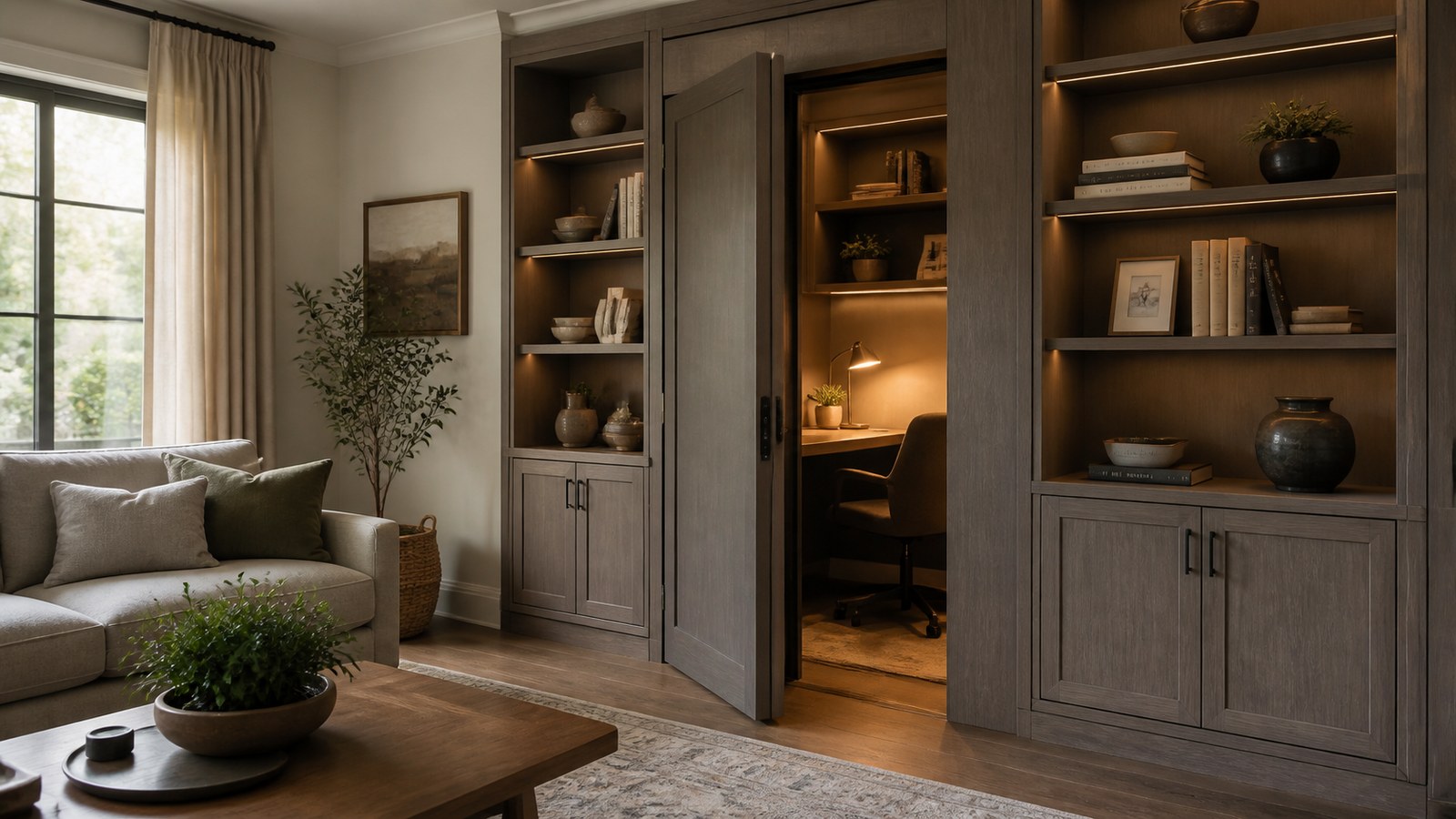
Hidden doors have captured imaginations for centuries, from medieval castles with secret passages to modern mansions that hide home theaters or wine cellars behind seamless walls. Concealed doors embody both mystery and function, blending into surrounding architecture so perfectly that they go unnoticed until revealed. Whether disguised as a bookshelf, a paneled wall, or even a mirror, a concealed door transforms a space into something extraordinary. For homeowners, building a concealed door is more than a DIY project—it’s a way to add intrigue, privacy, and elegance to a living space. In luxury homes, these doors serve as statement pieces, combining artistry with craftsmanship. In smaller homes, they can provide practical storage solutions while maintaining visual harmony. This step-by-step guide will explore how to build a concealed door, from planning and design to construction and finishing, offering inspiration for anyone ready to bring hidden elegance into their home.
A: A flush, paint-matched swing door with concealed hinges, magnetic latch, and a small edge pull.
A: Aim for ~1/16–1/8 in. uniform reveals; prioritize consistency over absolute tightness.
A: Use pivots for tall/heavy leaves; concealed hinges for slimmer, lighter doors.
A: Yes—add blocking, set a flush frame kit, skim and paint to erase seams.
A: Use engineered cores, multi-point latching, proper blocking, and tune hardware under live load.
A: Not by default—add mass, perimeter gaskets, and a drop seal; consider acoustic cores for theaters/offices.
A: Pair touch latches with a concealed mortise or smart strike and a minimal edge pull.
A: Yes—wrap the face and continue patterns across the leaf; align seams and baseboards perfectly.
A: DIY kits can be under $1,000; custom pivot/millwork systems run higher. Installs range from a day to several days/weeks with finishing.
A: Light leaks at the head, noisy latches, misaligned panel/baseboard lines, and floor drag on rugs.
Planning Your Concealed Door Project
Every great concealed doorway starts with careful planning. Before you pick up a tool or order supplies, you need to decide on the type of concealed door you want and its purpose. Is it meant to hide a private study, a utility closet, or perhaps a wine cellar? Will it serve primarily as a decorative feature, or does it need to meet specific security requirements? Next, evaluate the space where the door will be built. Concealed doors work best on walls where they can align seamlessly with existing design features, such as bookshelves, wood paneling, or cabinetry. Assess structural elements, including load-bearing walls, ceiling height, and available depth for the frame and hinges. The planning phase also includes measuring carefully, as precision is essential to creating a door that disappears into its surroundings. Finally, set a budget. Concealed doors can be built on modest budgets with clever design choices, but high-end versions with automated features or custom millwork can quickly grow costly. Planning ensures your concealed door will balance aesthetics, function, and cost.
Choosing the Right Design
There is no single style of concealed door. Instead, the design depends on the room’s character and the effect you wish to achieve. One of the most iconic is the bookshelf door, where a wall of books hides a pivoting or swinging entrance. This design works beautifully in libraries, studies, or living rooms with classic interiors. Another popular choice is the paneled wall door, which blends into wood paneling, wainscoting, or custom cabinetry. In more modern homes, a mirror or sliding panel door may provide a minimalist effect, vanishing into the clean lines of a contemporary wall. Each design offers different challenges, from balancing the weight of shelves to ensuring the finish blends seamlessly. The key is cohesion. The concealed door must match the surrounding architecture perfectly. Whether rustic wood or sleek lacquer, the materials, finishes, and proportions should appear indistinguishable from the rest of the wall.
Gathering Tools and Materials
Once your design is chosen, it’s time to gather the necessary materials. At the heart of every concealed door is the frame, door panel, and hinge system. For a bookshelf door, you’ll also need shelving materials, book spines, and hardware to support the additional weight. Common materials include plywood, hardwood, and MDF, depending on the design and budget. Tools typically required include a circular saw or table saw, drill, level, clamps, stud finder, and measuring tape. Hinges are critical; concealed or pivot hinges are often used, as they allow for smooth operation while minimizing visible hardware. If security is a priority, magnetic locks or hidden latches may also be added. Luxury projects might include advanced technology like automated openers, biometric scanners, or lighting systems. However, even with simple tools, a carefully executed concealed door can achieve remarkable results.
Building the Frame and Door
The construction process begins with the frame. A concealed door requires a sturdy frame that is perfectly square, ensuring the door can swing or slide smoothly without catching. Begin by marking the doorway and cutting the opening into the wall, ensuring structural integrity is maintained. Reinforce the opening with framing lumber if necessary. Next, construct the door panel. If you’re building a paneled wall door, the panel should match the thickness and finish of the surrounding wall. For a bookshelf door, build shelving with strong joinery, using dado joints or reinforced screws to support the weight of books and decorative items. The door must be heavy enough to feel substantial but light enough to open effortlessly. Precision during this stage is critical. Even a small misalignment can cause the door to sit unevenly, ruining the illusion of concealment. Using a level and square ensures clean lines and seamless integration.
Installing the Hinge or Pivot System
The hinge or pivot system is the most technical part of building a concealed door. Ordinary hinges may not suffice, particularly for larger or heavier designs. Hidden hinges or pivot hinges are ideal, as they allow the door to swing open smoothly while remaining invisible from the exterior. For bookshelf doors, the pivot hinge is particularly effective, as it distributes the weight evenly and allows the entire shelf to swing with minimal strain. Concealed hinges, such as Soss hinges, are another popular choice, disappearing entirely when the door is closed. Installation requires careful measurement. Hinges must be perfectly aligned, and the door must be balanced to avoid sagging. In luxury builds, soft-close mechanisms or automated openers can be added to ensure a smooth, silent motion that enhances the sense of refinement.
Concealment and Camouflage
With the door structurally sound, the next challenge is concealment. This stage transforms the project from a simple hidden door to an architectural illusion. The goal is to make the doorway invisible to the casual eye. For paneled wall doors, this means matching paint colors, wood grains, and trim exactly. Even minor differences in sheen or texture can reveal the door’s presence. For bookshelf doors, concealment is achieved by filling shelves with books or objects arranged naturally, avoiding patterns that hint at movement. Some homeowners use faux book spines or panels that mimic real books, reducing weight while maintaining authenticity. Others prefer fully functional shelves stocked with volumes. Additional tricks include extending baseboards and crown molding across the door’s surface to disguise seams.
Adding Locks and Security Features
If privacy or security is a priority, concealed doors can be enhanced with hidden locks. Magnetic touch latches allow doors to open only when pressure is applied to a specific point, while keypads, biometric scanners, or RFID readers can add high-tech sophistication. Luxury installations often integrate with smart home systems, enabling the door to open with a smartphone app or voice command. For those who prefer tradition, a discreet mechanical lock hidden behind a decorative object can maintain old-world charm. The choice depends on whether the door is primarily for whimsy, security, or both.
Finishing Touches
The final stage is finishing. Sanding, painting, or staining ensures the concealed door matches the surrounding environment seamlessly. Lighting can also be added, both to illuminate the hidden space and to highlight the reveal when the door opens. In luxury homes, interior designers may treat concealed doors as opportunities for storytelling, crafting dramatic reveals with lighting, décor, and ambiance. Furniture placement also plays a role. A strategically placed chair or artwork can further disguise the doorway, though care must be taken not to obstruct its operation. The goal is harmony—when finished, the concealed door should appear indistinguishable from the rest of the wall until opened.
Creative Applications in Luxury Homes
Concealed doors are endlessly adaptable. In grand mansions, they often lead to wine cellars, private lounges, or even hidden staircases. In family homes, they might conceal a playroom, a storage closet, or a utility room. Some homeowners build doors into mirrored walls, opening to reveal home gyms or spa retreats. Bookshelf doors remain a favorite, offering timeless charm and cinematic flair. However, modern minimalist homes are increasingly embracing concealed slab doors that vanish into sleek wall panels. The creativity lies in the contrast—unexpected spaces revealed by ordinary surfaces.
Common Mistakes to Avoid
While building a concealed door is exciting, several common mistakes can undermine the project. Poor measurements can result in uneven gaps that expose the doorway. Weak hinges may fail under the weight of a bookshelf. Inconsistent finishes can reveal the outline of the door. Rushing the concealment phase often betrays the secret. Patience, precision, and attention to detail are non-negotiable. When done correctly, the concealed door is not a gimmick but a functional and beautiful feature that enhances the home.
The Joy of the Reveal
Perhaps the most satisfying part of building a concealed door is the reveal. The look on a guest’s face when they see a wall of books swing open to reveal a hidden room is priceless. For homeowners, the concealed door is a source of pride—a conversation starter, a secret retreat, and a testament to craftsmanship. Beyond novelty, it adds tangible value to the home. Hidden doors suggest superior design, custom features, and thoughtful construction, all hallmarks of luxury living. They transform ordinary rooms into extraordinary experiences, proving that great architecture is as much about imagination as it is about structure.
Bringing Mystery Into Everyday Life
Building a concealed door is not simply about creating a hidden entrance. It is about weaving mystery, creativity, and craftsmanship into a living space. From planning and design to construction and finishing, every step requires patience and precision. The result is more than a door—it is a story embedded into architecture, a feature that delights, surprises, and elevates a home. In luxury estates, concealed doors represent exclusivity and refinement. In everyday homes, they offer whimsy and practicality. Regardless of setting, they remind us that even the most familiar walls can hold secrets. With careful planning and craftsmanship, anyone can build a concealed door and bring timeless intrigue into their own home.