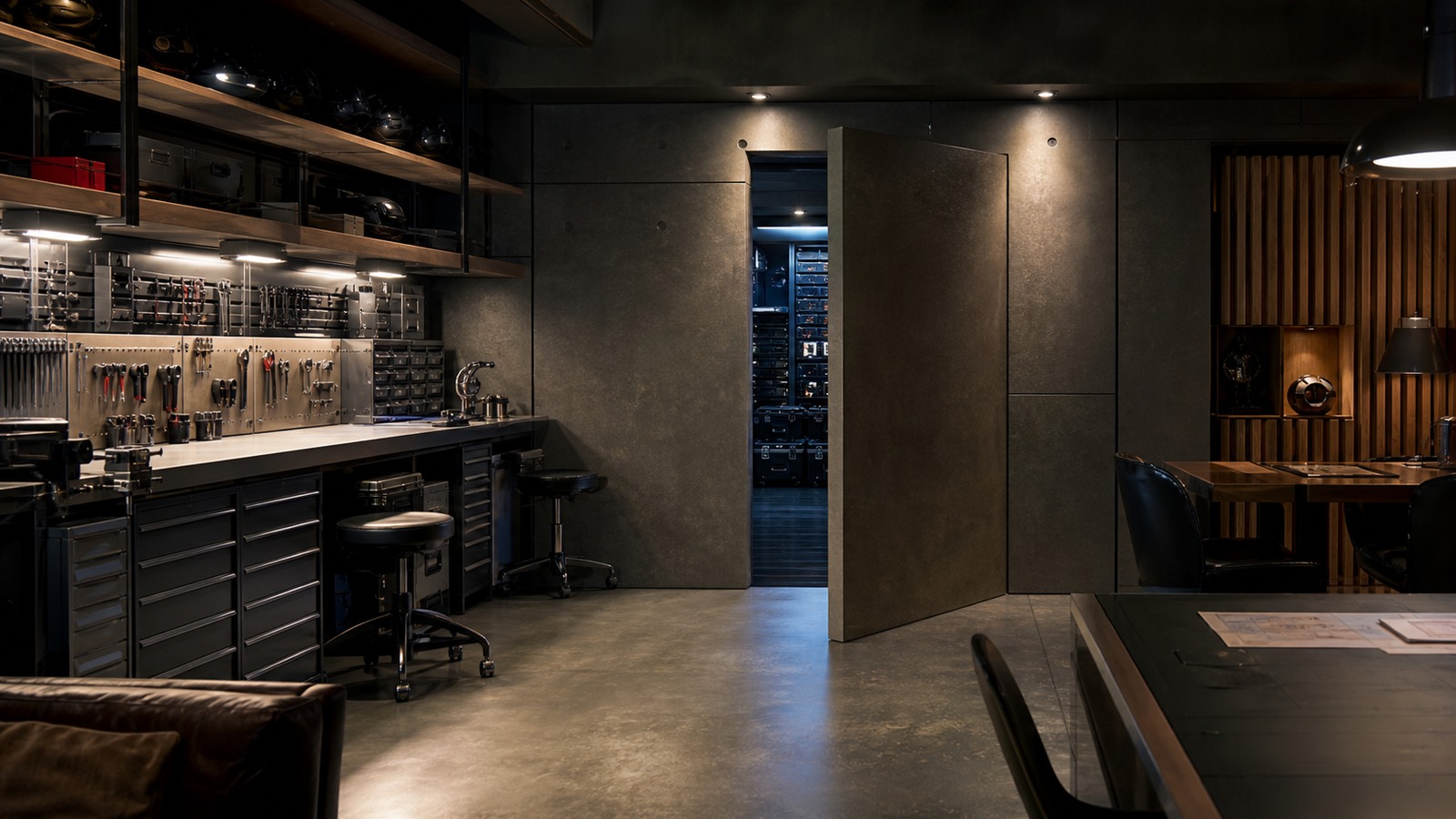
In modern home design, beauty often lies in the details you don’t immediately notice. Concealed doors, sometimes called hidden or invisible doors, are a perfect example of how functionality can merge seamlessly with style. Far from being just a clever architectural trick, these doors embody the idea of minimalism, mystery, and elegance. They allow homeowners to maintain clean lines, create surprising transitions between spaces, and even add an element of intrigue to their interiors. Whether you want to hide a pantry, disguise a closet, or add a touch of luxury with a secret passage, concealed doors are one of the most exciting design trends for modern homes. Let’s explore the best concealed door ideas that balance practicality with stunning visual appeal.
A: A flush, paint-matched swing door with concealed hinges and a magnetic latch.
A: Floor/ceiling pivot with multi-point latching to keep the plane true.
A: Use touch latches or a small edge pull; for security, pair a mortise set with a minimal escutcheon.
A: Yes—add blocking at hinge/pivot points and plan for skim-coating to erase seams.
A: Add mass to the core, perimeter gaskets, and a drop seal; avoid large undercuts.
A: Pre-lay out the panel grid so stiles/rails or slats cross the leaf without breaks.
A: Yes—choose low-profile hardware or hidden strikes that don’t telegraph through finishes.
A: Weatherstrip thoroughly, slope thresholds, choose UV-stable finishes, and ventilate cavities.
A: DIY flush kits can be a few hundred dollars; custom pivot/millwork walls can run several thousand.
A: A basic retrofit can be a day; full-height custom systems may take several days to weeks.
Flush-to-Wall Doors for a Seamless Look
The most classic approach to a concealed door is a flush-to-wall design. These doors sit perfectly level with the wall surface, eliminating visible frames, trims, or handles that might otherwise give them away. With the right paint or wall covering, they can virtually disappear into the room. For modern homes, flush doors work beautifully in minimalist interiors where every line counts. They can be used to hide storage rooms, utility closets, or even entire hallways. Many luxury designers use magnetic push-to-open systems, which remove the need for handles altogether, enhancing the seamless aesthetic. The beauty of flush-to-wall doors is how they give a space a sophisticated, uninterrupted flow that feels larger and calmer.
Mirror-Integrated Hidden Doors
Mirrors serve as both functional and decorative elements, making them perfect candidates for concealing doors. A mirrored door not only disguises the entryway but also reflects light, brightening the room and making it appear larger. Homeowners often use this trick to conceal wardrobes, bathrooms, or dressing rooms, particularly in bedrooms or walk-in closet areas. The mirrored surface becomes a design feature in itself, distracting the eye from the fact that it’s a door at all. In addition, mirrored concealed doors can be customized in smoked glass, antiqued finishes, or framed designs to match any modern aesthetic. This approach blends glamour with discretion, giving rooms an air of mystery.
Bookcase and Shelving Doors
Perhaps one of the most beloved concealed door ideas is the bookcase door. This timeless concept, often associated with secret libraries or hidden studies, has been reimagined for modern homes with sleek shelving units and contemporary finishes. Instead of heavy wood, designers now use lightweight materials and slim shelving that swing or pivot smoothly. Homeowners can style the shelves with books, plants, or decorative objects, creating a functional display that doubles as a passageway. Beyond its aesthetic appeal, a bookcase door is highly practical—it provides storage while cleverly disguising access to another room. Whether hiding a home office or a private retreat, this option brings a touch of cinematic drama to everyday life.
Paneled Doors that Disappear into Walls
Wall paneling is another brilliant way to disguise doors. By aligning a door with decorative wall panels—whether wood slats, textured gypsum, or sleek lacquer finishes—you create the illusion of a continuous surface. This method works particularly well in hallways or living rooms where homeowners want to maintain rhythm and symmetry. Vertical wood slats, for example, not only conceal the door but also add warmth and texture to the space. When the door is closed, it becomes almost impossible to distinguish from the surrounding wall treatment. Paneling concealed doors can be designed in pivot or hinged systems, and they often surprise guests with their sophistication.
Sliding Hidden Doors
Sliding concealed doors are ideal for modern open-concept homes where flexibility is key. Unlike traditional hinged options, sliding systems can be tucked into walls, behind panels, or even disguised as part of cabinetry. Many designers use barn-style sliding systems but disguise the track, making it look like the wall simply opens up. Hidden sliding doors are particularly effective for pantries, laundry rooms, or entertainment areas where you want to keep clutter out of sight. Glass, wood, or composite materials can be used depending on the room’s style. The added bonus is space-saving functionality, as sliding concealed doors eliminate the swing radius required for standard doors.
Wallpaper and Paint-Matched Concealed Doors
Sometimes the simplest design strategy is the most effective. Concealed doors can be completely camouflaged by matching the surrounding wallpaper or paint. This technique is especially striking when bold patterns or textures are used, creating an optical illusion that hides the door entirely. For instance, a geometric wallpaper can make a door blend into the wall until it is opened, catching visitors off guard. Similarly, painting the door the exact same color as the wall—complete with matte finishes and concealed hinges—creates an almost invisible passage. This approach works best in small spaces where visual unity helps the room feel less cluttered.
Glass and Frosted Concealed Doors
While most hidden doors aim to vanish, some modern homes prefer to disguise doors in plain sight by using glass panels that blend into larger installations. Concealed glass doors can be set into partitions, frosted for privacy, or aligned with full-height windows to make them less noticeable. A frosted glass concealed door in a hallway, for example, might appear like part of the wall until it swings open. Clear glass doors disguised within a floor-to-ceiling partition can also make spaces feel continuous, while still offering hidden functionality. This approach merges transparency with mystery, offering an airy, modern take on concealment.
Hidden Pivot Doors for Drama
Pivot doors bring an architectural flourish to hidden entryways. Unlike traditional hinges, pivot systems rotate on a central axis, allowing for oversized or unusually shaped doors. When designed as concealed features, they can be disguised with wall finishes or panels, yet reveal their presence dramatically when opened. A pivot concealed door can feel like a moving wall, making it a popular choice for luxury modern homes. They work particularly well in open-plan layouts where flexibility between spaces is desired. By concealing a pivot door within stone, wood, or concrete finishes, homeowners achieve a sleek look with a surprising reveal.
Concealed Doors Behind Artwork
One of the most creative and artistic ways to disguise a door is to cover it with artwork. From oversized paintings to framed photography, this method ensures the door becomes a design centerpiece rather than a distraction. In modern homes, large-scale canvases or printed panels can completely cover the door’s surface, swinging open as part of the artwork itself. Some homeowners even use custom murals, blending the door into a larger composition that spans the entire wall. This creates a dramatic, gallery-like effect, while keeping storage rooms or private spaces hidden in plain sight. It’s a strategy that combines practicality with bold artistic expression.
Hidden Doors in Kitchens
Kitchens often benefit from concealed doors, as they allow homeowners to maintain a sleek, uncluttered appearance. Pantry doors disguised as cabinetry are a popular choice, giving the illusion of uniform storage while actually hiding entire walk-in pantries. Appliance garages, laundry access, or even hidden staircases can be tucked behind seamless cabinetry panels. Many modern kitchens also integrate push-to-open technology, allowing concealed doors to function without handles. This approach works beautifully in minimalist or high-gloss kitchens where uninterrupted lines are part of the overall design concept.
Bathroom Concealed Doors
In bathrooms, concealed doors are often used to hide walk-in showers, closets, or water closets. They can be designed as part of mirrored walls, glass partitions, or tiled surfaces that continue uninterrupted across the space. This creates a spa-like environment where functionality doesn’t interrupt serenity. Modern luxury bathrooms often feature full-height concealed doors that blend with stone, marble, or porcelain wall panels, giving the impression of a single monolithic surface. When opened, these hidden doors reveal a new dimension of privacy and luxury.
Creative Hidden Passageways
For homeowners who want to indulge their imagination, concealed doors can be designed to lead to hidden passageways, wine cellars, or private lounges. These ideas go beyond practicality and embrace fantasy, adding a sense of wonder to modern living. A sliding mirror leading to a secret bar, or a disguised floor-to-ceiling cabinet that opens into a game room, transforms a home into a playground of design possibilities. While these options require thoughtful planning and craftsmanship, they provide unmatched uniqueness and often become a defining feature of the house.
The Technology Behind Concealed Doors
Modern concealed doors aren’t just about aesthetics—they rely on innovative hardware and engineering. Hidden hinges, magnetic locks, and pivot systems allow doors to function smoothly while remaining invisible. High-quality concealed hinges, for example, can support heavy doors without visible hardware. Magnetic push systems eliminate handles, relying on pressure instead of pulls. For larger doors, pivot systems allow for balanced movement with minimal resistance. Smart technology is also entering the concealed door market, with hidden doors that open using remote controls, keypads, or even biometric scanners. These advancements make concealed doors not only beautiful but also highly functional and secure.
Choosing the Right Concealed Door for Your Home
Selecting the right concealed door depends on the space, style, and purpose. For small apartments, paint-matched or mirrored doors can maximize visual space. Larger homes might opt for pivot systems or bookcase doors to create dramatic effects. Kitchens benefit from cabinetry-style concealed doors, while luxury bathrooms thrive with stone or glass panel concealments. Beyond the material and design, homeowners should consider durability, ease of maintenance, and how often the door will be used. A concealed door isn’t just a design element—it’s also a functional passage that must withstand daily use.
Concealed doors offer more than just a hidden entryway—they transform the way we experience space. In modern homes, they embody the ideals of minimalism, elegance, and surprise, while providing practical solutions for storage, privacy, and space optimization. Whether disguised as a bookcase, blended with paneling, mirrored for glamour, or integrated into cabinetry, concealed doors add a sense of intrigue and sophistication. They remind us that good design isn’t always about what you see, but sometimes about what you don’t. As homeowners increasingly seek sleek, functional, and unique living environments, concealed doors continue to rise as one of the most captivating features of modern architecture.