
Animation Lets Hidden Entrances Break the Rules
Concealed entrances in cartoons and animated shows have a freedom that live-action sets rarely enjoy. A bookcase can spin too fast, a tree can open like an elevator, a floor can stretch into a hatch, or an entire wall can blink, slide, and reset without needing real hardware. That freedom makes hidden entrances playful, expressive, and easy to tie to character personality. In animation, a concealed door can be a joke, a reveal, a route to a secret lab, a shortcut to a hideout, or a visual reminder that the world is more elastic than it first appears.
A: They turn secrecy into comedy, transformation, and quick visual storytelling.
A: It makes the hidden mechanism readable and timed for immediate reaction.
A: Yes. The disguise and motion can reflect habits, ego, chaos, or imagination.
A: They create a fast shift from ordinary life into invention and adventure.
A: They use color, timing, glances, sound, and exaggerated props.
A: No, but their impossible behavior should fit the show's rules.
A: A clear setup, surprising motion, and strong timing.
A: They separate everyday identity from secret play or mission space.
A: Yes, through safe playfulness, color, and joyful reveals.
A: A hidden entrance is most memorable when it has a personality.
Cartoons Use Doors as Visual Punchlines
A concealed entrance in animation can deliver a joke faster than dialogue. A character leans on a wall and falls through it, pulls the wrong book and launches a staircase, or opens a tiny panel that somehow leads to a vast control room. The door creates comedy because the surface behaves against expectation.
The timing matters. Animation can hold a beat before the reveal, exaggerate the movement, and snap the door back into place with perfect comic rhythm. The entrance is not only hidden; it is timed like a gag.
Exaggeration Makes Secrets Read Clearly
Animated shows often enlarge the clues around hidden entrances so young viewers and casual audiences can follow the moment. A suspicious lever may be brightly colored, a bookshelf may wobble with personality, or a panel seam may stretch before opening. The reveal can be obvious and still fun because the pleasure is in the performance.
This exaggeration is not a weakness. It is a form of clarity. Cartoons can make secrecy legible without needing realistic construction.
That clarity also helps pacing. Animated stories move quickly, and a hidden entrance has to be understood before the scene rushes onward.
Secret Labs Love Cartoon Entrances
Cartoon secret labs often sit beneath bedrooms, garages, schools, treehouses, mansions, or ordinary neighborhoods. The concealed entrance creates the jump from everyday life to invention. One button, poster, closet, vending machine, or loose floorboard can separate homework from experiments.
The Door Shows Character Personality
An animated concealed entrance can tell viewers what kind of character built it. A chaotic inventor may use a noisy, overcomplicated chute. A neat villain may hide a polished elevator behind a portrait. A playful child may use a laundry basket, toy shelf, or tree knot. The disguise becomes part of the character design.
This is one reason cartoon hidden doors feel memorable. They are not limited to generic panels. They can borrow from the character’s habits, room, costume, tools, and sense of humor.
Impossible Mechanics Are Part of the Charm
Animation can show doors that would collapse in real life. A wall can fold like paper, a tiny box can contain a hangar, a trapdoor can lead to a roller coaster, and a kitchen cabinet can open into a command center. Viewers accept the impossibility when the show’s world has taught them to accept elastic space.
The trick is consistency. If everything is impossible all the time, the hidden entrance loses impact. The reveal works best when the ordinary surface looks stable until the exact moment it becomes surprising.
Even fantasy mechanics need a little logic. A repeated button, sound, transformation, or object can teach the audience how the entrance belongs to the show.
Animated Hideouts Need Fast Geography
Cartoons often have to establish secret bases quickly. A concealed entrance helps by giving viewers a clear threshold. Once the character crosses it, the show can move into a lab, clubhouse, lair, spy room, magical space, or underground tunnel without a long explanation.
Sound Effects Sell the Reveal
Animation sound design gives hidden entrances extra personality. A squeak, spring, thunk, whoosh, slide whistle, electronic chirp, or overly grand rumble can make the same movement feel silly, advanced, spooky, or heroic. The door’s sound may be funnier than the door itself.
Because the image is drawn or rendered, sound helps give the entrance weight. A feather-light panel can feel massive if the sound says it is massive. A giant doorway can feel ridiculous if it opens with a tiny squeak.
Repetition Turns Entrances Into Running Jokes
Animated shows love recurring devices. A character may use the same secret entrance in every episode, but the entrance misbehaves differently each time. It jams, overreacts, opens onto the wrong place, launches someone too far, or responds to the wrong person.
Repetition makes the hidden door part of the show’s rhythm. Viewers anticipate it, which lets writers twist the expectation. The doorway becomes a familiar setup with room for surprise.
This is harder in live action because repeated mechanical business can slow production. Animation can reuse the idea while changing the physics whenever the joke needs it.
Villain Entrances Can Be Deliciously Theatrical
Animated villains often get entrances that are too dramatic to be practical: skull walls, rotating thrones, rising platforms, fireplace slides, mirror portals, or animal-shaped doors. The excess is part of the fun. A villain’s concealed entrance tells the audience that this character enjoys presentation.
Cartoon Entrances Can Also Create Wonder
Not every animated hidden doorway is comic. Some lead to enchanted forests, dream rooms, tiny worlds, lost attics, secret gardens, or portals that shift the emotional tone of the story. Animation can make the transition feel soft and magical instead of mechanical.
In those scenes, the concealed entrance often slows down. The camera lingers, light changes, and the hidden space feels like a promise. The door still breaks the rules, but it breaks them gently.
Real Design Can Borrow Playfulness
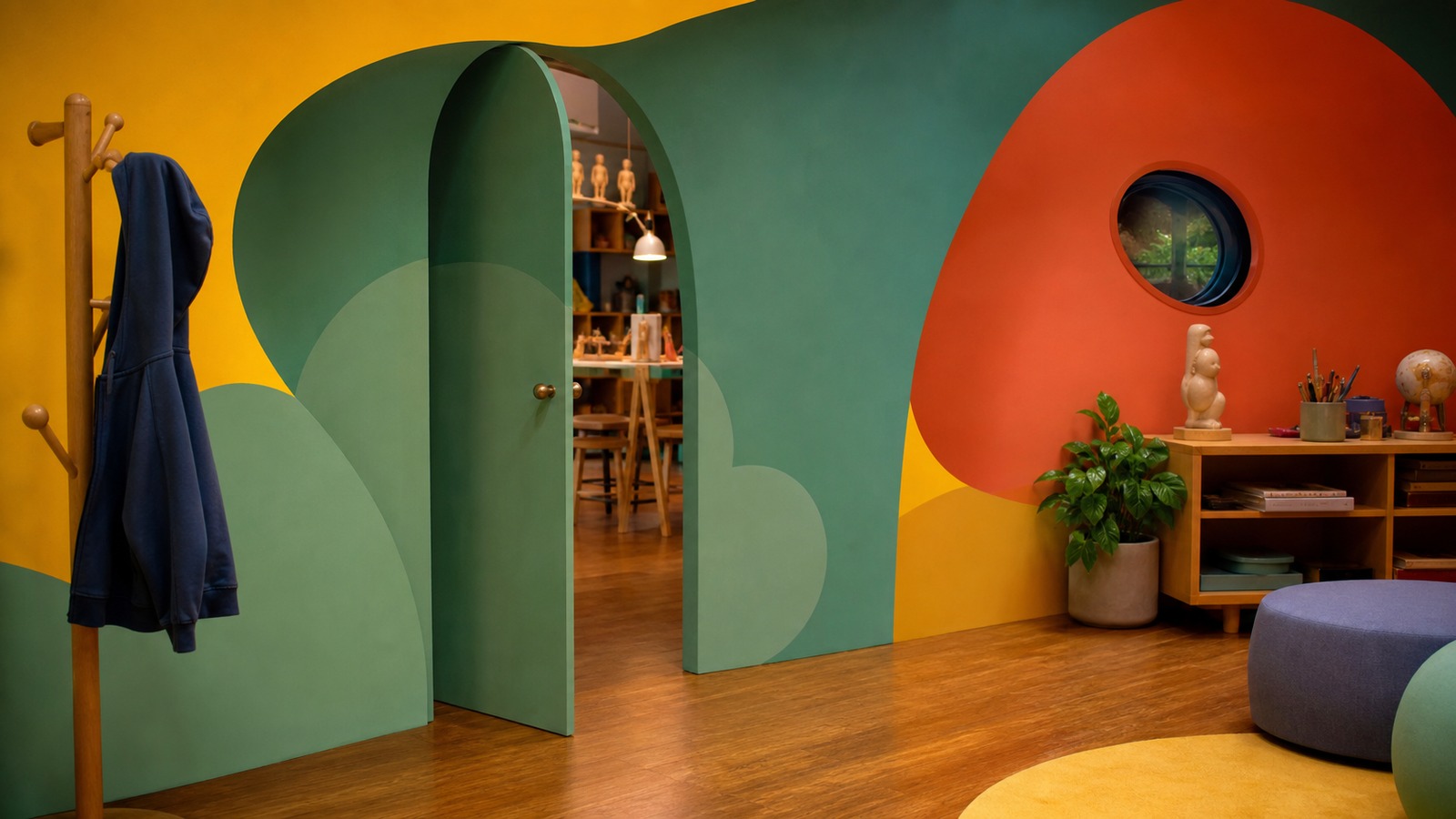
Homeowners should not copy cartoon physics, but they can borrow the playful thinking. A hidden playroom, reading nook, craft closet, or media room can use color, scale, and surprise in ways that feel joyful rather than severe. Concealment does not always have to be dark, formal, or mysterious.
The key is durability. A real family door has to work after the joke. If the entrance is used by children, it needs safe hardware, finger protection, clear exits, and finishes that survive enthusiasm.
Animation reminds designers that delight is a valid design goal. A hidden door can make a room feel kinder and more imaginative, not only more secret.
The Best Cartoon Door Has a Point of View
A concealed entrance in animation works best when it has a personality. It should belong to the character, the world, and the episode’s rhythm. A random moving wall can be amusing once, but a doorway with a specific voice becomes part of the show.
Animated Secrecy Is Really About Transformation
Concealed entrances in cartoons and animated shows endure because they show transformation instantly. A bedroom becomes a lab. A tree becomes an elevator. A painting becomes a villain route. A closet becomes a portal. The ordinary world opens into the exaggerated world, and the character moves between them with a gesture.
That is the lasting appeal. Animation makes hidden doors feel less like construction details and more like personality in motion. The entrance does not merely hide space; it reveals how flexible the show’s imagination can be. When a cartoon wall opens, viewers are invited to accept that the world is still being drawn, and therefore almost anything might be waiting behind the next perfectly ordinary surface.
Animation Uses Scale as a Joke
Scale is one of animation’s best tools for concealed entrances. A tiny door can lead to a cavernous headquarters, a huge fortress gate can open with a delicate squeak, or a normal refrigerator can hold an entire tunnel network. The mismatch is funny because viewers understand the physical impossibility immediately.
That scale play also makes the hidden entrance easy to remember. The joke is not only that the door exists. It is that the door reveals a world too large, too small, too fast, or too strange for the surface that hid it. Animation can stretch that mismatch without apology.
Real design cannot break scale the same way, but it can use proportion play gently. A small child-sized door to a playroom, an oversized panel that hides storage, or a compact entry to a cozy nook can borrow the emotional effect without pretending that physics has left the room.
Hidden Entrances Help Episodes Move
Animated episodes often need fast transitions. A concealed entrance lets the story jump from school to hideout, kitchen to laboratory, playground to secret tunnel, or bedroom to mission room without long setup. The door becomes a shortcut for pacing as well as geography. Viewers learn that once the entrance opens, the story has shifted into another mode.
The Background Can Become a Character
In animation, backgrounds are not passive. A wall can sweat before it opens, a bookshelf can hesitate, a floor can gulp, or a door can behave as if it has feelings. This gives concealed entrances a special charm. The setting seems to participate in the joke.
That participation helps shows build identity. Viewers may remember the way a secret door behaves almost as clearly as they remember the room behind it. The entrance becomes part of the cast’s world, repeating its little performance whenever the episode needs a burst of recognition.
Playful Concealment Still Needs Logic
The most playful animated entrances still benefit from internal logic. The audience should understand who can open the door, why it appears in that place, and what kind of world waits beyond it. Without that logic, hidden entrances become random visual noise instead of story tools.
Logic does not have to mean realism. It can be as simple as a recurring lever, a family password, a character-specific gadget, or a magical rule that appears more than once. Repetition gives the impossible entrance a home inside the show.
This is the lesson real design can use most easily. A concealed door may be delightful, but it should also feel intentional. When the reveal belongs to the room and the people who use it, the surprise keeps its warmth after the novelty fades.
The Best Animated Door Resets the World
Cartoon concealed entrances are satisfying because they can restore order as quickly as they disrupt it. A wall opens, the joke lands, the character disappears, and the room snaps back into normal life. That reset is part of the promise. Viewers know the world can bend without breaking. The hidden entrance creates a burst of possibility, then lets the episode return to its familiar shape, ready for the next impossible threshold to appear.
Animation Keeps the Threshold Friendly
Even when animated hidden entrances belong to villains or spooky houses, they often remain accessible to the viewer. The design is clear, the action is readable, and the reveal invites curiosity more than confusion. That friendliness is one reason cartoon concealed doors influence real playrooms, themed bedrooms, and family spaces.
The fantasy is not only secrecy. It is the belief that an ordinary room might respond with humor if someone touches the right thing. That is a warm kind of hidden-door magic, and animation makes that possibility feel wonderfully casual and close to home.


