Concealed Meeting Rooms Blend Privacy, Ritual, and Reputation
Secret societies and their concealed meeting rooms occupy a space between documented club culture, ritual privacy, architectural discretion, and popular myth. Some groups used private rooms, guarded doors, back stairways, or membership-only halls for ordinary reasons: discussion, ceremony, confidentiality, and social belonging. Other stories are exaggerated by rumor because closed doors invite imagination. A concealed meeting room should therefore be understood carefully. It may be a real architectural tool for privacy, a symbolic threshold for initiation, a security measure, or a legend attached to a room that was simply private.
A: No, many were private, restricted, or unmarked rather than physically invisible.
A: They reinforced membership, privacy, ritual separation, and controlled discussion.
A: No, private rooms often served social, charitable, professional, or ceremonial purposes.
A: Not alone; symbols need context and supporting evidence.
A: Plans, records, physical fabric, and reliable oral history are useful.
A: Yes, staff access can later sound like secret ceremonial access.
A: Social rules and lack of signage can hide a route in plain sight.
A: Restricted access invites imagination and storytelling.
A: Avoid treating every private room as proof of dramatic claims.
A: Balance curiosity with evidence, context, and respect for ordinary uses.
Private Groups Needed Controlled Thresholds
Any group that limits membership needs a way to manage entry. A concealed or discreet meeting-room door can reinforce that boundary by making access feel deliberate. The room beyond may not be dangerous or sensational; it may simply be reserved.
Architecture turns membership into movement. A person who knows the door, knock, stair, or route belongs to the inside world. A person who does not remains outside.
Ritual Spaces Benefit From Separation
Groups with ceremonies, initiations, debates, or private traditions often prefer rooms separated from public noise. A concealed entrance can make the transition feel meaningful. Crossing the threshold becomes part of the experience, not just a way into a room.
This is similar to many non-secret institutions. Courtrooms, temples, theaters, and clubs all use thresholds to change behavior. Secret societies intensify that idea by making the boundary part of identity.
The concealed door helps the room feel set apart before anything happens inside.
Not Every Private Room Is Sinister
Popular culture often turns secret societies into conspiracies. In reality, many private rooms served social, charitable, intellectual, professional, or fraternal purposes. Privacy does not automatically mean wrongdoing.
Architecture Can Encourage Legend
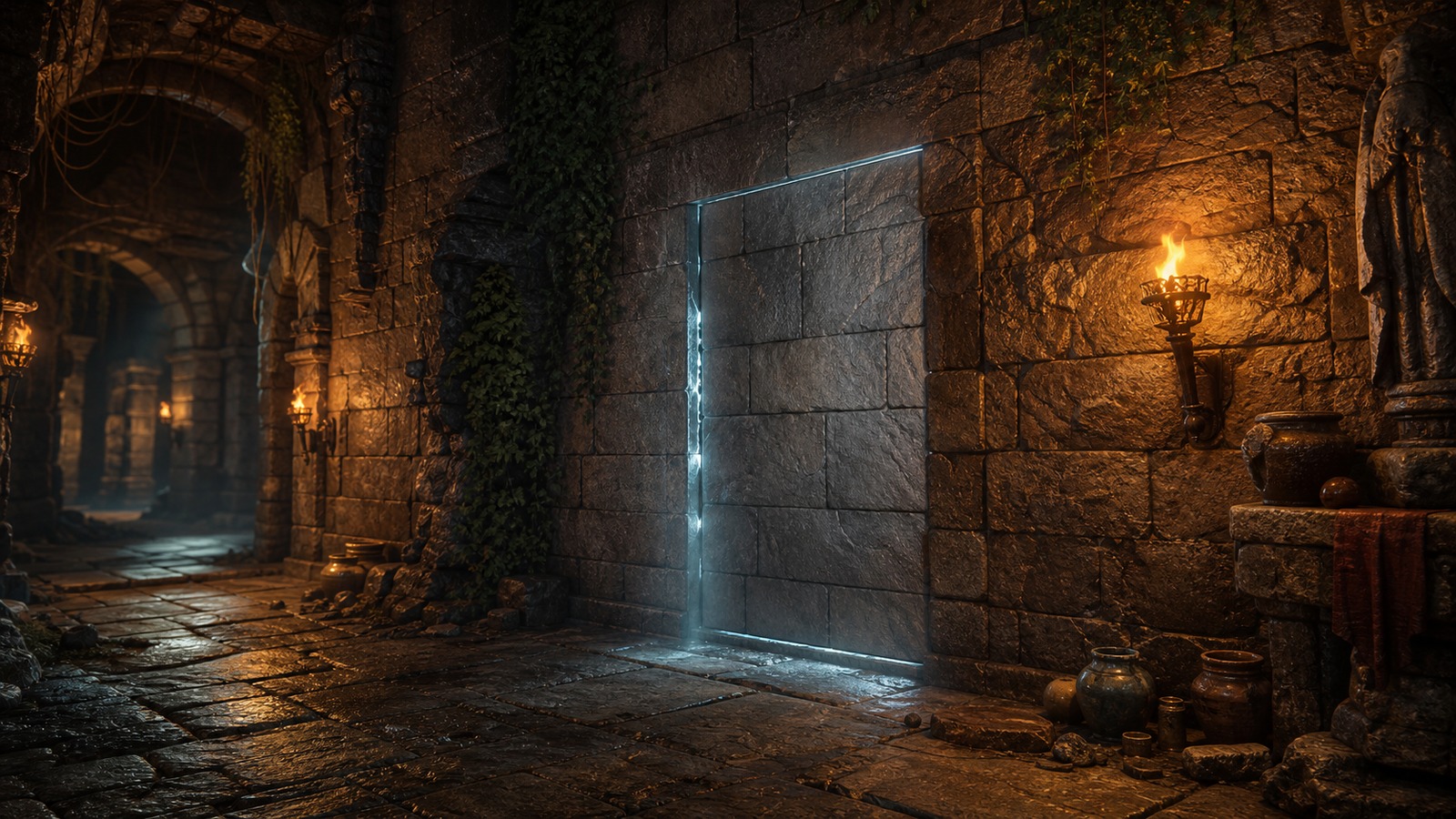
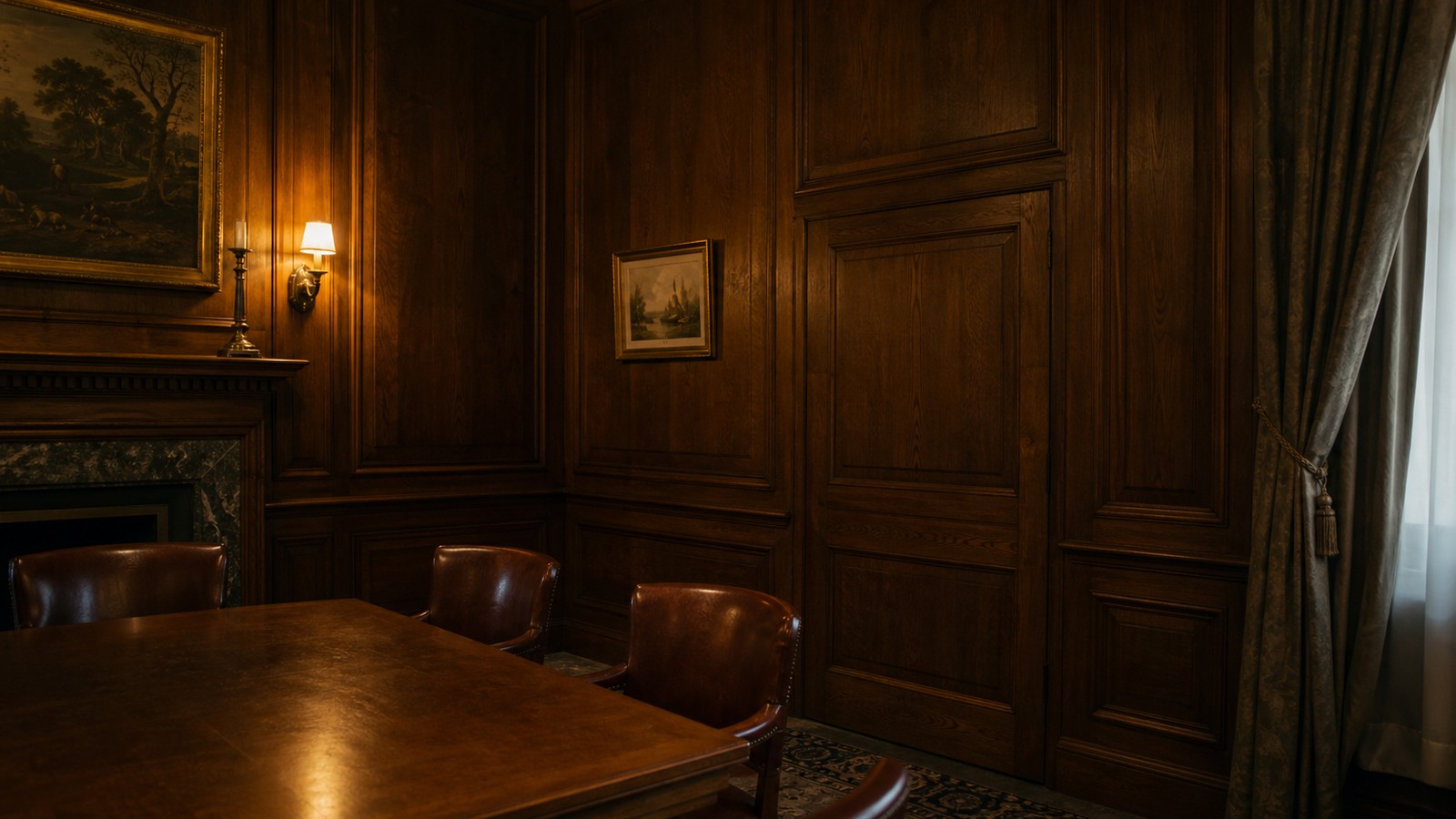
A paneled door, unmarked stair, locked library, or back-room corridor can attract stories even when the original use is ordinary. The more selective the access, the more dramatic the rumor. Concealed meeting rooms become magnets for speculation because people imagine what they cannot enter.
This does not mean every legend is false. It means evidence should lead. Records, building plans, oral history, and physical details matter more than atmosphere alone.
Clubs and Lodges Used Discretion
Private clubs, lodges, and fraternal halls often used formal entries for members and service entries for staff. Meeting rooms might sit behind ordinary doors, upper floors, or paneled walls. Discretion helped preserve the group’s atmosphere and limit interruption.
In some buildings, the concealed quality may be subtle: a door without signage, a stair behind a screen, or a room reached through another room. The secrecy lies in access control, not invisibility.
This is why “concealed meeting room” can describe a range of architectural choices.
Symbols Can Be Misleading
Secret societies often use symbols, but symbols are also easy to misunderstand. A decorative motif may be meaningful, fashionable, borrowed, or misread. A concealed room should not be identified by symbols alone, especially when buildings change owners and uses.
Sound and Privacy Matter
A meeting room may be concealed partly to control sound. Thick walls, tucked locations, double doors, curtains, and upper floors can reduce overheard conversation. Confidential discussion needs acoustic privacy as much as visual privacy.
This practical need can explain why a meeting room sits behind another room or away from the main hall. The hidden route supports quiet.
Service Access Complicates the Mystery
Private meeting rooms still needed cleaning, heating, food, records, chairs, and maintenance. Back doors or service passages may have served staff rather than members. Later observers might mistake those routes for secret ceremonial access.
Understanding who used a door is essential. A concealed service route and a concealed initiation route tell different stories.
Both can exist in the same building.
Membership Creates Insider Geography
Members learn routes that visitors do not. Over time, those routes become part of group identity. The concealed meeting room is not just a hidden space; it is a shared map. Knowing how to enter proves belonging.
Evidence Can Be Fragmentary
Groups dissolve, records disappear, buildings are renovated, and rooms change use. A former meeting room may become an office, storage area, apartment, or museum space. The door remains, but its meaning shifts.
This makes cautious interpretation important. A hidden door in an old building may have several lives. The society story may be one layer, not the whole explanation.
Concealment Can Be Psychological
Sometimes the door is not physically hidden at all. It is socially concealed because only members understand its significance. An unmarked door on an upper floor may be invisible to outsiders simply because they have no reason to open it.
This form of concealment is powerful. It depends on habit, permission, and confidence rather than secret hinges.
Many meeting rooms operate this way: hidden in plain sight by social rules.
Modern Storytelling Amplifies the Room
Films, novels, podcasts, and tours often turn concealed meeting rooms into dramatic symbols. That storytelling can be fun, but it can also flatten history. Real rooms may have hosted minutes, meals, lectures, votes, and ceremonies more often than dramatic plots.
The Threshold Still Matters
Even when the myths are stripped away, the concealed meeting room remains interesting because thresholds shape human behavior. A private door changes posture, voice, attention, and expectation. It tells people they are entering a different social condition.
Secret societies understood that effect. Architecture could make membership feel real before the meeting began.
Meeting Rooms Also Needed Ordinary Work
A private room still had to be cleaned, heated, lit, furnished, repaired, and stocked. Minutes had to be stored, chairs arranged, curtains maintained, and doors kept usable. Those practical needs leave architectural traces that are easy to overlook when the story focuses only on ritual.
Service access can make a concealed meeting room more complex. One door may have carried members into a formal space, while another allowed staff to move food, coal, records, or furniture. Later observers may collapse those routes into a single mystery, but the building often tells a more layered story.
That ordinary maintenance does not reduce the room’s interest. It makes the secrecy more human because even the most guarded gathering depended on routine labor.
Privacy Can Be Respectable and Strategic
Private groups often used discretion to protect frank discussion, not to hide dramatic wrongdoing. Business associations, fraternal orders, reading societies, charitable groups, and political clubs all needed rooms where members could speak without constant interruption. A concealed or controlled entrance helped create that protected atmosphere.
Ritual Turned Access Into Memory
When a group repeats a route over years, the route becomes part of institutional memory. The stair, knock, hallway, or concealed panel does more than admit people; it teaches them where they belong. Entering the room becomes a physical rehearsal of membership.
This is one reason concealed meeting rooms continue to fascinate even when their documented activities were modest. The architecture translates belonging into a sequence of movements. A person passes from public street to private hall, then from private hall to inner room, and the building makes that change feel ceremonial.
Rumor Often Fills Archival Gaps
Secretive groups do not always leave complete records, and even well-kept records can disappear through fire, sale, scandal, neglect, or ordinary renovation. When evidence breaks, rumor steps in. A hidden door, a missing ledger, or a blocked room can become the seed of a much larger story.
Good interpretation does not have to drain the mystery from the room. It can explain what is known, name what is uncertain, and leave room for wonder without inventing certainty. That balance is especially important around secret societies, where suspicion can grow faster than evidence.
The concealed meeting room is strongest as history when it is allowed to remain partly unresolved.
Modern Clubs Keep the Pattern Alive
Membership lounges, private dining rooms, speakeasy-style bars, and invitation-only offices still use discreet thresholds to create a feeling of insider access. Most are not secret societies, but they borrow the same psychological tool. A plain door, back stair, or hidden panel can make entry feel selective before the room says a word.
The Room Controlled Reputation
A concealed meeting room can make a group seem more disciplined, exclusive, or powerful than it might appear in public. The architecture supports reputation by making entry feel scarce. Even a modest room gains status when it is reached through a guarded or hidden threshold.
That reputation can be useful to the group and misleading to outsiders. Members may experience dignity and tradition, while nonmembers imagine danger or influence. The same door produces different stories depending on which side of it a person stands.
Furniture and Layout Carried Meaning
The concealed door was only the beginning of the room’s message. Seating arrangements, tables, lamps, curtains, platforms, cabinets, and wall finishes could reinforce privacy and hierarchy. A room arranged for debate feels different from a room arranged for ceremony.
Those details matter because they show what the space was built to do. If the room supported dining, record keeping, lectures, or voting, its furniture may tell a quieter story than the legend attached to the door. Architecture and use need to be read together.
Secretive spaces are most convincing when every element, not just the entrance, supports the intended mood.
A Closed Door Invites Projection
People naturally fill closed spaces with imagined activity. Secret-society rooms intensify that habit because access is selective and evidence can be thin. The concealed entrance becomes a screen for curiosity, fear, envy, humor, and local storytelling.
That projection is not always hostile. It can also be playful, admiring, or nostalgic, especially when the room belongs to an old lodge, club, or civic building. The point is that restricted architecture asks outsiders to imagine, and imagination often becomes part of the room’s public identity.
Interpret With Curiosity and Restraint
The best approach to secret-society rooms is neither gullible nor dismissive. Some groups really did use private, guarded, or discreet spaces. Some stories really are inflated. The architecture deserves a reading that can hold both possibilities.
A concealed meeting room is most compelling when it is allowed to be human. It reflects privacy, belonging, ritual, status, labor, and storytelling. The room may not reveal a world-controlling conspiracy, but it can reveal how people use architecture to make an inside world feel separate from the outside.
That human scale is the most durable part of the subject. People have always used doors to decide who may enter, what may be said, and how an ordinary room becomes charged with meaning. Secret-society meeting rooms simply make that everyday power more visible by hiding the threshold first.
Read with care, the concealed room becomes less a cartoon of secrecy and more a study of belonging. It shows how private groups turn architecture into memory, status, caution, and shared identity.
The door is compelling because it refuses to be only one thing. It can be practical, ceremonial, protective, exclusionary, ordinary, and mysterious at the same time. That layered quality is exactly what makes these rooms worth reading carefully instead of reducing them to rumor.