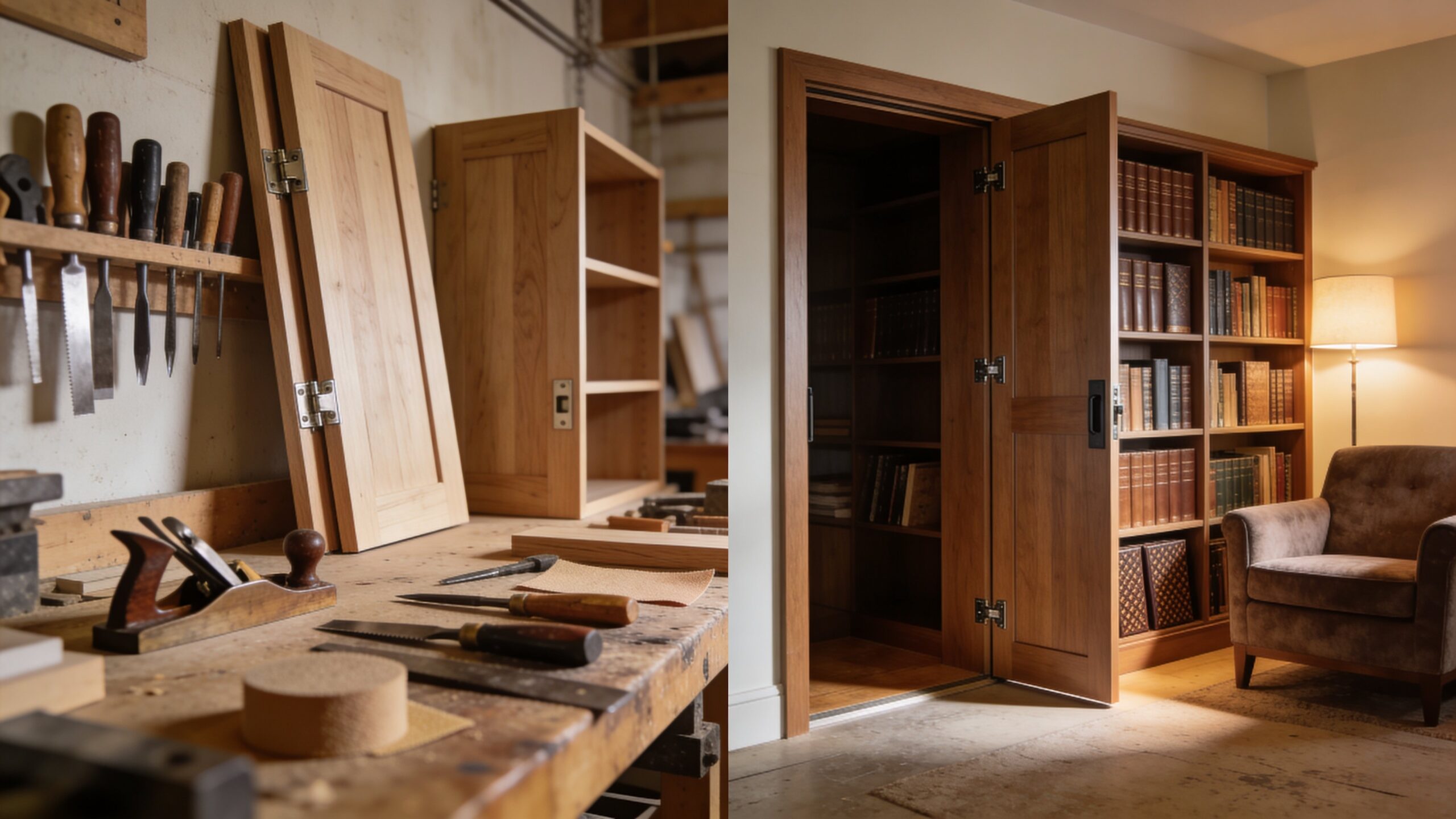
Secret closet doors sit at the fascinating crossroads of design, craftsmanship, and everyday practicality. They transform ordinary walls into moments of surprise, turning storage into an experience rather than an afterthought. In a world where homes must work harder than ever—serving as living spaces, offices, retreats, and showcases—hidden storage offers a powerful solution. Secret closet doors conceal clutter, preserve clean sightlines, and add an element of intrigue that elevates interiors far beyond standard cabinetry. When executed well, they don’t feel gimmicky; they feel intentional, elegant, and timeless. The appeal of secret closet doors lies not only in what they hide, but in how seamlessly they blend with their surroundings. A bookcase that swings open, a paneled wall that quietly reveals a wardrobe, or a mirror that doubles as an entryway all redefine what storage can be. These doors allow homeowners to rethink space, using design as a tool for both beauty and efficiency. As minimalism, multifunctional rooms, and bespoke interiors continue to influence modern living, stylish hidden storage has shifted from novelty to necessity.
A: Yes—they combine everyday storage with clean design.
A: Most can be retrofitted with proper framing.
A: Slightly, due to hardware and craftsmanship.
A: Flush panels and mirror doors.
A: Yes, with reinforced hardware.
A: Yes, ideal for small spaces.
A: Quality installs remain seamless for years.
A: Motion sensors are commonly used.
A: Concealment plus locks offers solid security.
A: Yes, especially for heavy or tall doors.
The Psychology of Hidden Spaces
Humans have always been drawn to hidden places. From childhood forts to secret passages in historic homes, concealed spaces spark curiosity and a sense of control. In residential design, secret closet doors tap into this psychology by offering a feeling of order and calm. When storage is hidden, visual noise disappears. Rooms feel larger, lighter, and more intentional, even if they hold the same amount of belongings.
There is also a sense of privacy and security that hidden storage provides. A concealed closet doesn’t announce what it contains. Whether storing clothing, valuables, or personal items, homeowners gain peace of mind knowing that access is discreet. This psychological benefit is particularly valuable in shared homes, apartments, or spaces that host guests frequently. A well-designed secret door quietly communicates sophistication and thoughtfulness without drawing attention to itself.
A Brief History of Concealed Doors
Hidden doors are not a modern invention. Historic estates, castles, and manor houses frequently featured concealed passages and closets. These were often built for security, servants’ access, or social discretion. Paneling, tapestries, and built-in furniture were common disguises, allowing doors to vanish into walls. While the motivations have changed, the core design principles remain remarkably similar.
In contemporary homes, secret closet doors are less about secrecy in a dramatic sense and more about visual harmony. Instead of hiding people or escape routes, they hide coats, shoes, seasonal clothing, and household essentials. Modern technology and materials have expanded what’s possible, allowing doors to operate smoothly, silently, and safely while maintaining the illusion of solidity. Today’s designs honor the past while embracing modern expectations of convenience and style.
Why Secret Closet Doors Are Gaining Popularity
Several design trends have converged to make secret closet doors increasingly popular. Open-concept living has reduced the number of traditional walls available for closets, pushing designers to integrate storage more creatively. At the same time, the rise of minimalism and curated interiors has increased demand for spaces that look uncluttered even when fully functional.
Another factor is customization. Homeowners are seeking spaces that feel unique rather than mass-produced. A hidden closet door immediately distinguishes a home, signaling craftsmanship and intentional design. It becomes a talking point, but one that doesn’t overwhelm the room. Additionally, as urban living spaces shrink, the need for efficient, concealed storage grows. Secret closet doors allow every inch of space to work harder without sacrificing aesthetics.
Design Principles That Make Hidden Doors Work
The success of a secret closet door depends on alignment, proportion, and material continuity. The door must visually belong to the surface that conceals it. This often means matching finishes precisely, whether that surface is wood paneling, shelving, or painted drywall. Even slight inconsistencies in grain direction, spacing, or color can give the door away.
Proportion is equally important. A hidden door that is too large or too small for its surrounding elements can look awkward or suspicious. Designers often use repetition to their advantage, surrounding the door with similar panels or shelves so it disappears into a pattern. Hardware is minimized or completely concealed, relying on push-to-open mechanisms, magnetic latches, or hidden hinges. When these principles come together, the door doesn’t announce itself; it simply exists as part of the architecture.
Bookcase Doors: Classic and Versatile
The bookcase door remains one of the most iconic forms of secret closet entry. It works because shelves are expected to be deep, solid, and visually complex, making it easier to hide seams and movement. In a bedroom, office, or living room, a bookcase door can lead to a walk-in closet without interrupting the room’s layout.
Modern bookcase doors are engineered for stability and balance, capable of supporting the weight of books while swinging smoothly. When designed well, they feel indistinguishable from fixed shelving. The key to elegance is restraint. Overloading shelves or using mismatched materials can draw attention to the mechanism. A curated selection of books and objects reinforces the illusion while maintaining a refined aesthetic.
Panel-Integrated Closet Doors
Panel-integrated doors are among the most subtle and sophisticated hidden storage solutions. These doors align perfectly with wall paneling, often using floor-to-ceiling designs that create a sense of architectural continuity. In bedrooms and hallways, they can make entire walls appear seamless, with no visible indication of storage behind them.
This approach works particularly well in modern and transitional interiors where clean lines are prized. Painted panel doors can blend effortlessly into neutral walls, while wood-paneled versions add warmth and texture. Because the door is visually quiet, it allows other design elements in the room to shine. The result is a space that feels calm, balanced, and intentionally designed.
Mirror Doors: Function Meets Illusion
Mirrored secret closet doors offer a clever combination of function and disguise. Mirrors are naturally reflective and visually ambiguous, making it difficult to perceive depth and seams. In bedrooms and dressing areas, a mirror door feels entirely logical while concealing a surprisingly spacious closet behind it.
Beyond their practical use, mirrored doors enhance light and create the illusion of a larger room. This makes them especially valuable in smaller spaces. When framed minimally or flush-mounted, they maintain a clean appearance. The challenge lies in precision installation, as even slight misalignment can disrupt the illusion. When executed correctly, mirror doors are both beautiful and highly practical.
Sliding and Pocket-Style Hidden Doors
Not all secret closet doors swing open. Sliding and pocket-style hidden doors offer solutions for tight spaces where swing clearance is limited. These doors can disappear behind wall panels or glide along concealed tracks, maintaining the hidden effect while maximizing usability.
Sliding mechanisms require careful engineering to ensure smooth operation and long-term durability. They also demand precise alignment so the door remains flush when closed. When done well, sliding hidden doors feel effortless and modern, adding a layer of sophistication to compact homes, apartments, or renovated spaces where every inch counts.
Materials That Elevate Hidden Storage
Material choice plays a crucial role in the success of secret closet doors. Solid wood offers warmth and timeless appeal, especially when matched to surrounding millwork. Engineered wood products provide stability and consistency, making them ideal for large panels or doors that must remain perfectly aligned.
Painted finishes allow doors to vanish entirely into walls, while veneers offer the richness of wood without excessive weight. In some designs, metal accents or glass inserts are used subtly, though restraint is key. The goal is cohesion, not contrast. Materials should support the illusion of permanence and solidity rather than drawing attention to the door itself.
Hardware and Mechanics Behind the Magic
While hidden doors appear simple on the surface, their mechanics are often sophisticated. Concealed hinges, pivot systems, and soft-close mechanisms ensure smooth operation without visible hardware. Magnetic latches and push-to-open systems eliminate the need for handles, preserving clean lines.
High-quality hardware is essential for long-term performance. A door that sticks, squeaks, or shifts over time quickly undermines the illusion. For this reason, hidden closet doors benefit from professional installation and periodic adjustment. When the mechanics are flawless, the user experience feels effortless, reinforcing the sense of luxury.
Lighting Inside Hidden Closets
A beautifully concealed closet deserves thoughtful lighting inside. Since the entry is discreet, the interior should feel welcoming and functional once revealed. Integrated LED lighting, motion sensors, and warm color temperatures transform hidden storage into a pleasant, usable space rather than a dark afterthought.
Lighting also supports organization. Well-lit closets make it easier to find clothing and accessories, reducing frustration and improving daily routines. When the door opens to reveal a thoughtfully illuminated interior, the contrast between concealment and clarity enhances the overall experience.
Secret Closet Doors in Small Spaces
In compact homes and apartments, secret closet doors can be transformative. They allow storage to be integrated into walls, corners, or multifunctional rooms without visually shrinking the space. A hidden closet in a studio apartment, for example, can preserve the illusion of openness while providing ample storage.
Designers often use verticality in these situations, extending hidden doors from floor to ceiling to maximize storage volume. When paired with light colors and reflective surfaces, the result feels airy rather than cramped. Hidden storage becomes a strategy for livability, not just aesthetics.
Customization and Personal Expression
One of the greatest advantages of secret closet doors is their adaptability. They can be tailored to match virtually any design style, from classic to contemporary. A traditional home might feature paneled doors with subtle detailing, while a modern loft could use sleek, handleless panels that disappear into concrete or plaster walls.
This flexibility allows homeowners to express personality without sacrificing function. Hidden doors can be playful or serious, bold or restrained, depending on how they are designed. The common thread is intention. When customization aligns with the overall design vision, hidden storage becomes an integral part of the home’s identity.
Practical Considerations and Safety
While secret closet doors are visually appealing, they must also meet practical requirements. Weight, balance, and accessibility are critical factors, especially for frequently used closets. Doors should open easily and safely for all users, including children and older adults.
Ventilation is another consideration. Closets concealed behind solid doors still require airflow to prevent moisture buildup and odors. This can be addressed through discreet vents, breathable materials, or mechanical ventilation systems. When these practical elements are addressed early in the design process, the final result is both beautiful and functional.
Maintenance and Longevity
Hidden closet doors require the same care as any architectural feature, with a few additional considerations. Regular inspection of hinges, tracks, and latches ensures smooth operation over time. Finishes should be maintained to match surrounding surfaces, as wear can make the door more noticeable.
Fortunately, high-quality materials and hardware significantly reduce maintenance needs. When built correctly, hidden doors age gracefully, blending into the home for decades. Their timeless appeal lies in their subtlety, which tends to transcend short-lived design trends.
The Emotional Impact of Thoughtful Design
Beyond practicality and aesthetics, secret closet doors influence how people feel in their homes. They create moments of delight, turning daily routines into small experiences. Opening a concealed door feels intentional, almost ceremonial, reminding occupants that their space was designed with care.
This emotional impact should not be underestimated. Homes that surprise and engage tend to feel more personal and memorable. Hidden storage contributes to this sense of delight without overwhelming the senses, striking a balance between novelty and refinement.
Looking Ahead: The Future of Hidden Storage
As homes continue to evolve, hidden storage solutions are likely to become even more refined. Advances in materials, hardware, and smart home integration will make secret closet doors quieter, smoother, and more intuitive. Voice control, automated lighting, and adaptive mechanisms may soon become standard features.
At the same time, the core principles will remain unchanged. Successful hidden storage will always rely on thoughtful design, quality craftsmanship, and an understanding of how people use their spaces. Trends may shift, but the desire for beauty, order, and a touch of mystery will endure.
Conclusion: Where Style and Secrecy Meet
Secret closet doors represent the art of doing more with less. They hide what needs to be hidden while enhancing what remains visible. In doing so, they elevate storage from a purely functional necessity to a defining design feature. Whether through bookcases, panels, mirrors, or sliding systems, these doors offer endless possibilities for creative expression and practical living. Stylish hidden storage is ultimately about respect for space. It acknowledges that a home should serve its occupants without constantly reminding them of its mechanics. By concealing closets behind beautifully designed doors, homeowners create environments that feel calm, intentional, and quietly extraordinary. In that subtle balance between visibility and secrecy lies the true magic of secret closet doors.