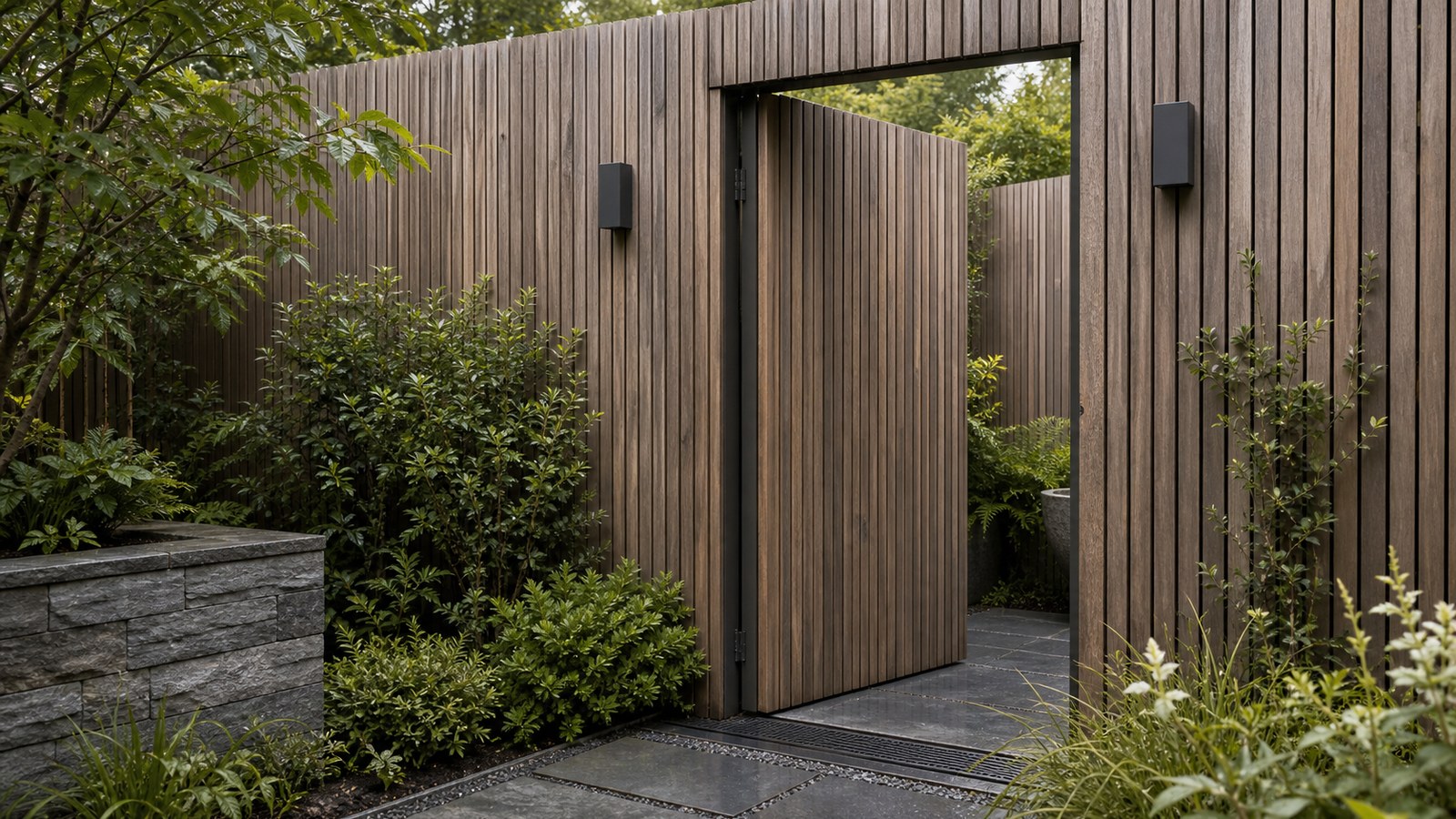
A Hidden Exterior Door Has to Beat the Weather First
An outdoor secret door has to do more than disappear into a fence, wall, garden structure, or exterior cladding. It has to handle rain, sun, wind, freeze-thaw movement, insects, dust, drainage, corrosion, and seasonal expansion. The exterior disguise is only successful if the door still opens, closes, seals, and drains after real weather. Weatherproofing should be part of the design from the first sketch, not a coating added at the end. A durable outdoor hidden door is built like exterior architecture that happens to be discreet.
A: Yes, if it is designed as an exterior assembly from the start.
A: Bottom edges, hardware, thresholds, and trapped-water areas often fail first.
A: No, drainage and flashing are more dependable than sealant alone.
A: Cedar, treated lumber, and properly sealed exterior-grade products are common options.
A: Yes, but plants should not trap moisture or block movement.
A: Enough for seasonal movement, debris, and finish thickness without obvious gaps.
A: Yes, uneven finishing can encourage warping or moisture imbalance.
A: Exterior-rated hinges, corrosion-resistant fasteners, reliable latches, and serviceable adjustment points.
A: Check after storms and at seasonal changes.
A: Drainage, sealed edges, exterior materials, good hardware, and regular maintenance.
Choose an Exterior-Grade Location
The first weatherproofing decision is location. A door under a roof overhang has different demands than one exposed to direct rain. A shaded garden door faces different risks than a south-facing panel that bakes in sun. Study water, light, wind, and foot traffic before designing the opening.
A secret door placed at the bottom of a slope, beside a sprinkler, or under a gutter problem will be harder to protect. Good weatherproofing starts by not inviting water toward the opening. If the site is already wet, fix grading and drainage before focusing on the door face.
Think about what happens around the door during storms. Leaves, mulch, snow, and windblown debris can collect at thresholds and reveals. An exterior hidden door needs enough clearance and drainage to keep ordinary outdoor mess from becoming a jam.
Use Materials Built for Outside
Exterior hidden doors should use materials that tolerate moisture and temperature changes. Cedar, treated wood, exterior-rated plywood, composite panels, metal cladding, fiber cement, marine-grade components, and appropriate weather-resistant finishes may all be useful depending on the design.
Interior materials often fail outside even when they are painted. MDF, interior glue plywood, ordinary cabinet parts, and unsealed edges can swell quickly. A secret door that changes shape will reveal itself and may stop operating.
Choose materials for the worst realistic exposure, not the prettiest dry day. The door should survive the season when maintenance is least convenient.
Material selection should also match the disguise. A fence-style door may need boards that weather at the same rate as the surrounding fence, while a stucco or cladding door may need a stable substrate that resists cracking. The hidden effect depends on the face aging with its context.
Design Drainage Into the Opening
Water needs a way out. Exterior secret doors should include slopes, drips, flashing, thresholds, or gaps that encourage water to drain away from vulnerable edges. A concealed opening that traps water in a reveal will age poorly.
Do not rely on sealant alone. Caulk can fail, crack, or hide trapped moisture. Mechanical drainage details are more dependable. A slight bevel, drip kerf, sloped sill, or protected threshold can make a large difference.
If the door sits in a fence or garden wall, keep soil, mulch, and plants away from the moving edge. Organic material holds moisture and can block swing clearance. The disguise should not smother the door.
Drainage details should be subtle but serviceable. If leaves can clog a channel, the homeowner needs a way to clean it.
Look above the opening as well as below it. Water running down siding, posts, masonry, or trim can find the top edge of a hidden door and work behind the face. A small cap, flashing return, or overhanging detail may protect more than a thick layer of finish.
Seal Every Edge
Exterior doors fail at edges first. The top, bottom, hinge cutouts, latch cutouts, and exposed end grain all need protection. A beautifully finished face is not enough if the bottom edge absorbs water.
Use exterior-rated primer, finish, sealant, edge banding, metal caps, or compatible coatings based on the material. Recoat cut edges after trimming. Hardware mortises should not be left raw.
Choose Corrosion-Resistant Hardware
Outdoor secret doors need hardware that can handle moisture. Stainless steel, galvanized steel, powder-coated components, exterior-rated hinges, and corrosion-resistant fasteners are often worth the cost. Rusting hardware can stain the door, bind movement, and weaken security.
Hardware should also be accessible. A concealed hinge that cannot be cleaned, lubricated, or adjusted may become a problem after one hard season. Weatherproofing includes service access.
Check compatibility between metals. Some metal combinations can corrode faster when exposed to moisture. Manufacturer guidance matters, especially in coastal or humid climates.
Plan for Expansion and Movement
Outdoor materials move. Wood swells and shrinks, metal expands in heat, and composite panels may shift with temperature. A hidden door needs reveals that can handle that movement without rubbing or opening obvious gaps.
Seasonal movement is not a defect; it is a design condition. Build in enough clearance, use stable materials, and choose hardware with adjustability. A reveal that is perfect in spring may be too tight in humid summer.
Test the door after weather changes if possible. Early adjustment can prevent finish damage and hardware strain.
Movement should influence the size of the door too. A very large exterior hidden panel may look impressive, but it can be harder to keep flat and aligned. Dividing the disguise into smaller sections or using a stronger internal frame can make the final result more dependable.
Protect the Threshold
The threshold is where weather, dirt, insects, and daily use meet. It should shed water, resist rot, and avoid becoming a trip hazard. A hidden exterior door with a weak threshold will fail even if the vertical panel is well built.
Use durable sill materials and consider flashing below the opening. Keep the threshold slightly proud or sloped where needed, but make sure it still suits the path and access needs.
In garden settings, pavers, gravel, or decking should not block the swing. Leave room for seasonal debris and future cleaning.
Blend the Door Without Blocking Airflow
Outdoor disguises often use plants, slats, stone, or fence boards. These can work beautifully, but they should not block ventilation or hold moisture against the door. Vines and planters can hide an opening and damage it at the same time.
Keep plant material trimmed away from reveals and hardware. Use removable or offset landscaping if greenery is part of the concealment. The door needs breathing room.
Weatherproof the Hidden Side Too
The back side of the outdoor secret door may face storage, a shed, a passage, or a protected nook. It still needs weather awareness. Condensation, trapped humidity, and temperature swings can affect the door from behind.
If the hidden side is enclosed, consider ventilation. If it stores tools, cushions, or equipment, prevent those items from pressing against the door or blocking drying airflow.
Seal and finish both faces where material requires it. Uneven finishing can encourage warping because one side absorbs moisture differently from the other.
Use Finishes That Can Be Renewed
Exterior finishes need maintenance. Paint, stain, oil, clear coat, and powder-coated parts all age under sun and rain. Choose a finish system that can be renewed without dismantling the disguise.
Darker colors may absorb more heat. Clear finishes may need more frequent care. Natural weathering can be beautiful, but the door still needs protected edges and hardware.
Keep finish records. The exact stain, paint, or coating will be easier to refresh later if it is documented when the project is built.
Plan where touch-ups will happen. If the door face uses many boards, panels, or trim strips, some pieces may fade or wear faster than others. Keeping a few spare boards or a sample panel can make future repair less visible.
Inspect After Storms and Seasons
Outdoor hidden doors should be checked after heavy rain, wind, snow, or seasonal changes. Look for swelling, rubbing, rust, standing water, loose fasteners, clogged drainage, and finish wear. Small issues are easier to fix early.
Clear debris from the threshold and reveals. Lubricate compatible hardware as recommended. Touch up exposed edges before water enters the material.
Weatherproofing is not a one-time task. It is an ongoing relationship with the site.
Plan a Maintenance-Friendly Disguise
The best outdoor disguise still allows someone to clean, adjust, and repair the door. Removable trim, reachable screws, lift-off panels, or accessible hinge pockets may be worth designing in from the beginning. Concealment should not make every small repair feel like demolition.
Consider who will maintain the door. A homeowner may handle sweeping and finish touch-ups, while a carpenter or gate specialist may need access for hinge adjustments. The more clearly those maintenance paths are planned, the longer the secret can stay quiet.
Maintenance also affects landscaping. A plant that looks perfect in a photo may block the latch in two seasons. Leave enough room for pruning, cleaning, and repainting around the moving parts.
That practical access does not have to ruin the illusion. It can be hidden inside the same board rhythm, trim line, or service-side detail that makes the door blend with the exterior surface.
Match Weatherproofing to the Climate
An outdoor secret door in a dry mountain climate has different risks than one near a coast, in a humid garden, or under heavy snow. Sun exposure, salt air, wind-driven rain, insects, freeze-thaw cycles, and wildfire considerations can all change the best material and finish choices. A durable detail in one region may be a weak point somewhere else.
Local building habits are useful clues. If nearby fences cup, painted gates peel quickly, or exterior hardware rusts, the secret door will face the same pressure. Choose methods that already perform well in the neighborhood instead of copying an indoor detail outdoors.
Climate also affects maintenance intervals. A protected courtyard door may need only occasional touch-up, while an exposed fence door may need seasonal cleaning and faster finish renewal. Planning that rhythm early keeps weatherproofing realistic.
Let Durability Shape the Secret
An outdoor secret door should not sacrifice durability for concealment. The best designs use exterior-grade materials, drainage, hardware, and maintenance access as part of the disguise. They look natural because they belong to the fence, wall, garden, or cladding system.
When weatherproofing leads the design, the door can stay subtle for years. It opens when needed, blends when closed, and resists the outdoor conditions that would expose a weaker build.
That mindset helps with budget decisions too. Spending more on the hinge, threshold, flashing, or finish system may matter more than adding a complicated release. Outdoors, the secret survives only as long as the door keeps working smoothly.
A simple, well-drained exterior door will often feel more impressive than an elaborate hidden panel that swells after the first wet season. Durability is what lets the surprise last beyond installation day, especially when the door is exposed to repeated cycles of heat, rain, dust, cleaning, windblown grit, and the occasional hard use that exterior access usually receives.
Weatherproofing also protects the space behind the door. Whether the opening leads to tools, a passage, storage, or a private garden room, the concealed entrance should keep that area dry, accessible, and ready to use through ordinary storms, seasonal debris, and long stretches between maintenance days.