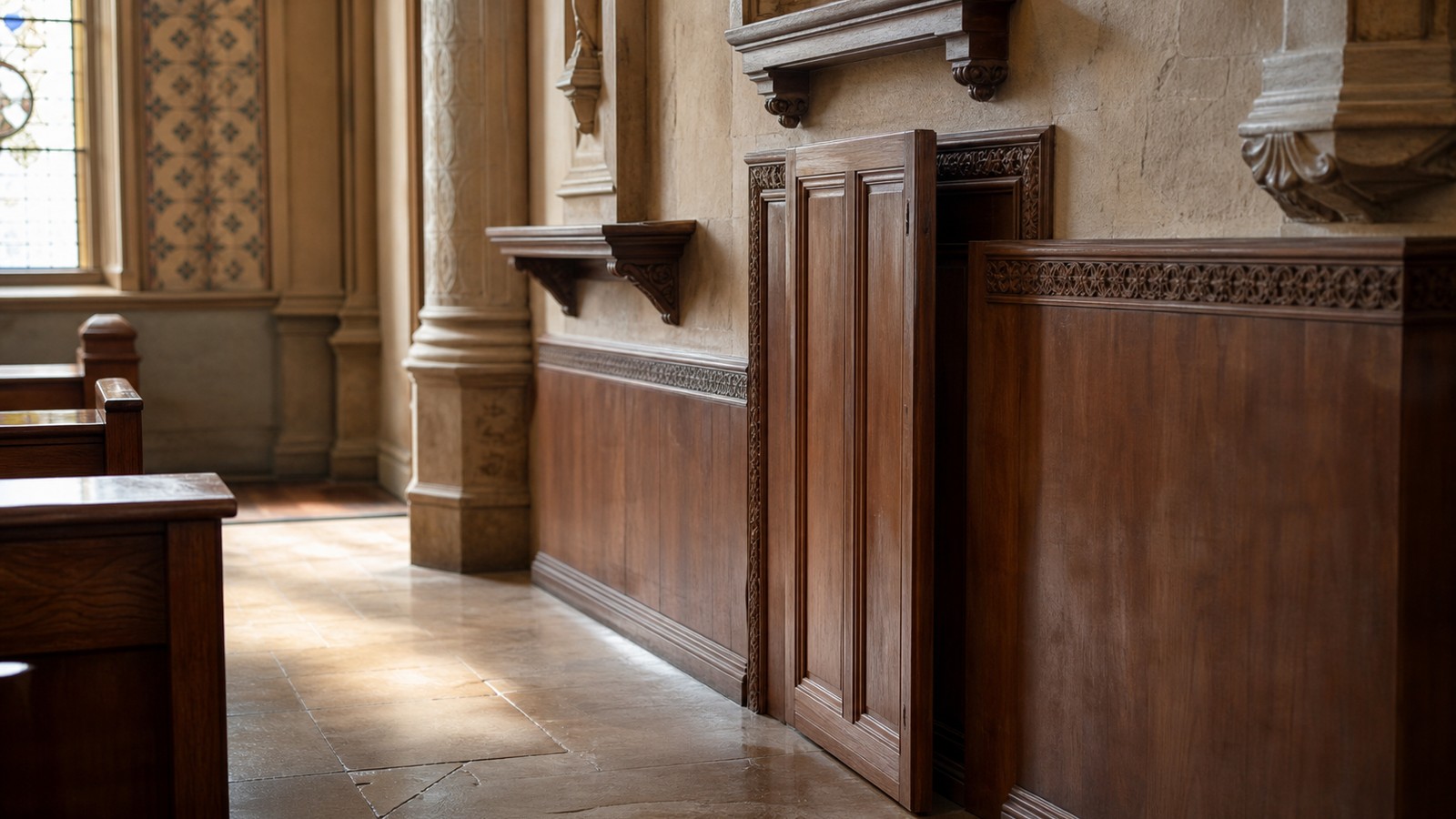
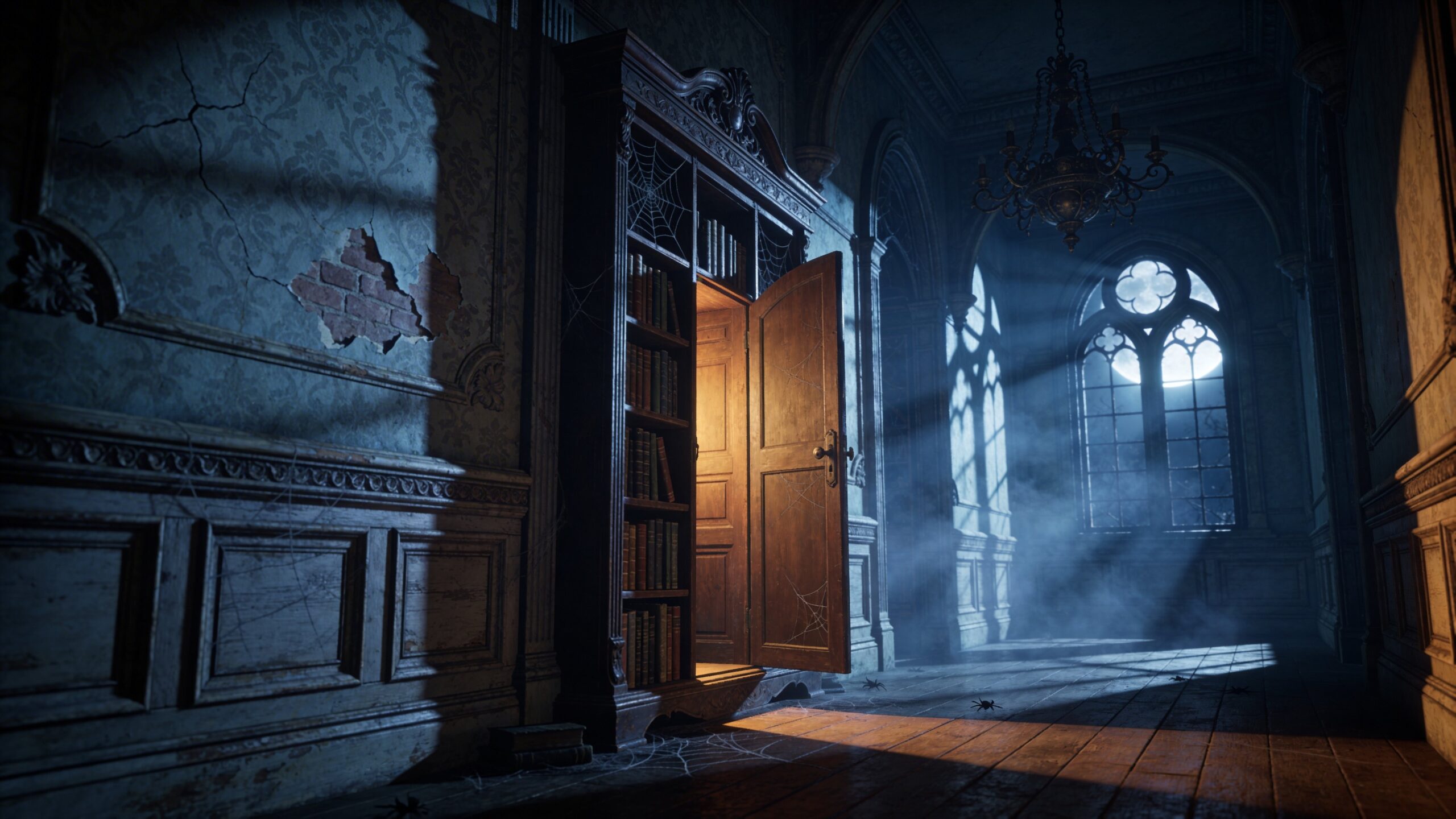
Secret doors have long captured the imagination, but in modern interior design they are no longer novelties reserved for castles or mystery novels. Today’s interior designers integrate hidden passages, concealed rooms, and disappearing doors with such precision that even experienced homeowners may live alongside them for years without noticing. The goal is not deception for its own sake, but harmony. A secret door succeeds when it feels inevitable, as though the space itself demanded it. Designers approach these features as architectural poetry, blending form, function, and emotion into a single seamless gesture. At the heart of this craft is restraint. Unlike bold statement pieces that announce themselves, secret doors thrive on subtlety. The designer’s task is to make the extraordinary feel ordinary, allowing the door to vanish into the rhythm of the room. Achieving that illusion requires an understanding of proportion, materials, circulation, and human perception. When done well, a secret door enhances both the usability and the storytelling of a space.
A: Yes—concealment works best when integrated from the start.
A: Absolutely—minimalist spaces are ideal for them.
A: When designed correctly, they function like standard doors.
A: Continuous paneling or perfectly matched paint.
A: In luxury markets, often yes.
A: Designers conceal wiring and controls within walls.
A: No, with proper hardware selection.
A: Temporary millwork solutions exist.
A: Seals and mass greatly improve sound control.
A: Treating the door as decoration instead of architecture.
Understanding the Purpose Before the Illusion
Interior designers begin by defining why a secret door should exist at all. Sometimes the motivation is practical, such as hiding a pantry, mechanical room, or storage area to maintain visual calm. In other cases, privacy is the driver, with hidden access to home offices, safe rooms, or personal retreats. There are also experiential reasons, where clients want an element of surprise, delight, or narrative woven into their home.
Clarifying purpose shapes every design decision that follows. A secret door meant for daily use must prioritize durability, ease of operation, and code compliance, while a door designed as a rare reveal can afford greater theatricality. Designers balance these needs early, ensuring that the door’s invisibility does not compromise comfort, safety, or longevity. Seamless integration is not just aesthetic; it is functional coherence.
Reading the Architecture of the Space
Successful secret doors respond to the architecture that surrounds them. Designers carefully study wall lengths, ceiling heights, natural sightlines, and circulation patterns before deciding where concealment makes sense. A door hidden in a long uninterrupted wall reads differently than one integrated into a corner or alcove. The room’s proportions guide whether the door should align with panel seams, shelving bays, or millwork divisions.
Sightlines are especially critical. Designers position secret doors where the eye naturally glides past rather than stops. Areas behind seating, along transitional hallways, or within symmetrical compositions offer ideal conditions for concealment. When the architecture already suggests repetition or rhythm, a hidden door can slip into that pattern without calling attention to itself.
Material Continuity as Camouflage
One of the most powerful tools interior designers use is material continuity. A secret door disappears when it shares the same surface language as the surrounding wall. This often means extending wood paneling, plaster finishes, stone cladding, or even wallpaper across the door leaf without interruption. The goal is to eliminate visual cues that signal “opening” to the brain.
Designers pay particular attention to grain direction, joint alignment, and finish sheen. A slight mismatch in wood grain or a subtle change in reflection can betray the door’s presence. For painted surfaces, color matching alone is not enough; texture and light absorption must also be consistent. When materials flow uninterrupted, the door becomes visually silent.
The Precision of Millwork Integration
Custom millwork is central to many seamless secret door designs. Designers collaborate closely with cabinetmakers and finish carpenters to build doors that are structurally sound yet visually indistinguishable from fixed elements. Bookshelves that swing open, paneled walls with concealed hinges, and cabinetry that doubles as an entry point all rely on millwork precision.
The key is tolerances. Hidden doors demand tighter tolerances than conventional doors because even small gaps disrupt the illusion. Designers specify exact clearances, edge details, and shadow lines to ensure consistency. In high-end projects, millwork is often fabricated and dry-fitted off-site, then adjusted on location to account for real-world conditions. This level of craftsmanship is what allows the door to vanish.
Hardware That Refuses to Be Seen
Traditional door hardware is the enemy of concealment, so designers favor specialized systems that minimize or eliminate visible components. Concealed hinges, pivot systems, and magnetic latches allow doors to open smoothly without revealing their mechanics. Handles are often replaced with push-to-open mechanisms or discreet finger pulls hidden within grooves or reveals.
Designers also consider how the door will be discovered by those who need to use it. The absence of visible hardware should not lead to frustration. Subtle cues, such as a slightly deeper shadow line or a hidden touch point, guide the informed user without alerting everyone else. This balance between invisibility and usability defines professional execution.
Aligning Patterns and Visual Rhythm
Pattern alignment is one of the most overlooked aspects of secret door integration. Whether working with wall paneling, tile layouts, wallpaper motifs, or shelving grids, designers ensure that patterns continue uninterrupted across the door surface. Misaligned seams or broken repeats immediately draw attention.
In spaces with strong symmetry, designers often place secret doors within mirrored compositions, allowing the eye to read balance rather than function. In more organic layouts, repetition and rhythm become camouflage. When the brain recognizes a pattern, it stops searching for anomalies, which is exactly what a secret door requires to remain hidden.
Managing Light and Shadow
Light can reveal what materials conceal. Interior designers carefully study how natural and artificial light interacts with a secret door throughout the day. A door that disappears at noon may become obvious at sunset if shadows outline its edges. To counter this, designers adjust reveals, recesses, and lighting placement to soften transitions.
Indirect lighting is often used to wash walls evenly, minimizing contrast at door seams. In darker spaces, designers may lean into shadow, allowing the door to recede into low-contrast surfaces. The goal is consistency. When light behaves uniformly across the wall, the door has nowhere to announce itself.
Sound, Weight, and the Sensory Experience
Seamless integration goes beyond sight. Designers consider how a secret door sounds and feels in use. A hollow thud or metallic click can undermine the illusion, even if the door looks perfect. Solid cores, acoustic gasketing, and dampened latches contribute to a more convincing experience.
Weight distribution is equally important. A door that is too heavy feels mechanical rather than architectural. Designers work with engineers and fabricators to balance mass and movement, ensuring that the door opens effortlessly and closes with a satisfying, quiet finality. These sensory details elevate the door from a trick to a craft.
Balancing Secrecy with Building Codes
Professional designers never sacrifice safety for concealment. Secret doors must still comply with building codes, fire regulations, and accessibility requirements. This includes proper egress where required, fire-rated assemblies, and clear operational logic. Designers integrate these constraints early, treating them as design parameters rather than obstacles.
In residential projects, this might mean ensuring that a hidden door to a basement still functions as a clear exit. In commercial or hospitality spaces, signage and emergency lighting may need to be subtly incorporated without ruining the illusion. Mastery lies in making compliance invisible.
Technology as a Modern Ally
Contemporary secret doors often benefit from smart technology. Designers integrate electronic locks, biometric access, or app-controlled systems that allow doors to remain visually pristine while offering controlled access. These technologies are concealed within millwork or wall cavities, preserving the door’s anonymity.
Automation also allows for creative moments. A wall panel might glide open at the touch of a button, or a bookshelf may unlock when a specific book is tilted. Designers use technology sparingly, ensuring it supports the narrative rather than becoming the focal point. When technology fades into the background, the magic feels effortless.
Storytelling Through Space
Interior designers think of secret doors as narrative devices. They create moments of transition, discovery, and surprise that shape how occupants experience a space. A hidden passage can turn a house into a journey, with layers revealed over time. Designers often align these moments with the client’s personality, lifestyle, or history.
For some clients, the story is playful, evoking childhood wonder or cinematic intrigue. For others, it is about sanctuary, privacy, and control. Designers translate these emotional goals into physical form, ensuring that the secret door feels intentional rather than gimmicky. When the story resonates, the design endures.
Collaboration Between Disciplines
Seamless secret doors are rarely the work of a single professional. Interior designers coordinate with architects, engineers, millworkers, electricians, and contractors to bring these features to life. Early collaboration prevents conflicts between structure, mechanics, and finishes that could compromise concealment.
Designers often act as conductors, aligning multiple disciplines around a unified vision. Detailed drawings, mockups, and prototypes help ensure that everyone understands the importance of precision. This collaborative process is what transforms an idea into a flawless built reality.
Common Mistakes Designers Avoid
Experienced designers know where secret doors fail. Overcomplication is one of the most common pitfalls. When a door relies on too many moving parts or elaborate tricks, maintenance issues and visual inconsistencies follow. Designers favor elegant simplicity, where fewer components mean fewer opportunities for exposure.
Another mistake is forcing concealment where it does not belong. Not every wall wants to hide a door. Designers respect the natural logic of a space, choosing locations that support rather than fight invisibility. By knowing when not to include a secret door, they preserve its impact when they do.
The Enduring Appeal of the Hidden
The popularity of secret doors endures because they satisfy a deep human desire for mystery and control within our environments. Interior designers harness this appeal while grounding it in professionalism, craftsmanship, and restraint. A well-integrated secret door does not shout its cleverness. It waits patiently, rewarding those who know and disappearing entirely for those who do not. In the end, seamless secret doors represent the highest level of interior design thinking. They require designers to blend aesthetics, engineering, psychology, and storytelling into a single, quiet gesture. When done right, the door ceases to be an object and becomes an experience, one that transforms ordinary spaces into places of wonder without ever revealing how the magic works.