A Hidden Door Does Not Have to Be a Luxury Build
Secret doors are often shown as custom bookcases, motorized walls, or paneled libraries with cabinet-grade budgets. Those projects are beautiful, but they are not the only path. A convincing hidden door under $500 is possible when the design works with what the room already has: an existing opening, a simple slab, a coat of paint, affordable trim, lightweight shelving, a mirror, or a curtain strategy that feels intentional. The budget version succeeds by editing visual clues, not by pretending to be a mansion feature. Spend where movement and safety matter, simplify where decoration can do the hiding, and the result can still feel clever, polished, and personal. The real discipline is choosing one achievable illusion and executing it cleanly rather than scattering money across half-finished ideas.
A: Painting the existing door and trim into the wall is usually the lowest-cost start.
A: Sometimes, if it is shallow, lightweight, and built around an existing opening.
A: Spend on safe hinges, reliable latching, and paint prep before decorative extras.
A: Yes for smooth doors, but seams and edges need careful alignment.
A: They may be able to use curtains, screens, or reversible paint-friendly ideas with approval.
A: Not if it is straight, evenly spaced, sanded, caulked, primed, and painted well.
A: Only if you can patch cleanly; painting casing often gives a strong result for less.
A: Yes, but choose durable finishes and hardware that stands up to daily use.
A: Heavy swinging bookcases are risky without proper hardware and anchoring.
A: Price every small supply before starting, not only the main boards and hinges.
Use the Existing Door First
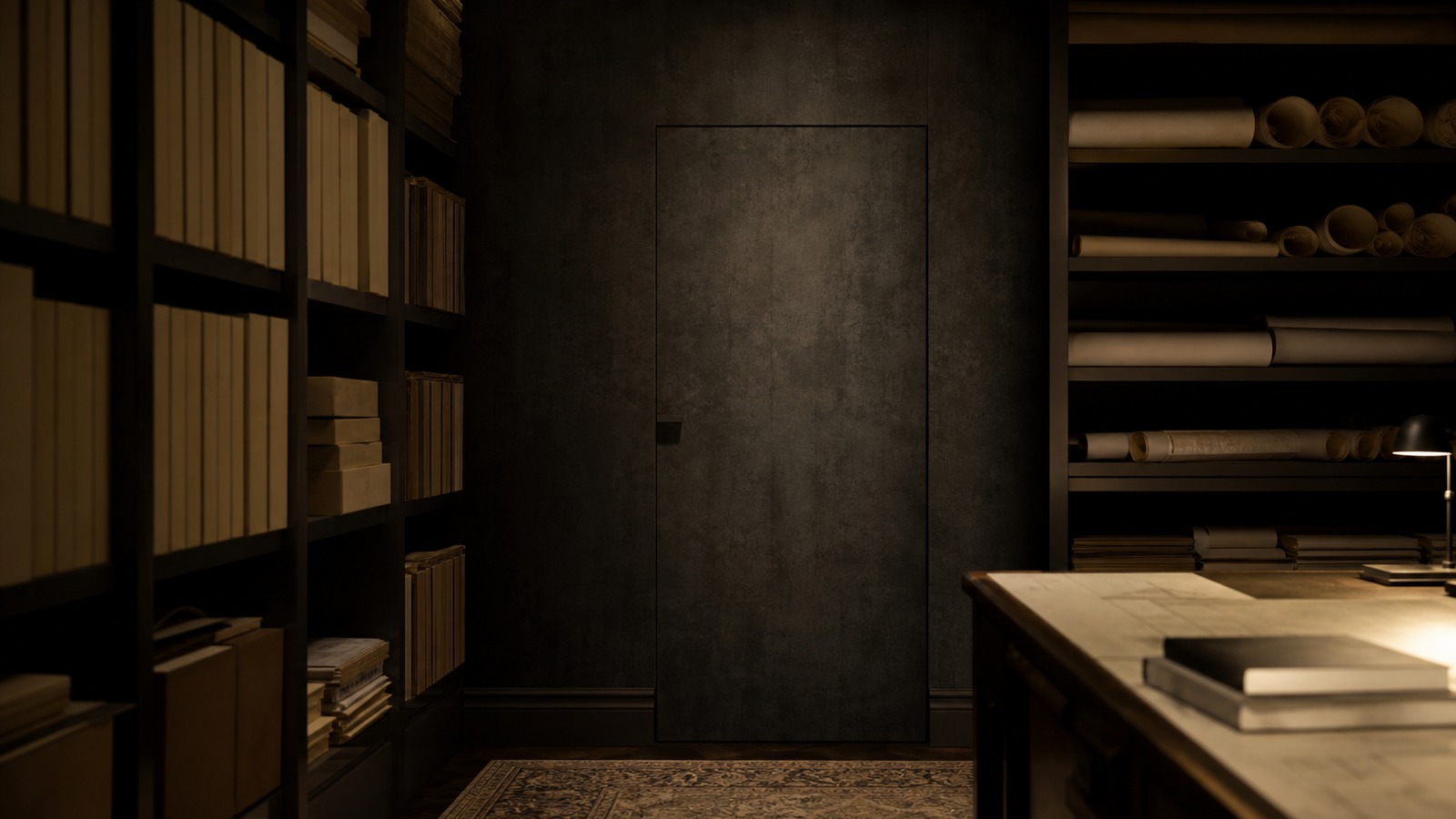
The least expensive secret door is usually the one you already own. Replacing the whole opening with custom hardware can swallow a $500 budget immediately. Instead, look at how the current door gives itself away. Is the casing too bright? Is the knob too shiny? Does the door color contrast with the wall? Is the slab plain while the wall has trim? Many affordable projects begin by painting the door, trim, and wall the same color, then adding trim or surface detail so the doorway becomes part of a larger composition. This method also avoids the hidden cost of fixing flooring, jambs, drywall, and trim after a larger tear-out.
This approach works especially well for closets, pantries, laundry rooms, storage rooms, and office nooks. These doors do not always need heavy security or complex movement. They need to recede. A few boards, caulk, primer, paint, and a quieter handle may change the entire reading of the wall.
Painted Panel Walls Are Budget Workhorses
A painted panel wall can make a standard door look intentional. Thin lattice, MDF strips, or primed pine can create a board-and-batten or picture-frame pattern that continues across the slab. When everything is painted one color, the door outline gets lost among the repeated lines. The materials are affordable, and the tools are familiar: saw, level, adhesive, finish nails, caulk, primer, and paint.
The design should be planned on paper before anything is cut. Uneven spacing around a door can make the disguise look accidental. Align rails and stiles with the wall, not just the slab. Check knob clearance and door swing after adding trim thickness. A budget project still needs careful layout; precision is what makes inexpensive materials look designed.
For renters or temporary spaces, removable trim is trickier but still possible with lightweight materials and careful attachment methods. Always respect the lease and avoid creating a repair bill larger than the project.
Simple Bookcase Disguises
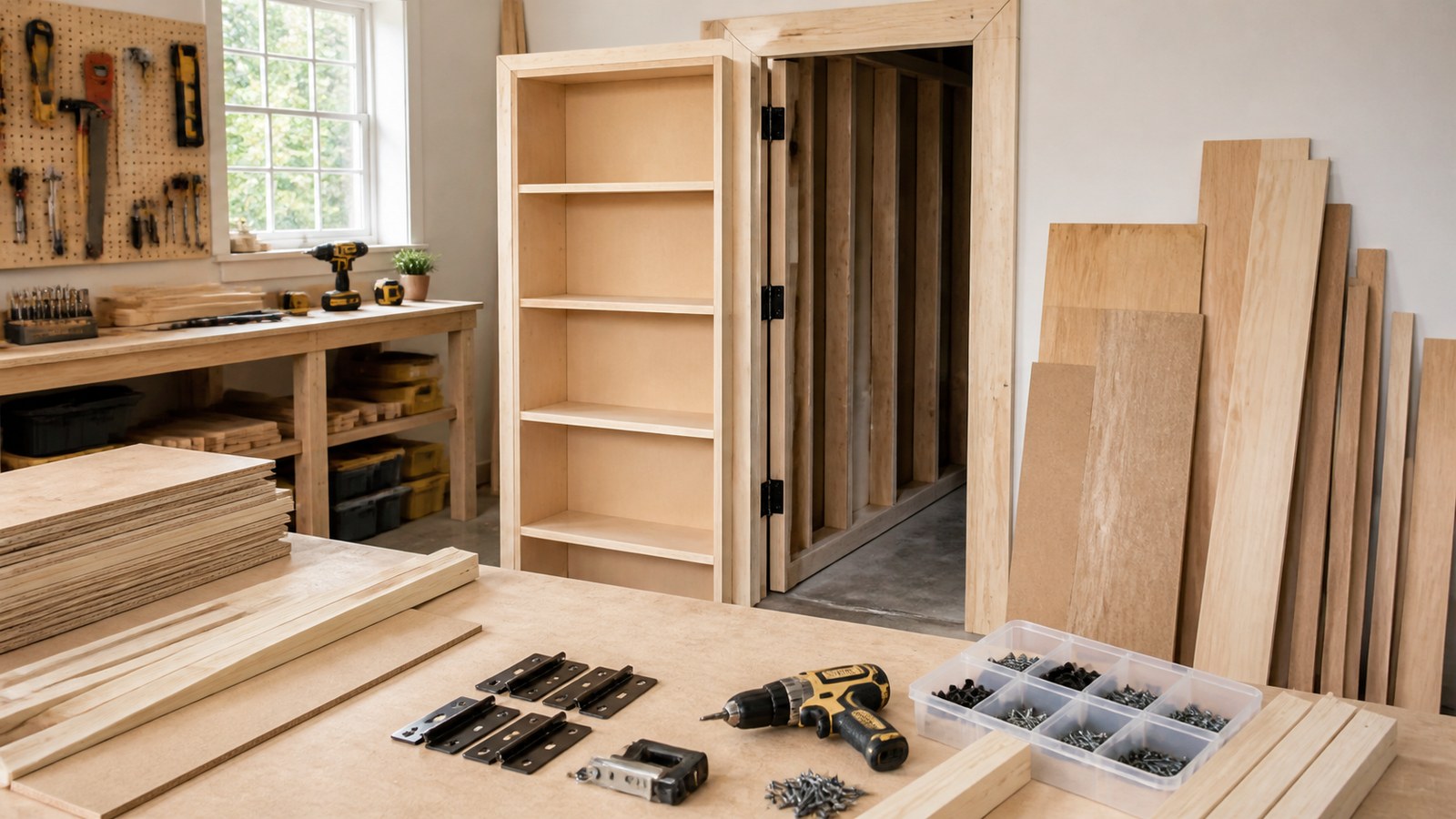
A full swinging bookcase door can exceed the budget once heavy-duty pivot hardware and custom carpentry enter the picture. A more affordable version uses a shallow bookcase or shelving unit placed in front of an existing door opening, especially for spaces used occasionally. The unit can be mounted on casters, a light-duty pivot, or simply arranged as a visual screen if full concealment is not required.
Safety and access are the limits. A freestanding shelf should not tip. A moving unit should not scrape floors or block emergency paths. Keep weight low, anchor when appropriate, and avoid loading shelves with heavy objects if the structure moves. The charm of a budget bookcase door comes from believable styling, not from overloading it with hardcovers.
Mirrors and Art Panels Can Hide Small Rooms
A large mirror or art panel can reduce the appearance of a door, particularly on closets, powder rooms, and dressing areas. Mirrors are useful because people accept them as wall objects. If the mirror is mounted securely to the door and sized to cover most of the slab, it shifts attention away from the doorway. Art panels can do the same, though the frame and weight must be compatible with the hinges.
Budget mirror projects need caution. Cheap mirrors can be heavy, sharp, or poorly backed. Use proper mounting hardware, confirm hinge capacity, and keep the door from slamming. If the mirror frame sticks out, make sure it clears adjacent walls and trim. A hidden look should not compromise safe daily use.
The surrounding wall should support the disguise. A mirror alone on an otherwise empty wall can still look like a door cover, while a mirror placed among balanced furnishings feels natural. A slim console, repeated vertical lines, or matching wall color around the frame can make the piece read as decor instead of concealment.
Curtains, Slats, and Soft Screens
Not every secret entrance has to be a rigid door. In some rooms, a curtain wall, hanging textile, or row of vertical slats can make an opening feel like part of the decor. This can work for storage zones, hobby rooms, laundry alcoves, or under-stair access where privacy matters more than true security. The key is making the treatment look deliberate. A full-height curtain track, quality fabric, and consistent wall color will look far better than a random drape tacked over a doorway.
Slat screens can be built from inexpensive wood strips, but spacing must be regular and the frame must remain straight. They create partial concealment rather than complete invisibility, which can be enough in a casual space. They also allow airflow, making them useful for mechanical closets that cannot be tightly sealed.
Spend Money on the Pieces You Touch
Budget projects are most convincing when the operating parts feel good. A cheap latch that sticks will make the door feel like a trick. A slightly better magnetic catch, soft-close hinge, edge pull, or quality paint may be worth more than extra decoration. Touch points shape the experience every time the hidden door is used.
Hardware should match the project ambition. A lightweight closet disguise does not need expensive architectural pivots. A moving shelf loaded with objects does. Do not save money by undersizing hinges or fasteners. The hidden feature should be safe first, quiet second, and visually clever third.
Paint is another touch point because people see and clean it constantly. Spending a little more on primer, a washable finish, and good rollers can make inexpensive trim look built-in. Saving ten dollars on the final coat may leave the whole wall streaky, which makes the hidden door more visible rather than less.
Keep the Scope Honest
The $500 line is easier to hold when the opening already exists and labor is your own. Costs rise quickly when you need structural changes, new framing, electrical work, custom millwork, or professional finishing. Before buying materials, list every small item: primer, sandpaper, caulk, adhesive, fasteners, hinges, pulls, blades, rollers, and touch-up supplies. The hidden costs of DIY often live in the cart, not the main idea.
A good budget secret door has a clear purpose. It may hide clutter, make a hallway cleaner, create a playful closet, or disguise a work-from-home nook. It does not have to perform like a bank vault or a luxury library. Choosing an achievable goal keeps the design strong. If the project only needs to reduce visual clutter, a painted panel treatment may be smarter than a moving bookcase. If the project needs daily access, smooth hardware may matter more than an elaborate disguise.
Make Inexpensive Materials Look Intentional
The final difference is finish quality. Fill nail holes, sand edges, caulk selectively, prime raw material, and use consistent paint technique. Style shelves with restraint. Keep surrounding wall decor balanced so the disguised door is not the only interesting thing in the room. When the whole wall looks composed, the secret door stops looking like a DIY workaround.
Under $500, you are buying illusion through planning. The best result is not the most complicated mechanism. It is the one that fits the room, opens reliably, and makes guests pause for a second when they realize the wall was hiding something useful all along.
Take photos before and after each stage. Photos reveal crooked trim, uneven spacing, and awkward styling more quickly than standing close to the project. They also help you decide when to stop. A budget secret door can lose its elegance when too many ideas are added after the main disguise is already working.
Plan the Shopping List Before the Weekend
A small hidden door project can stall when one missing hinge, blade, brush, or fastener sends you back to the store. Build a shopping list by sequence: prep, cutting, fastening, filling, priming, painting, hardware, and final adjustment. That order keeps the budget honest and helps you see whether the project is truly under $500 before the first board is cut. Add a contingency line for the unglamorous items too: extra caulk, replacement screws, shims, sandpaper, drop cloths, and a better brush can protect the finish more than another decorative feature.
It also helps to divide the budget into must-have and nice-to-have lines. Safe movement, paint adhesion, and reliable latching belong in the first group. Extra trim, decorative objects, and novelty releases belong in the second. If prices run high, the project can still succeed because the essential parts remain funded.
Measure the Win by Everyday Use
A low-cost secret door should make the room easier to live with. If the hidden pantry opens smoothly, the laundry closet no longer breaks up the hallway, or a small office disappears after work, the project has done its job. The best budget designs are not embarrassed about being simple. They are satisfying because the idea fits the space, the finish is clean, and the door keeps working after the weekend build is over. Judge the result by daily behavior: does the latch catch without slamming, do the trim lines still look straight, can the door be opened without moving half the room, and does the disguise make sense when visitors are not looking for it? Those practical answers matter more than whether the project uses expensive hardware or a dramatic reveal.
Leave Room for a Later Upgrade
A budget hidden door can be a finished project and a foundation for future improvements. If the painted panel works, you can later add better hardware. If the mirror disguise succeeds, you can upgrade hinges or lighting. Building cleanly now keeps those options open.
That mindset prevents overspending on day one. Start with the change that solves the visual problem, then live with it. The room will tell you whether it needs a smoother latch, stronger trim, quieter hinges, or nothing more at all. A patient upgrade path keeps the project affordable while still letting the hidden door mature into a more polished feature over time. It also keeps the first version from becoming more complicated than the room needs, which is often what makes a budget project feel relaxed instead of forced. Simplicity can be the most convincing disguise, especially when the surrounding wall already has enough character to carry the idea and the finish feels complete.