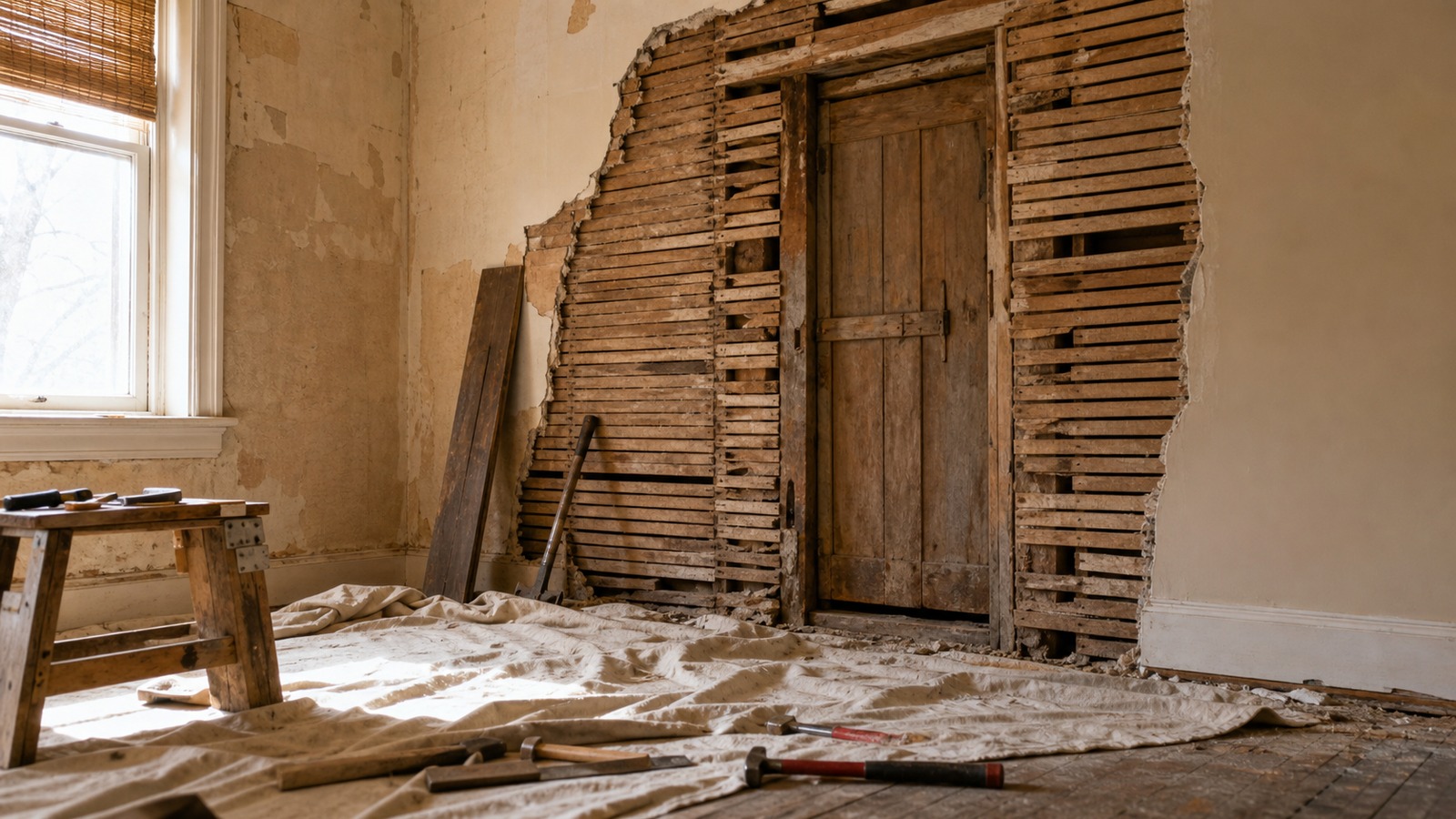
Where Practicality Meets Intrigue
Secret doors are no longer reserved for castles, speakeasies, or cinematic hideaways. In today’s homes, they are becoming a refined architectural feature—especially in mudrooms and side entrances, where function and flow matter most. These transitional spaces are hardworking zones, managing coats, boots, backpacks, pet gear, and daily clutter. Integrating a secret door into this environment elevates the design while preserving order and surprise. Secret doors for mudrooms and side entrances are about more than novelty. They streamline circulation, conceal storage, improve security, and create a seamless visual experience from exterior to interior. Whether hidden within custom cabinetry, disguised as a paneled wall, or masked behind vertical slats and shiplap, these doors blend into the architecture with quiet confidence. The result is a home that feels intentional, efficient, and just a little bit magical.
A: Costs range from DIY builds to custom millwork systems.
A: Yes, with proper framing and finish continuity.
A: Reinforced frames and smart locks enhance security.
A: Paint-matched panels, slats, or shiplap.
A: Yes, with weatherproof hardware and seals.
A: Add acoustic seals and solid-core construction.
A: Simple installs may take hours; custom builds take longer.
A: Concealed or pivot hardware is recommended.
A: Possibly, depending on structural changes.
A: Yes, motion-activated LED strips are popular.
The Rise of Concealed Entry Design
Modern homeowners are embracing minimalist aesthetics, clean lines, and concealed storage solutions. As mudrooms evolve into curated design features rather than afterthoughts, hidden door systems align perfectly with this philosophy. A flush-mounted door that disappears into wall paneling or millwork creates visual calm in a space that is typically busy. Side entrances also benefit from concealed transitions. These doors can hide access to utility rooms, home offices, laundry zones, or secure storage. Instead of a corridor cluttered with visible doors, homeowners enjoy an uninterrupted wall plane that enhances both style and functionality. In open-concept layouts, this design strategy preserves sightlines while subtly directing traffic. The growing interest in smart home technology further supports this trend. Magnetic latches, soft-close hinges, and discreet electronic access controls allow secret doors to function smoothly without visible handles or knobs. Technology becomes invisible, reinforcing the illusion.
Why Mudrooms Are Ideal for Secret Doors
Mudrooms naturally invite concealment. They often include built-in lockers, cubbies, bench seating, and vertical storage walls. Integrating a secret door within this millwork feels organic. A section of beadboard, vertical shiplap, or painted paneling can pivot open to reveal a pantry, a secondary hallway, or even a hidden drop zone for valuables.
Because mudrooms sit between exterior and interior zones, they offer strategic access points. A concealed door can provide discreet entry into the main house while maintaining security from the outside. In households with children or pets, hidden doors can limit access to certain rooms without creating an obvious barrier. From a design perspective, mudrooms benefit from texture—wood slats, metal hooks, tile accents, and painted finishes. Secret doors can adopt these same materials, ensuring they blend seamlessly into the surrounding architecture. When reveals are tight and hardware concealed, even close inspection won’t immediately reveal the hidden passage.
Smart Transitions in Side Entrances
Side entrances often connect garages, gardens, and driveways to the home. These secondary entry points are practical yet frequently overlooked in design. Introducing a secret door transforms this area from purely utilitarian to architecturally engaging.
For example, a side entrance wall clad in vertical wood slats can conceal access to a workshop or tool storage room. A mirror-faced panel might hide a security closet or smart-home control hub. The illusion works best when the door aligns perfectly with surrounding materials, maintaining consistent grain direction, paint color, and shadow lines. In smaller homes, side entrance secret doors can maximize spatial efficiency. Instead of allocating wall space to multiple visible doors, a single continuous wall can conceal multiple openings. This strategy keeps narrow corridors feeling open and cohesive.
Design Styles That Disappear Beautifully
Flush panel systems remain a favorite for secret doors in mudrooms. These doors sit perfectly aligned with the wall surface, using concealed hinges or pivot systems. Once painted the same color as the wall, they nearly vanish. For homes with a more traditional aesthetic, paneled millwork doors can be crafted to mirror surrounding cabinetry. Slat wall camouflage is another popular option. Vertical wooden slats add depth and texture while cleverly masking the door seam. Because the slats create natural lines, the door’s outline becomes almost undetectable. This approach works exceptionally well in contemporary and Scandinavian-inspired interiors.
Shiplap and beadboard are equally effective disguises. The repetitive pattern distracts the eye from subtle reveals. In farmhouse-style homes, these finishes offer charm while maintaining secrecy. For those seeking drama, hidden bookshelf doors remain timeless. In a mudroom setting, shelving can store hats, gloves, and decor items while concealing access to an adjacent room. Lightweight construction and reinforced framing ensure functionality without sacrificing illusion.
Hardware That Makes the Magic Happen
Behind every secret door is a carefully engineered hardware system. Concealed hinges allow doors to swing open without visible hardware. Pivot hinges, mounted at the top and bottom of the door, are ideal for heavier panels or floor-to-ceiling designs. These systems provide smooth movement and a premium feel. Magnetic latches and touch-release mechanisms eliminate the need for visible handles. A gentle push opens the door, preserving a clean façade. For added sophistication, soft-close dampers prevent abrupt slamming and protect surrounding finishes. In side entrances that require additional security, electronic locks or discreet keypad systems can be integrated within the concealed design. Modern solutions allow for smartphone activation, ensuring convenience without compromising the hidden aesthetic. Weatherproofing is essential for exterior-adjacent secret doors. Proper gaskets, thresholds, and insulation prevent drafts and moisture intrusion. The illusion may be subtle, but performance must remain robust.
Security Benefits Beyond Concealment
Secret doors offer an additional layer of security by reducing visibility. While concealment alone is not a substitute for strong locks and reinforced frames, it does deter casual intrusion. In mudrooms connected to garages, a hidden door can provide secure access to interior living spaces.
Homeowners often use concealed doors to protect valuables, secure equipment, or create controlled access areas. The key is balancing stealth with compliance. Building codes require safe egress routes, and concealed doors must not obstruct required exits. When thoughtfully designed, secret doors enhance both safety and discretion. Smoke detectors, carbon monoxide alarms, and accessibility considerations must remain unobstructed. Safety always takes priority over novelty.
Acoustic and Environmental Considerations
Mudrooms can be noisy, especially when connected to garages or outdoor areas. Secret doors designed with acoustic seals and proper gasketing can reduce sound transfer. Solid-core construction increases mass and improves performance. Insulation also plays a role. Exterior-adjacent secret doors must be properly insulated to prevent heat loss. High-quality seals ensure the hidden entry performs as effectively as a traditional door. Moisture management is equally critical. Side entrances often encounter rain, snow, or humidity. Weather-resistant materials and finishes help preserve durability while maintaining the concealed effect.
The Craftsmanship Factor
Precision is everything in secret door installation. Even a millimeter-wide misalignment can compromise the illusion. Framers must account for structural loads, especially when supporting heavy pivot doors. Blocking and header sizing should be carefully planned.
Finish continuity is equally important. Paint colors must match exactly. Wood grain should align. Wallpaper patterns must wrap seamlessly across the door surface. Attention to these details separates an average hidden door from a masterful one. Lighting can also enhance the reveal. Subtle LED strips triggered by motion sensors create a cinematic effect without exposing hardware. When the door opens, the experience feels intentional and elevated.
Future Trends in Hidden Entry Design
As smart homes become more integrated, secret doors will continue evolving. Biometric access systems and sensor-based triggers are gaining popularity. Homeowners increasingly value both privacy and architectural refinement. Sustainable materials are also shaping the industry. Eco-friendly finishes, responsibly sourced wood, and energy-efficient insulation contribute to performance without compromising aesthetics.
Custom millwork remains at the forefront of this movement. Designers are treating mudrooms as design statements rather than transitional spaces. Hidden doors become part of a cohesive architectural story.
Bringing Mystery Home
Secret doors for mudrooms and side entrances combine practicality, security, and design intrigue. They streamline clutter, enhance flow, and introduce an element of surprise to everyday routines. From flush panel systems to slat wall disguises, the possibilities are expansive. When thoughtfully executed, a concealed door does more than hide a room. It transforms the entry experience. Guests notice the craftsmanship. Homeowners enjoy the efficiency. And daily life gains a subtle sense of wonder. In a world where homes are expected to do more—store more, secure more, and inspire more—secret doors represent a quiet revolution. They remind us that architecture can still surprise, even in the most practical corners of our homes.