
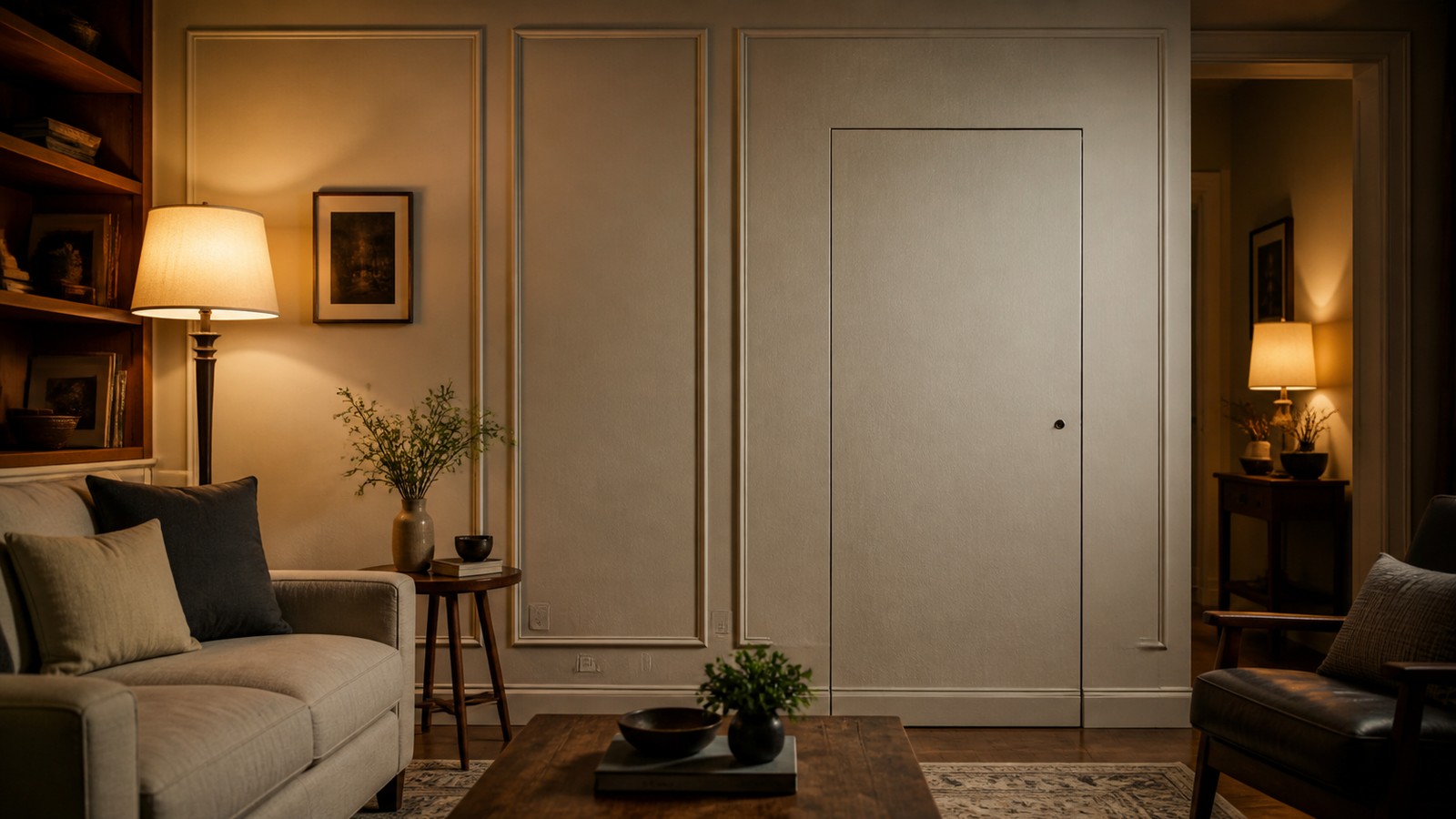
Invisible Doors Make the Screen Feel Bigger
Invisible doors in movies and TV shows work because they suggest that the set has another life beyond what the camera first reveals. A flat wall, cabinet face, mirror, bookcase, or paneled hallway can suddenly become a passage, and that change makes the fictional world feel deeper. The audience learns that the room was never only a room; it was also a puzzle, a hiding place, a route, or a test of who knows what. This is why invisible doors appear across mysteries, comedies, thrillers, superhero stories, fantasy shows, and prestige dramas. They offer a practical screen trick with a surprisingly emotional result: the viewer feels invited behind the visible scene.
A: They turn an ordinary surface into a visual discovery the audience can understand instantly.
A: Many use practical set pieces, though modern productions often blend carpentry with digital cleanup.
A: The set gives subtle clues that become visible once the audience knows where to look.
A: Recurring sets let shows surprise viewers by changing a space they already know.
A: Yes, comedy often uses the sudden opening for timing, embarrassment, or absurd contrast.
A: Continuity across the wall surface usually matters more than a complicated mechanism.
A: They can, but the strongest reveals still need physical weight and spatial logic.
A: A hidden threshold makes the fictional world feel larger than the frame.
A: Yes, especially the emphasis on flush surfaces, aligned trim, and purposeful destinations.
A: A door that opens to nowhere plausible or exists only for a quick trick feels less satisfying.
The Reveal Depends on What the Audience Misses
A screen invisible door begins with misdirection. The set must look complete enough that viewers do not keep staring at the wall, yet detailed enough that the reveal feels fair once it happens. The trick is not simply hiding an opening. It is teaching the audience to accept a surface as ordinary until the story needs that surface to change.
That is why many memorable reveals happen after a character has crossed the room more than once. The space becomes familiar, then the familiar space breaks open. The moment lands because the viewer had time to trust the wrong thing.
Set Design Turns Walls Into Story Clues
Film and television designers use invisible doors as part of a larger visual grammar. A wall may be broken by vertical battens, wallpaper repeats, shelves, shadow lines, or decorative panels so the concealed seam has somewhere to hide. The set still has to photograph well from multiple angles, which makes the illusion more complicated than it looks.
The best versions do not scream for attention. They sit quietly inside the composition until a hand touches a molding, a shelf swings away, or a whole section of wall glides open. When the reveal arrives, earlier design choices become clues rather than decoration.
This gives invisible doors a rare double function. They help the production crew solve staging problems, and they help the story deliver discovery. The physical craft and narrative beat meet at the same threshold.
Television Uses Invisible Doors for Rhythm
In television, invisible doors often become part of a show’s pace. A sitcom may use one for a quick joke, a mystery series may use it for a clue, and a serialized thriller may use it to introduce a hidden room that reshapes the season. Because viewers return to the same sets repeatedly, a late reveal can make a familiar location feel newly charged.
Genres Change the Meaning of the Hidden Threshold
The same invisible door can mean different things depending on genre. In a mystery, it may signal withheld evidence. In a spy story, it may imply controlled access. In a fantasy show, it may feel like a portal between ordinary life and enchantment. In a family comedy, it may simply be the entrance to a ridiculous secret hobby.
This flexibility is part of the appeal. Invisible doors are not locked to one mood. They can be elegant, funny, ominous, romantic, absurd, or awe-inspiring, depending on how the camera frames the discovery and how the characters react.
Why the Door Must Still Make Spatial Sense
Audiences forgive a lot of theatricality, but a hidden screen door works better when it respects the room around it. The passage should seem to lead somewhere plausible. If the door appears in a thin wall with no possible depth behind it, the illusion may feel like a cheap trick unless the production is intentionally surreal.
Spatial logic also affects suspense. Viewers want to know whether the hidden route lets a character overhear a conversation, escape danger, enter a forbidden room, or hide in plain sight. The invisible door is strongest when its location affects the plot instead of serving only as a visual surprise.
This is why production designers often build the surrounding set with hints of circulation. A secondary corridor, a thick wall, a fireplace mass, or an oversized cabinet can make the hidden threshold feel possible. The audience may not analyze those details consciously, but they help the reveal feel grounded.
Home Viewers Bring the Idea Back to Design
Movies and TV shows have shaped how homeowners imagine invisible doors. A viewer may not want a spy lair, but they may want the same pleasure of a clean wall that opens to a pantry, office, closet, or media room. Screen design turns the invisible door into both a fantasy and a design reference.
The Best Examples Reward a Second Look
A well-designed invisible door gets better when watched again. The viewer notices a hinge line, an unusually deep shelf, a repeated panel, a character’s glance, or a camera angle that carefully avoids showing the edge too early. The scene becomes more satisfying because the trick was prepared, not simply sprung.
That second-watch quality is important. It means the invisible door was part of the language of the scene. The reveal changes what came before and encourages viewers to read the room with more attention.
Digital Effects Changed the Illusion
Older screen doors relied heavily on practical carpentry, breakaway sets, mechanical slides, and clever editing. Those techniques still matter, but digital effects have made the surfaces smoother and the transformations more impossible. A wall can dissolve, reconfigure, or expose a glowing passage without showing the engineering that would make it work.
The danger is that digital perfection can reduce tactile pleasure. A practical invisible door has weight, friction, shadow, and scale. The viewer senses that an actor is touching something real. When digital surfaces feel too effortless, the reveal may look expensive but less satisfying.
The strongest modern scenes often blend both approaches. A real panel gives the actor something to handle, while visual effects extend the movement or hide the mechanism. The result keeps the physical credibility of a set and the spectacle of contemporary production.
Small Details Make the Door Believable
Believability often comes from small choices: a flush baseboard, a continuous wallpaper pattern, a concealed pull, a matching grain direction, or a shadow line hidden inside an existing trim detail. These details are easy to miss, which is exactly why they work.
They also reveal how much labor sits behind a quick screen moment. The audience sees a wall open in seconds. The crew has already solved framing, carpentry, lighting, sound, blocking, safety, and continuity.
Why the Motif Lasts
Invisible doors remain popular on screen because they make discovery visual. Instead of explaining that a character has access to hidden knowledge, the story can show a surface becoming a threshold. The room changes, and the audience understands the power shift immediately.
The motif also flatters the viewer’s curiosity. It says there may be another layer to the scene, another way through the story, another answer behind the surface. That promise is simple, but it rarely gets old.
For design-minded viewers, screen invisible doors offer a bonus pleasure. They turn ordinary walls into active architecture and remind us that a room can be calm and surprising at the same time. The best examples do not just hide a door. They make the visible world feel incomplete in the most entertaining way.
How Directors Keep the Reveal From Feeling Cheap
A screen reveal feels stronger when the director lets the room breathe before the door opens. Viewers need a little time to accept the wall, shelf, or cabinet as part of the normal setting. If the camera points too insistently at the surface, the audience gets ahead of the scene; if it avoids the surface entirely, the reveal can feel unfair. The best direction sits between those extremes, allowing the hidden threshold to become visible only after the story has earned the change.
Reaction shots also matter. A character who is not surprised can make the door feel routine inside the world, while another character’s shock tells the audience that a boundary has been crossed. The same opening can feel comic, threatening, romantic, or heroic depending on whose face the camera chooses after the wall moves.
Practical Limits Often Improve the Moment
Practical set limitations can make invisible doors more satisfying. A real door has weight, clearance, speed, and sound, and those limits help viewers believe the surface belongs to an actual room. When a production embraces those constraints instead of smoothing them away completely, the reveal gains texture. The door feels touched, not merely rendered.
What Home Design Borrowers Should Notice
People who love invisible doors on screen often focus on the surprise, but the better lesson is integration. The wall works because trim, panels, furniture, lighting, and destination all support one idea. A homeowner borrowing the effect should begin with a useful room and then decide how calmly the opening can disappear into the existing architecture.
That translation is different from copying a film set. A set can cheat depth, avoid daily wear, and control every camera angle. A real invisible door has to survive groceries, children, guests, humidity, cleaning, and repeated use. The screen fantasy becomes better at home when it is made quieter, safer, and more durable.
The most useful screen lesson is therefore restraint. The audience remembers the opening, but the set succeeds because the door was invisible before the reveal. Good residential design works the same way: the hidden threshold should not demand attention every time someone enters the room.
The Rewatch Value Is the Real Trick
Invisible doors endure in movies and television because they improve the second viewing. Once the viewer knows the secret, the scene becomes a small design puzzle. Every glance, shadow, blocking choice, and prop placement can be reread as preparation for the reveal.
That layered pleasure is rare. Many surprises shrink after the first viewing, but a well-built invisible door can become more interesting because the craft becomes visible. The surface still hides the door inside the story, while the viewer begins to see how carefully the moment was made.
The Lasting Lesson Is Attention
The most useful thing movies and television teach about invisible doors is that attention changes a room. The first viewing belongs to story; the second viewing belongs to design. A viewer who starts noticing panel breaks, camera blocking, trim alignment, and character movement can see how much quiet preparation sits behind a reveal that lasts only seconds. That awareness makes the invisible door more than a trick. It becomes a reminder that good rooms, on screen and at home, can reward careful looking without shouting for attention.
Why the Motif Keeps Crossing Media
The same screen language now shapes streaming dramas, sitcoms, prestige mysteries, children’s shows, and home-renovation fantasies. Invisible doors keep crossing formats because they give any scene a clean before-and-after moment. First the surface is ordinary; then it becomes access.
That simplicity is durable. Even when viewers know the trope, they still enjoy the instant when a room admits it has been hiding another layer. It turns attention into entertainment.


