Concealed Doors Turn Access Into Meaning
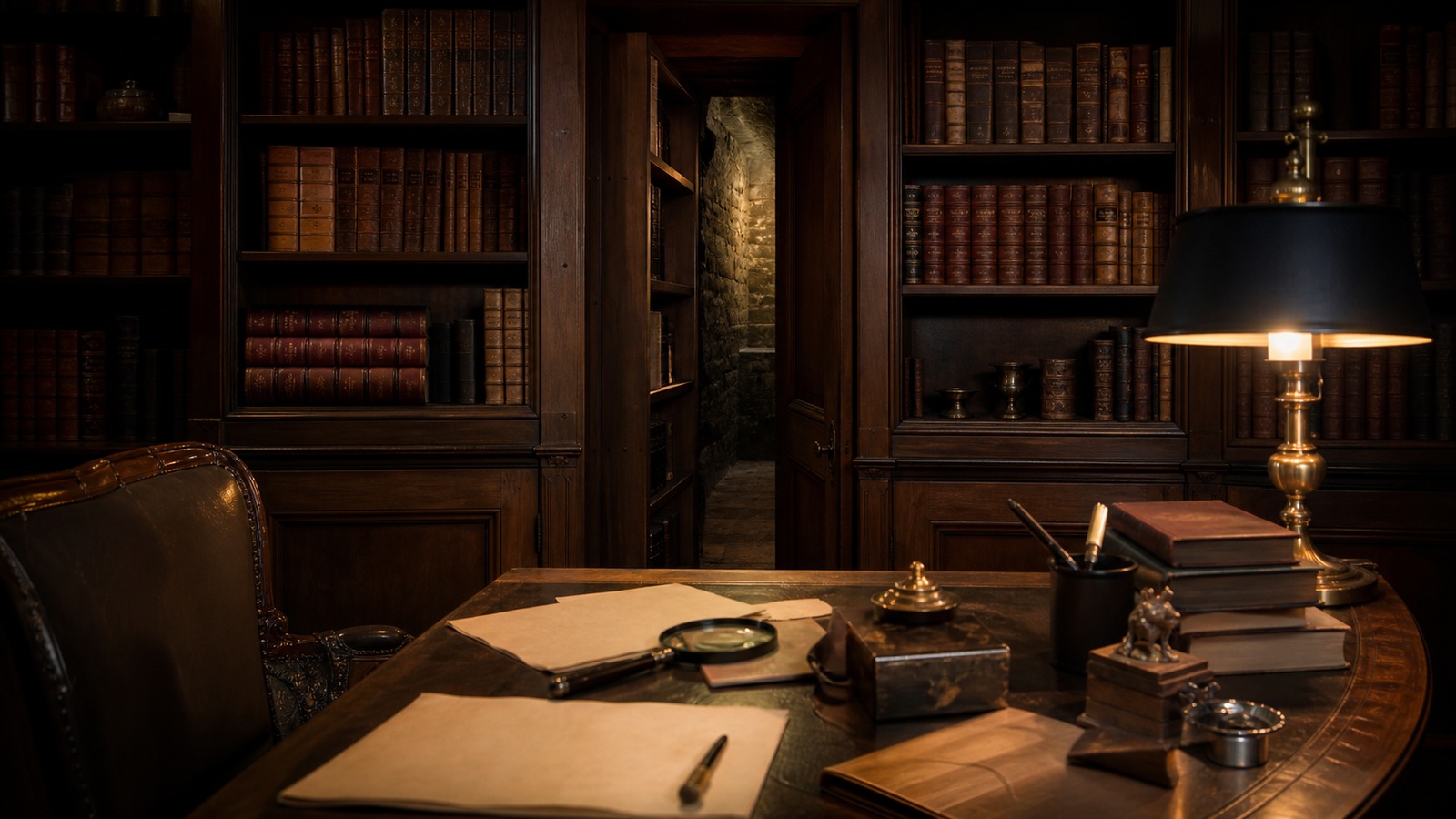
Concealed doors symbolize power and mystery because they do more than hide an opening. They decide who knows, who enters, who waits outside, and what remains unseen. A hidden door can protect privacy, preserve a secret, stage a reveal, or make ordinary architecture feel charged with possibility. It can suggest wealth, danger, knowledge, authority, play, safety, or forbidden access depending on the setting. The concealed door is a simple object with unusually rich symbolic force: it turns the act of entry into a question about power.
A: They control access and divide those who know from those who do not.
A: They offer partial knowledge and suggest more space beyond the visible room.
A: Yes, it can protect privacy, safety, collections, refuge, or focused work.
A: It feels threatening when access seems unequal, secretive, or unaccountable.
A: They create a clear reveal and move characters into a deeper layer of the plot.
A: Luxury often uses concealment to control clutter, service movement, and visual order.
A: They make entry feel prepared, meaningful, and transformative.
A: Yes, homes and hospitality spaces often use them for delight and surprise.
A: It joins curiosity, access, secrecy, and movement in one simple image.
A: What lies beyond the surface, and who is allowed to enter?
Access Is the Root of Power
Power often begins with access: access to rooms, records, leaders, resources, rituals, decisions, or information. A concealed door makes that access visible by hiding it. The person who knows the threshold has an advantage over the person who sees only a wall.
This is why hidden doors appear in stories about rulers, spies, secret societies, temples, libraries, estates, and fortresses. They dramatize the difference between public space and controlled space. The door becomes a symbol of selective knowledge.
Even when the real purpose is practical, the symbolism remains. A private route suggests that the building has layers of authority.
The concealed door turns hierarchy into architecture.
Mystery Begins With Partial Knowledge
A door is mysterious when people know enough to wonder but not enough to understand. Concealment creates that partial knowledge. A seam, rumor, panel, handle, or blocked route hints that something exists beyond the visible room.
Insiders and Outsiders Are Defined at the Threshold
Concealed doors divide people into those who know and those who do not. That division can be playful in a home, practical in a museum, solemn in a ritual space, or threatening in a political thriller. The threshold gives social difference a physical form.
Insider knowledge can feel powerful even when the room beyond is ordinary. Knowing where the door is changes how a person sees the wall. The architecture becomes a shared secret.
This is why hidden doors often create delight. They let people feel, briefly, that the world has admitted them into another layer.
Secrecy Can Protect or Exclude
A concealed door can protect something valuable: a person, collection, refuge, workspace, or memory. It can also exclude unfairly, hide wrongdoing, or display status. The same architectural gesture can feel comforting or suspicious depending on context.
That ambiguity gives the symbol depth. A hidden door is not automatically good or bad. It asks why access is controlled and who benefits from that control.
Storytelling Loves the Reveal
Few architectural moments are as satisfying as a wall opening unexpectedly. The reveal changes the room instantly. What looked complete becomes incomplete, and the viewer must revise their understanding of the space.
Stories love this because it creates a clean turning point. A character discovers the door, crosses the threshold, and enters a new layer of the plot. The physical movement mirrors a change in knowledge.
The concealed door is therefore a narrative machine. It stores surprise inside a wall.
That surprise can be comic, romantic, frightening, sacred, or strategic.
The mechanism is simple, but the emotional range is wide.
Luxury Uses Concealment as Control
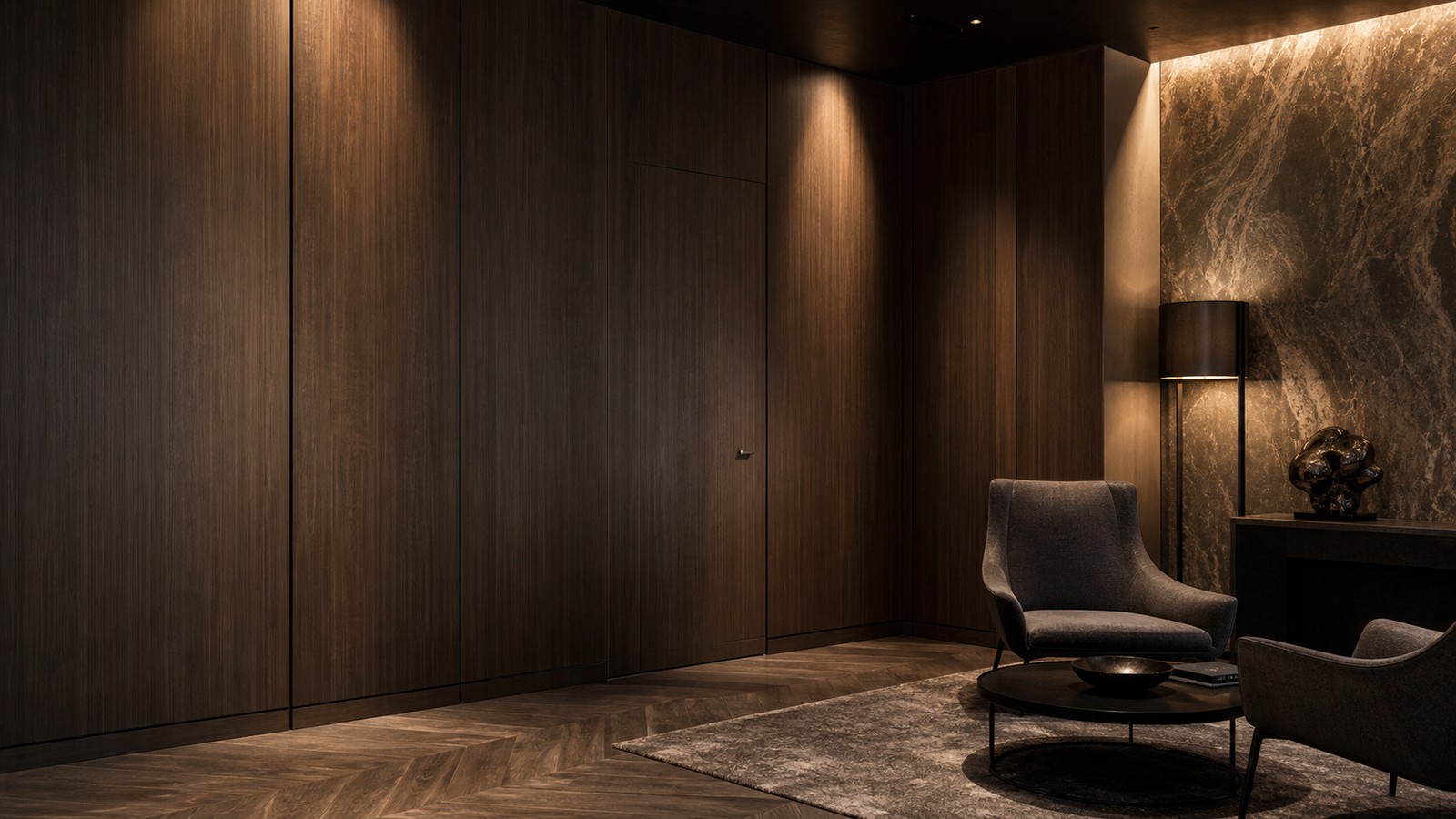
In luxury interiors, concealed doors often signal control over clutter, staff movement, private rooms, storage, and visual order. The owner can make practical functions disappear. Smoothness becomes a sign of power over space.
Ritual Thresholds Feel Stronger When Hidden
In sacred or ceremonial settings, a concealed or restricted door can heighten reverence. The route is not casual. The hidden threshold implies preparation, permission, and a change in behavior.
This symbolic pattern appears in temples, lodges, initiation stories, theaters, and private ceremonial rooms. The entrance matters because crossing it changes the participant’s role.
Concealment gives the threshold weight. It says that entry is not just movement; it is transition.
The hidden door turns arrival into ritual.
Mystery Depends on Restraint
A concealed door loses some of its magic when everything is explained immediately. Mystery needs restraint: a hint, a pause, a question, a partial view. The best hidden doors understand timing.
This is true in design as well as fiction. A subtle seam or carefully integrated panel can be more compelling than an obvious novelty door because it lets discovery happen gradually.
Control of Sight Shapes Control of Space
Concealed doors control what can be seen. They hide rooms, routes, storage, labor, danger, or refuge. By controlling sight, they control expectation. A person behaves differently in a room that seems complete than in one known to contain hidden access.
This control of sight is one reason hidden doors feel powerful. They remind us that architecture can edit perception. The wall is not just a boundary; it is a story the room tells about itself.
When the story changes, the viewer’s relationship to the room changes too.
Playfulness Softens the Symbol
Not every concealed door is solemn. In homes, game rooms, children’s spaces, libraries, and hospitality settings, a hidden door can symbolize play. It turns the room into a secret shared between designer and user.
Fear Enters When Access Feels Unequal
The same hidden door that feels playful to insiders can feel threatening to outsiders. If access appears unfair, unaccountable, or tied to power, mystery turns into suspicion. The symbol changes with social position.
This is why concealed doors carry political and cultural charge. They ask who gets to move unseen and who is left guessing. The architecture becomes a metaphor for unequal knowledge.
That metaphor is strong because everyone understands doors. Everyone knows what it means to be allowed in or kept out.
The concealed version sharpens that feeling.
It makes exclusion look intentional.
Hidden Knowledge Feels Like Status
Knowing where the concealed door is can feel like possession of a secret. Even before the room is entered, knowledge itself becomes status. The wall looks different to the person who understands it.
The Wall Becomes a Social Boundary
A concealed door transforms a wall from a passive surface into an active social boundary. It no longer only divides space; it divides awareness. Some people see a room ending, while others see a route continuing.
That split is why hidden doors can feel powerful in homes, institutions, clubs, myths, and films. The boundary is both physical and social. It separates movement and knowledge at the same time.
The symbol works because it makes inequality visible through perception.
Mystery Needs Someone Outside
A concealed door is mysterious only because someone does not know it is there. Mystery depends on the outsider’s perspective. Once everyone knows the route, the door may still be beautiful, but its symbolic charge changes.
This is why reveals matter. The moment of discovery turns an outsider, however briefly, into an insider.
Power Can Be Protective or Possessive
The power symbolized by a hidden door can protect. It may shield a vulnerable person, a fragile collection, a private room, or a place of refuge. In that case, access control serves care.
The same symbol can also feel possessive. It may suggest hoarding, exclusion, surveillance, or privilege. The door does not decide the moral meaning by itself; the social context does.
This ambiguity is why concealed doors remain so rich. They are never only architectural jokes. They carry questions about what should be protected and what should be shared.
The mystery deepens when those questions cannot be answered easily.
Delight Depends on Trust
A playful hidden door works because the user trusts the setting. In a library, home, or themed hotel, concealment can feel generous. In a context of fear or exclusion, the same gesture may feel threatening.
The Symbol Works Because It Is Bodily
Concealed doors symbolize power and mystery through the body. Someone pushes, pulls, turns, steps through, ducks, descends, or crosses. The idea of access becomes physical.
That physicality makes the symbol easier to remember. Power is no longer an abstract system; it is a route the body can take or be denied.
The hidden door remains compelling because it lets people feel meaning as movement.
The Symbol Endures Because It Is Simple
A concealed door symbolizes power and mystery because it combines two basic human experiences: wanting to know and wanting to enter. It turns curiosity into a physical action. It makes secrecy visible at the moment secrecy breaks.
That simplicity explains its endurance. Across castles, bunkers, homes, myths, films, libraries, museums, and future interiors, the hidden door keeps asking the same question: what lies beyond the surface, and who is allowed to find out?
The question is simple enough for a child and deep enough for a culture. It can power a bedtime story, a palace rumor, a museum tour, a thriller, or a philosophical argument about access. Few architectural features move so easily between play and seriousness.
That range gives concealed doors their unusual emotional life. They can make people smile, shiver, suspect, remember, or feel chosen. The same hinge can carry delight in one room and dread in another.
The symbol also endures because it respects the imagination. It does not show everything at once. It leaves a surface intact long enough for the viewer to wonder, then changes the meaning of that surface when the opening is found.
In that moment, architecture becomes revelation. The wall was not a wall only; the room was not complete; the person looking did not know everything. That is a powerful experience in miniature.
Concealed doors symbolize power and mystery because they make hidden possibility tangible. They turn the unseen into a threshold and invite us to ask who controls the passage.
That question can be playful, political, spiritual, domestic, or cinematic. In every version, the door gathers attention because it seems to hold more than space. It holds permission, timing, knowledge, and the chance to cross from one condition into another.
The symbol endures because people never stop negotiating those conditions. We want privacy and openness, safety and discovery, control and surprise. A concealed door contains those tensions in a form the body understands immediately.
That bodily understanding is why the image works across cultures and eras. A person does not need a lesson in symbolism to feel the charge of a wall becoming a passage. The meaning arrives through motion.
In the end, concealed doors symbolize power and mystery because they compress a social drama into a physical act. Someone knows, someone does not, something is hidden, and the surface may open. That is enough to keep the imagination returning to the threshold. The symbol stays alive because every generation has its own hidden rooms, its own guarded knowledge, and its own desire to discover what the wall has been keeping just out of sight. The concealed door makes that desire architectural, immediate, and unforgettable, while reminding us that access is never only about space. It is also about trust, timing, and permission, and about who gets invited across when the surface finally opens into another layer of meaning and memory that changes the room and the person entering it, even if only in imagination and story for a moment of wonder that lingers afterward in the reader’s mind.