Concealed doors have evolved from secret passageways of old castles into sophisticated architectural features found in modern homes, historic renovations, and luxury interiors. Whether you’re hiding a private office, a panic room, a storage area, or simply adding a dramatic design element, a concealed door can transform an ordinary wall into something unexpected and memorable. The good news is that adding a concealed door to an existing wall is not only possible—it’s increasingly achievable with modern hardware, careful planning, and the right construction approach. This guide walks you through the complete process of adding a concealed door to an existing wall, from early design decisions to structural considerations, hardware choices, installation techniques, and finishing details. Whether you’re a skilled DIY builder or working with a contractor, understanding the process ensures the result looks intentional, seamless, and safe.
A: Most interior walls can be modified with proper framing.
A: Yes, structural changes should be engineered.
A: With flush alignment and matched finishes, yes.
A: It’s the easiest, but paneling and veneers work well.
A: Standard 2x4 walls are usually sufficient.
A: Yes, with added mass and concealed seals.
A: Simple retrofits take days; custom builds take longer.
A: Often yes if framing or structure is altered.
A: Poor framing precision.
A: Skilled DIYers can succeed, but pros deliver cleaner results.
Understanding What Makes a Door Truly Concealed
A concealed door is defined less by the door itself and more by how it disappears into its surroundings. Unlike traditional doors with visible frames, casing, hinges, and handles, concealed doors are designed to blend into the wall surface so completely that they appear to be part of the architecture.
True concealment relies on several key principles. The door must sit flush with the wall, align perfectly with surrounding surfaces, and use hidden hinges or pivot systems. Hardware must be either invisible or disguised, and finishes must match the wall seamlessly, whether that means paint, paneling, shelving, or decorative cladding. When executed properly, a concealed door does not announce itself—it reveals itself only when you know where to look.
Evaluating Your Existing Wall
Before any construction begins, the most important step is determining whether your existing wall can accommodate a concealed door. This evaluation influences everything from cost to complexity to safety.
The first distinction is whether the wall is load-bearing or non-load-bearing. A non-load-bearing wall is far easier to modify, as it supports only its own weight. Load-bearing walls, on the other hand, carry structural loads from floors or roofs above. Installing a concealed door in a load-bearing wall is possible, but it requires proper headers, framing reinforcement, and often professional engineering input.
Wall thickness is another critical factor. Standard interior walls are typically framed with 2×4 studs, creating a finished thickness of about 4½ inches. This can accommodate many concealed door systems, but thicker walls offer more flexibility for hardware, soundproofing, or specialty finishes. Electrical wiring, plumbing, and HVAC lines must also be identified and rerouted if they pass through the planned doorway location.
Choosing the Right Type of Concealed Door
Not all concealed doors operate the same way, and the type you choose should reflect both functional needs and design goals.
Flush hinged concealed doors are the most common option for residential interiors. These doors swing open like traditional doors but use concealed hinges and frameless jamb systems to eliminate visible trim. They work well for bedrooms, offices, and hidden rooms where conventional access is needed without visual disruption.
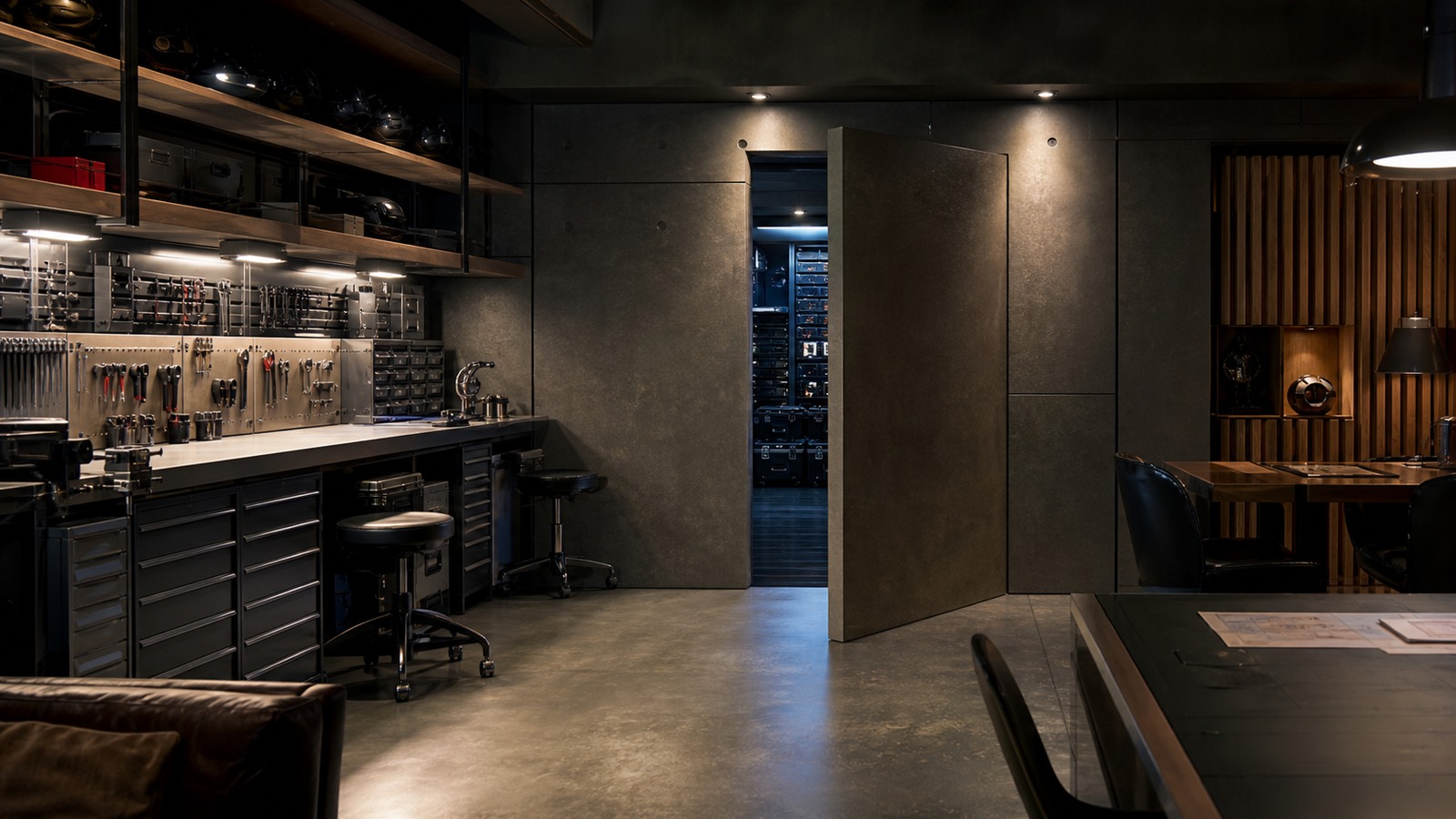
Pivot doors rotate on a pivot point rather than side hinges. They create a dramatic effect and can support heavier materials, making them ideal for large panels, stone cladding, or bookcase doors. Pivot systems require precise installation and adequate wall depth but offer exceptional concealment when closed.
Sliding concealed doors are useful when swing clearance is limited. These doors may slide into wall pockets or along concealed tracks. While slightly harder to fully disguise, modern sliding systems can be integrated behind panels, artwork, or shelving.
Disguised functional doors, such as bookcase doors, mirror doors, or panel-matched doors, intentionally camouflage the opening by adding another function or visual layer. These are popular choices when total invisibility isn’t necessary, but visual misdirection is desired.
Planning the Door Opening and Layout
Precise planning determines whether your concealed door feels professional or improvised. Measurements must be exact, and alignment with surrounding architectural elements is essential.
The door opening should be placed where wall seams, panel lines, or architectural rhythms already exist. Aligning the concealed door with existing panel divisions or millwork joints helps prevent telltale outlines. Ceiling height also matters; full-height concealed doors that run from floor to ceiling are more convincing than standard-height doors because they eliminate the visual break of a header.
Swing direction must be carefully considered. The door should open smoothly without interference from furniture, light switches, or adjacent walls. In concealed applications, outward-opening doors are often preferred because they reduce visible gaps when closed.
Framing the Opening in an Existing Wall
Once planning is complete, the wall must be opened and reframed to support the concealed door system. This is the most invasive part of the process and often the point where professional help becomes valuable.
Drywall or plaster is removed to expose the framing. Studs within the door opening are cut and replaced with a framed rough opening sized to the concealed door system’s specifications. In load-bearing walls, a properly sized header must be installed to transfer weight around the opening. Precision is critical during framing. Even slight deviations can cause alignment problems that prevent the door from sitting flush. Concealed doors are far less forgiving than traditional doors, and uneven framing can lead to visible gaps, binding, or uneven reveals.
Selecting Concealed Door Hardware
The hardware you choose largely determines how invisible and durable your concealed door will be. Modern concealed door systems integrate frames, hinges, and mounting hardware into a unified design that disappears once installed.
Concealed hinge systems are designed to sit entirely within the door and frame, allowing the door to close flush without visible knuckles or plates. These hinges often support adjustable alignment after installation, which is essential for achieving perfect reveals.
Frameless door systems replace traditional casing with recessed aluminum or steel frames that are plastered or mudded directly into the wall. Once finished, the frame becomes indistinguishable from the wall surface.
Latching mechanisms must also be discreet. Magnetic latches, push-to-open systems, or concealed mechanical latches allow the door to open without visible handles. In high-security applications, hidden locks or electronic access controls can be integrated without compromising the door’s appearance.
Installing the Door Slab
With framing and hardware in place, the door slab itself can be installed. The slab material should be selected based on the intended finish and weight capacity of the hardware.
Solid-core doors are commonly used for concealed installations because they provide rigidity, sound control, and durability. MDF or engineered wood slabs are ideal for painted finishes, while plywood cores may be better for veneered or panel-matched doors. During installation, the door must be perfectly plumb and level. Even minor misalignment becomes obvious when a door is meant to disappear into a wall. Most concealed hinge systems allow for fine-tuning after installation, but starting with precise placement ensures smoother adjustments.
Achieving a Seamless Finish
The finishing stage is where a concealed door truly becomes invisible. This step requires patience, craftsmanship, and attention to detail.
If the door is painted, the same paint, texture, and sheen must be applied to both the wall and the door surface. Even subtle differences in finish can reveal the door’s outline under certain lighting conditions. For drywall finishes, joint compound is feathered carefully along the frame to eliminate visible seams.
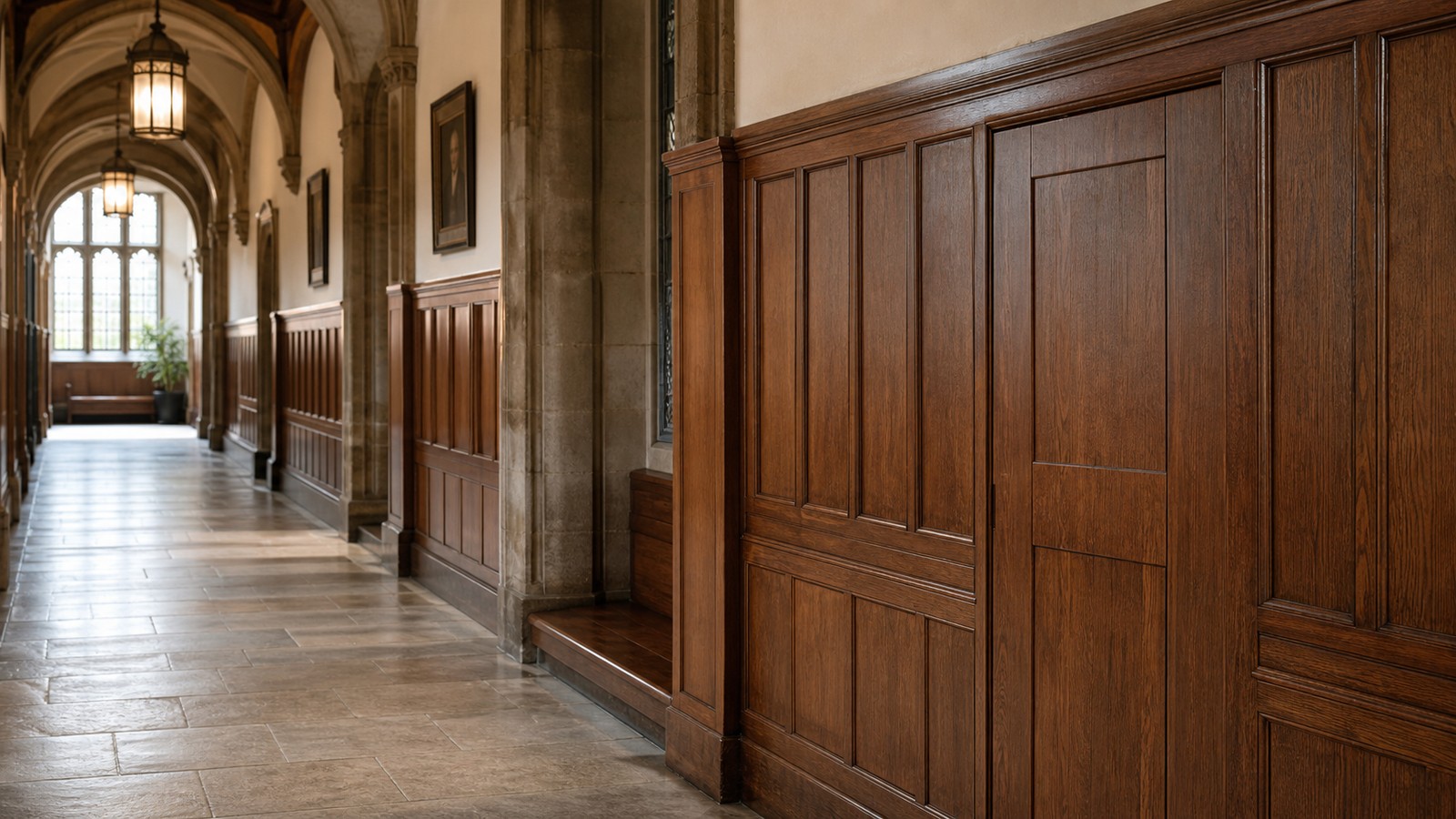
Paneling, wood slats, wallpaper, or textured finishes must align perfectly across the door surface. Patterns should continue uninterrupted when the door is closed. This often requires custom fabrication or on-site fitting to ensure perfect continuity. Shadow gaps around the door edges are intentionally minimal and uniform. These small reveals allow the door to move without scraping while maintaining the illusion of a solid wall.
Disguising the Door Mechanism
A concealed door is only convincing if the opening method remains subtle. Traditional handles immediately give away the presence of a door, so alternative solutions are preferred.
Push-to-open mechanisms allow the door to open with gentle pressure at a designated point. Touch latches, spring-loaded systems, or magnetic releases can all be hidden within the door edge or frame. In disguised doors such as bookcase or mirror installations, the handle may be integrated into the design itself. A shelf edge, decorative groove, or recessed finger pull can serve as a functional grip without drawing attention.
Safety and Code Considerations
While concealed doors are visually discreet, they must still comply with building codes and safety standards. This is especially important when the door provides access to occupied spaces.
Egress requirements may apply if the concealed door serves as an exit from a bedroom or habitable room. Fire ratings, smoke separation, and accessibility standards may also influence door construction and hardware selection.
For concealed doors used in panic rooms or secure areas, interior release mechanisms are essential. No concealed door should trap occupants without a reliable way to open it from the inside.
Common Mistakes to Avoid
Many concealed door projects fail not because of ambition, but because of overlooked details. One of the most common mistakes is underestimating the importance of precision. Concealed doors demand tighter tolerances than standard doors.
Another frequent error is mismatched finishes. Even the best hardware cannot compensate for inconsistent textures or paint sheen. Lighting should also be considered; directional light can highlight seams that remain invisible under diffuse lighting.
Finally, choosing hardware not rated for the door’s weight can lead to sagging over time. Concealed doors often carry heavier finishes, making proper load ratings essential for long-term performance.
Is This a DIY or Professional Project?
Adding a concealed door to an existing wall sits at the intersection of carpentry, drywall finishing, and architectural detailing. Skilled DIY builders can achieve excellent results, particularly in non-load-bearing walls with modern concealed door kits.
However, professional installation is often recommended for load-bearing walls, large pivot doors, or high-end finishes. Experienced installers understand how to anticipate settling, adjust reveals, and integrate finishes seamlessly.
The Transformational Impact of a Concealed Door
A concealed door does more than hide a room—it reshapes how a space feels and functions. It introduces mystery, sophistication, and intentional design into environments that might otherwise feel ordinary. In historic homes, concealed doors preserve architectural authenticity. In modern interiors, they reinforce clean lines and minimalist aesthetics.
When designed thoughtfully and executed precisely, a concealed door becomes one of those rare features that visitors remember long after they leave, even if they never realize exactly why.
Final Thoughts
Adding a concealed door to an existing wall is a rewarding architectural upgrade that blends craftsmanship, creativity, and engineering. By carefully evaluating your wall, choosing the right door type, investing in quality hardware, and prioritizing precision at every step, you can achieve a result that feels both magical and functional. Whether your goal is privacy, security, storage, or pure design intrigue, a concealed door offers a timeless solution—one that proves the most powerful architectural features are often the ones you don’t immediately see.