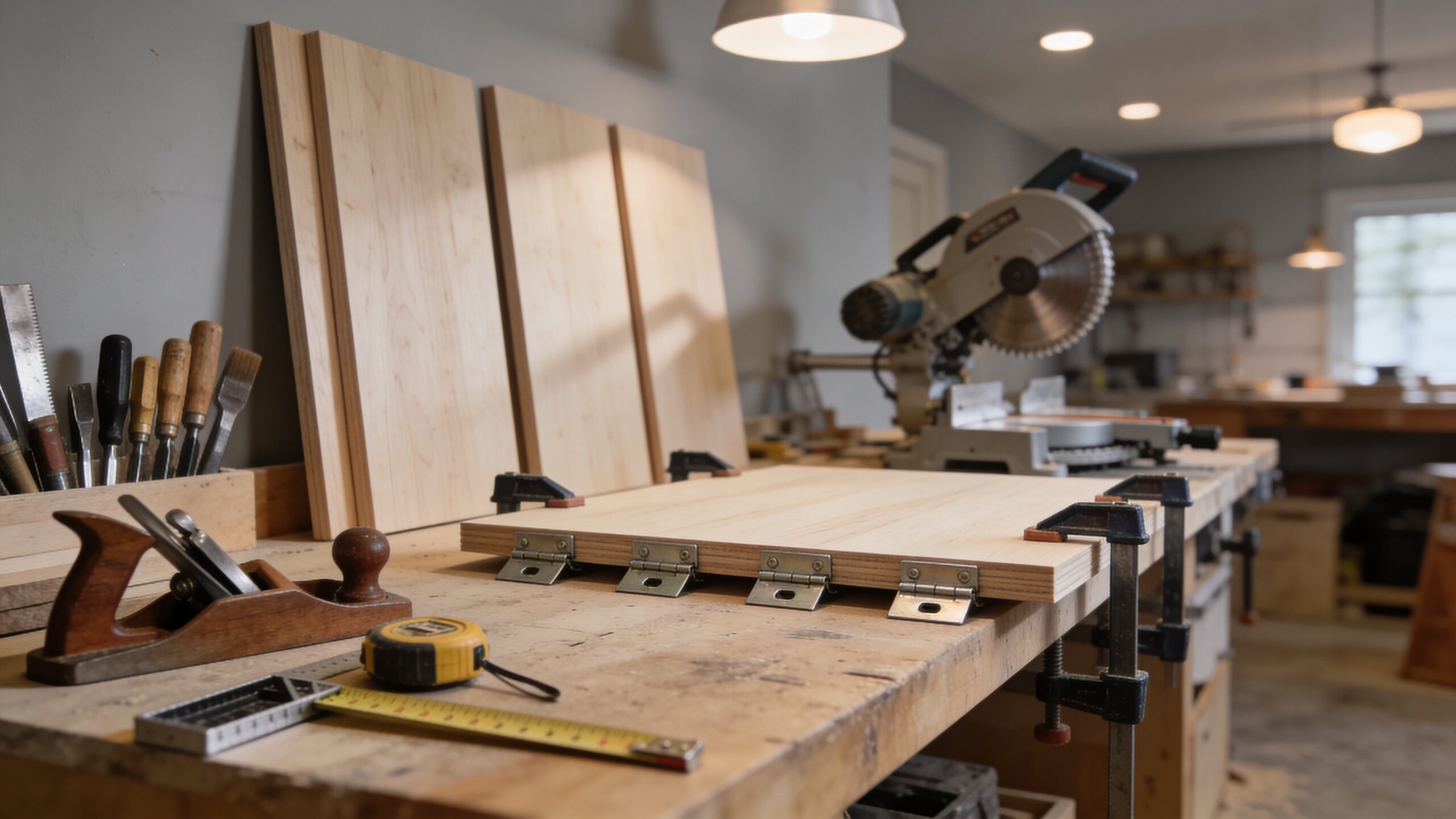
A hidden interior door is the ultimate blend of function and design—a piece of architecture that merges seamlessly into the wall, offering a sense of mystery and sophistication. Whether you’re concealing a private office, pantry, or storage space, building your own hidden door allows full control over materials, dimensions, and finish. The process requires careful planning, precision carpentry, and an eye for design continuity. Done correctly, the result is a door that disappears entirely until you decide to reveal it.
A: A flush swing door with concealed hinges and paint continuity—no casings, minimal parts.
A: Uniform 2–4 mm reveals, matched sheen, aligned slat/panel modules, and perimeter seals to kill light lines.
A: Pivots suit tall/heavy leaves and dramatic entries; concealed hinges excel at compact, everyday doors.
A: Yes—flush swing with trimless frame or a top-hung wall-glide slider with a removable valance.
A: MDF/LVL/engineered cores stay flat and accept skins; balance veneers to prevent warp.
A: Limit shelf load, distribute weight, widen pivot spread, and consider a floor guide or hidden caster.
A: Not entirely; add mass and seals. For isolation, consider a swing door with continuous gaskets.
A: Touch latches/edge pulls, color-matched trims, and recessed closers—avoid shiny metals.
A: Weekend for a basic flush build; 2–3 days with pivot, paneling, and finish work.
A: DIY hundreds for a paint-grade flush build; custom pivot/bookcase systems can reach several thousand.
Why Build a Hidden Door?
Hidden doors elevate both practicality and style. They’re ideal for small spaces where visible doors can disrupt visual flow or design balance. They also add a touch of intrigue to any home, offering both privacy and aesthetic unity. While you can purchase pre-made concealed door kits, building one yourself ensures the materials, proportions, and finish align perfectly with your interior design vision. The project combines basic carpentry with design finesse—turning a simple concept into a stunning architectural detail.
Step One: Plan Your Door and Wall Integration
Before picking up any tools, determine the purpose and placement of your hidden door. Ask yourself what you want to conceal—an office, closet, or passageway—and assess how the door will blend with the surrounding wall. Flat, flush walls are ideal since hidden doors rely on continuity to disguise their presence. Take precise measurements of your doorway opening, including width, height, and wall thickness. Then plan how the door will align with the wall finish—paint, wood paneling, or wallpaper. The more consistent the materials, the more convincing the illusion will be.
Step Two: Gather Materials and Tools
To build a durable, flush-fitting hidden door, you’ll need the following essentials:
Flat or flush door slab (solid core recommended for soundproofing)
Hidden hinge set (concealed or pivot type)
Door frame lumber (matching wall material)
Paint, veneer, or wallpaper for finish
Construction adhesive, screws, and wood filler
Level, measuring tape, power drill, and circular saw
Sandpaper, primer, and paint tools
Quality materials make a noticeable difference. Solid-core doors provide better weight distribution and sound insulation, while pivot hinges or SOSS-style concealed hinges allow for smooth, discreet operation.
Step Three: Build or Modify the Frame
Your hidden door must fit precisely within the frame for a clean, invisible look. Begin by removing any existing molding or trim around the doorway. Traditional casings emphasize separation, which breaks the illusion. Replace them with flush-mounted framing using high-quality lumber cut to fit snugly within the opening. The door frame should sit perfectly even with the drywall or panel surface. Use a level to ensure alignment; any unevenness will reveal gaps once painted. Secure the frame using construction screws, making sure the edges remain square and stable.
Step Four: Choose the Right Hidden Hinges
Concealed hinges are the heart of a hidden door system. Standard hinges won’t work—they expose the door line and disrupt the visual flow. Instead, use SOSS invisible hinges or pivot hinges.
SOSS Hinges: These mount inside the door and frame, completely invisible when the door is closed. They provide smooth, secure motion and are ideal for smaller, lighter doors.
Pivot Hinges: Mounted at the top and bottom of the door rather than the side, these allow the door to pivot open with weightless motion. They’re perfect for larger or heavier panels and modern minimalist designs.
Install your chosen hinges according to manufacturer guidelines, ensuring alignment remains perfect on both vertical and horizontal planes. The hinge depth and position are crucial for flush closure.
Step Five: Fit and Adjust the Door
Dry-fit your door into the frame before final installation. Close it gently to check alignment—edges should sit perfectly even with the wall surface. If necessary, trim the door edges slightly with a circular saw for a tighter fit. When satisfied, attach the hinges permanently. Test the opening and closing motion multiple times, ensuring smoothness and balance. A perfectly aligned hidden door should close silently and sit flat with no visible gaps.
Step Six: Conceal the Frame and Seams
Once your door operates smoothly, the next step is to hide the frame and seams. Apply joint compound or wood filler around the frame edges to blend it seamlessly into the wall. For drywall installations, use corner bead and compound to finish edges flush. When dry, sand carefully for a smooth transition between wall and frame. If your walls are paneled, align the panel grooves or patterns across the door and wall for perfect continuity. The goal is for the eye to see one uninterrupted surface.
Step Seven: Add the Disguise Finish
Your chosen finish determines how invisible your door becomes. For painted walls, use the same primer and paint across both the door and surrounding wall. Apply consistent brush strokes or roller texture for a uniform appearance. For wood-paneled or veneered walls, cover the door surface with matching veneer strips or panels. Align the grain perfectly so the transition disappears. If your walls are wallpapered, carefully extend the wallpaper pattern across the door, ensuring flawless pattern continuity. Matte finishes work best for concealment—they absorb light and minimize reflection.
Step Eight: Install Hidden Hardware
To keep the illusion intact, opt for discreet or invisible hardware. Instead of traditional knobs, use magnetic push latches or recessed pulls. Push latches allow the door to open with a gentle press—no handle required. If you prefer a handle, paint it to match the wall or use one recessed into the surface. Concealed magnetic catches are another option for secure closure without visible fixtures. The less hardware you see, the more successful the disguise.
Step Nine: Fine-Tune the Details
The finishing touches determine whether your hidden door looks handmade or professional. Step back and check for any visible seams, uneven paint, or alignment issues. Adjust hinges if needed to eliminate gaps. Sand and repaint any rough edges. Test the door under different lighting conditions—sometimes shadows reveal outlines that may need subtle correction. Small details like consistent color, lighting, and even grain direction contribute to the illusion’s success.
Step Ten: Optional Enhancements and Style Additions
Once your hidden door functions perfectly, consider how it contributes to your overall design. Add recessed LED lighting along the wall or ceiling to emphasize architectural continuity. If your home favors texture, integrate the door into a slatted wall system or wainscoting. For a contemporary aesthetic, pair it with other concealed elements like hidden cabinets or flush power outlets. If you want drama, use your hidden door to conceal an unexpected space—a reading nook, mini bar, or private library. The magic lies in function wrapped in mystery.
Alternative Hidden Door Styles to Build
Bookshelf Door: Construct a door with built-in shelving that swings open using concealed pivot hinges. Reinforce the base for stability and balance.
Mirror Door: Mount a full-length mirror onto your door slab to disguise a closet or bathroom entrance while adding depth to the room.
Panel Door: Integrate the door within a paneled wall system, ensuring all grooves align seamlessly.
Sliding Hidden Door: Install a wall cavity or track system that allows the door to slide invisibly behind adjacent panels.
Each variation follows the same principles: alignment, material continuity, and hardware concealment.
Maintenance and Longevity
To keep your hidden door functioning flawlessly, perform occasional checks on hinges and alignment. Lubricate moving parts with silicone-based lubricant to prevent wear. If your finish is painted, touch up periodically to maintain uniform color. Wooden panels may expand or contract with humidity, so ensure hinges remain tight and frames stable. Hidden doors are durable by design, but precision upkeep ensures long-term elegance and silence in operation.
Benefits of Building It Yourself
Constructing your own hidden door offers creative freedom and cost efficiency. You control every detail—from dimensions to materials and finish. DIY construction also allows integration into existing walls, which can be more adaptable than pre-made kits. Beyond functionality, the project cultivates craftsmanship and pride. Every time you see the seamless wall where your hidden door lies, you’ll know it’s a product of your own precision and imagination.
The Aesthetic and Emotional Impact
Hidden doors offer more than concealment—they evoke emotion. They change how you move through space, creating moments of curiosity and wonder. The feeling of sliding or swinging open a wall to reveal a secret room never fades; it’s architectural storytelling at its finest. For homeowners who value both artistry and privacy, a hidden door becomes a symbol of mastery—a quiet nod to design intelligence.
Where Craftsmanship Meets Mystery
Building a hidden interior door is as much about patience as precision. It challenges you to think like both a designer and a builder, merging structure with subtlety. The reward is immense: a sleek, functional masterpiece that transforms your home into something extraordinary. Hidden doors remind us that the best design often lies in what’s unseen—a perfect balance of craft, illusion, and imagination, waiting quietly behind the wall.