The Art of Concealment in Modern Residential Design
Secret doors have evolved far beyond childhood fantasies and medieval folklore. In today’s luxury and custom residential architecture, they are strategic design tools that blend aesthetics, privacy, and innovation. Architects use secret doors not as gimmicks, but as highly considered architectural elements that serve spatial, functional, and emotional purposes within a home. When integrated thoughtfully, concealed doors enhance clean lines, improve flow, increase privacy, and elevate the experience of moving through a space. Custom home design is about crafting moments. Architects carefully choreograph sightlines, transitions, and layers of discovery. A secret door becomes part of that choreography. It allows a wall to remain visually uninterrupted while hiding a pantry, office, wine cellar, or private retreat. In minimalist interiors especially, where clutter-free surfaces define the style, concealed entries protect the purity of the design language. The result is a home that feels refined, intentional, and subtly dramatic.
A: Costs vary from simple concealed systems to high-end custom pivots.
A: Yes, with proper framing and finish planning.
A: Unique features often increase buyer interest.
A: Security depends on reinforcement and hardware selection.
A: With seals and mass, acoustic performance improves.
A: Flush modern and paneled traditional both work well.
A: Occasional hinge and alignment checks are recommended.
A: Yes, many concealed systems integrate with smart tech.
A: Custom builds may require several days.
A: Depending on location and structural impact, yes.
Clean Lines and Architectural Minimalism
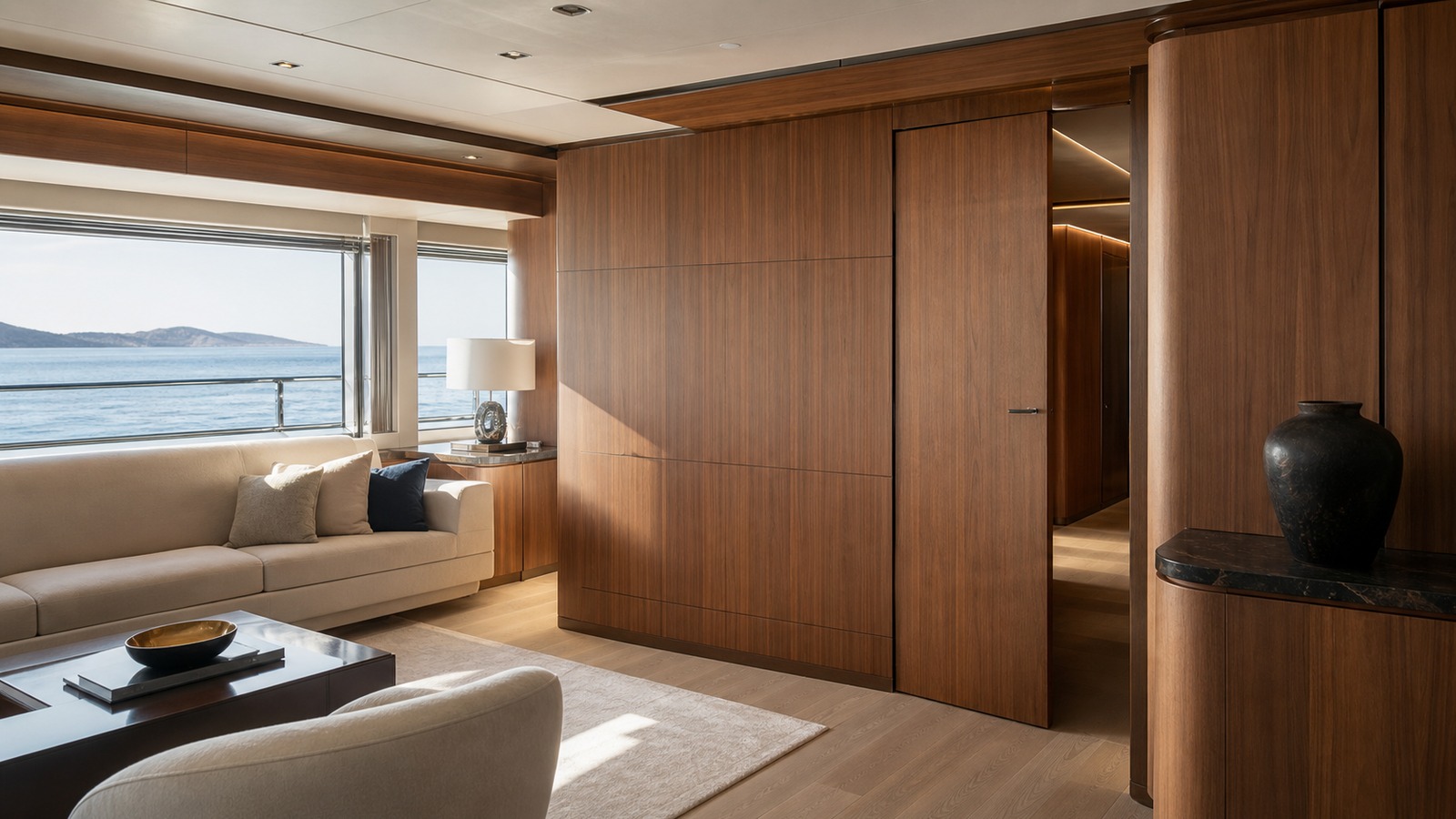
One of the primary reasons architects use secret doors in custom homes is to preserve visual continuity. Modern architecture often emphasizes flat planes, seamless materials, and minimal hardware. A traditional hinged door with casing, handles, and visible hinges can disrupt that aesthetic. By contrast, a flush-mount concealed door aligns perfectly with the wall surface, allowing paint, paneling, plaster, or wallpaper to run uninterrupted. Architects achieve this effect by specifying hidden frames, concealed hinges, and micro-reveals. Shadow gaps replace bulky trim. The door leaf becomes an extension of the wall, sometimes finished in the exact same material. In high-end homes, this technique creates a gallery-like calm where the architecture speaks quietly and confidently. The secret door doesn’t announce itself. It waits to be discovered.
Enhancing Privacy Without Sacrificing Design
Privacy is another powerful motivation behind secret door installations. Custom homes frequently include transitional spaces such as private corridors to primary suites, hidden home offices, or back-of-house circulation paths. Architects use concealed doors to create separation without adding visual complexity.
Imagine a formal living room with symmetrical millwork and a feature fireplace. A traditional door might compromise the balance of the composition. A hidden door integrated into the paneling maintains symmetry while providing discreet access to a library or lounge. In this way, the door becomes invisible to guests but invaluable to the homeowner. This strategy is particularly common in large estates and custom builds where layered circulation is essential. Architects often design multiple pathways through a home, allowing residents to move privately while maintaining formal public areas for entertaining.
Functional Spaces Hidden in Plain Sight
Beyond aesthetics and privacy, secret doors solve practical problems. Kitchens frequently include hidden pantries tucked behind cabinetry runs. Instead of interrupting a wall of custom cabinets with a standard door, architects integrate a full-height concealed panel that opens into a storage space. The kitchen remains sleek and cohesive, yet highly functional.
Home theaters, wine cellars, and safe rooms are also common candidates. A concealed entry to a theater creates anticipation and theatricality. A hidden wine cellar protects temperature-controlled storage while preserving a clean dining room aesthetic. For high-security applications, architects may design reinforced concealed doors leading to secure rooms. Children’s playrooms, craft studios, and hobby spaces are often hidden behind bookshelves or decorative panels, creating an element of delight while maintaining organization. In all cases, the goal is harmony between design and function.
Materials and Finish Continuity
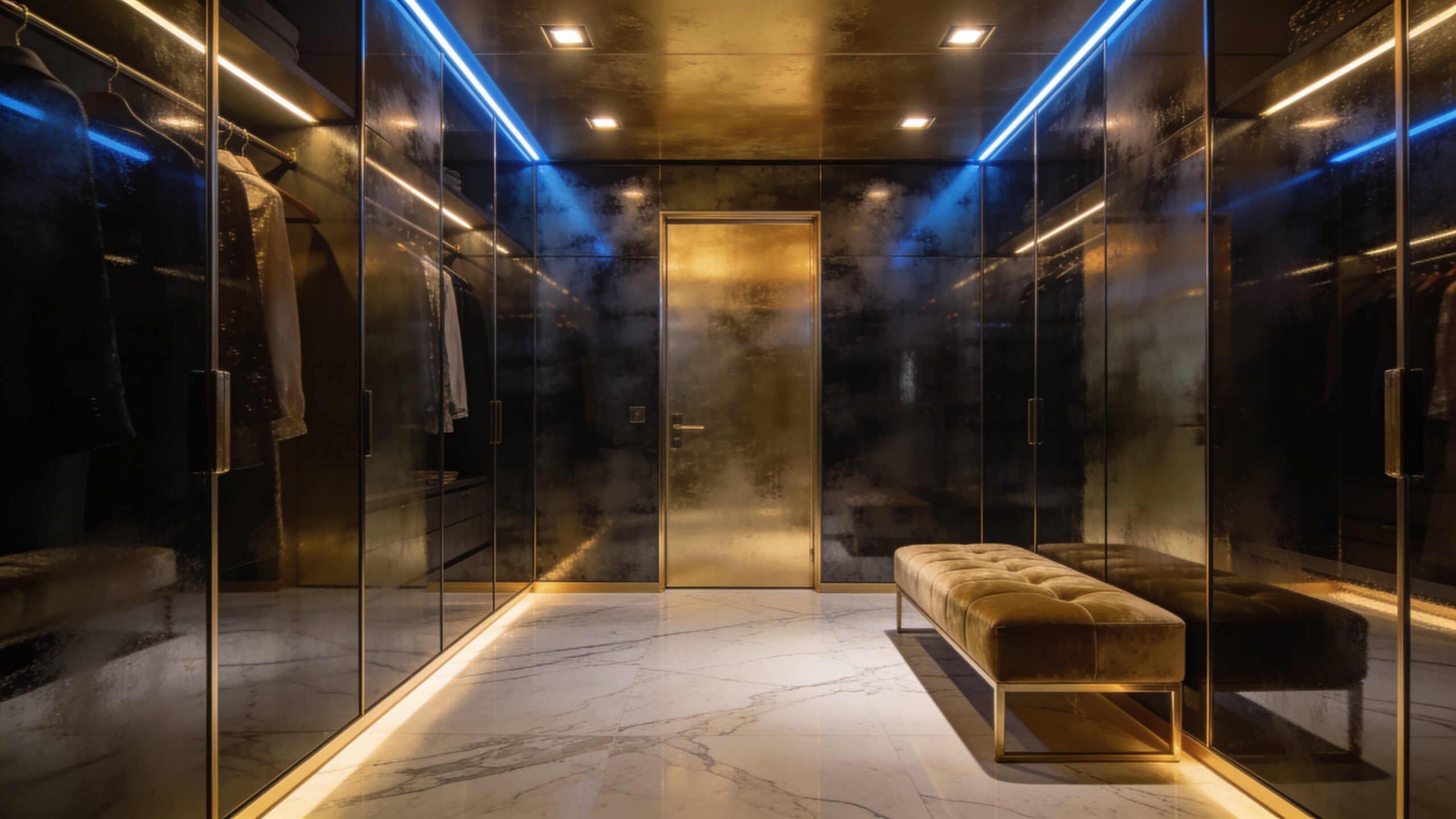
A key component of secret door design is material continuity. Architects coordinate finishes carefully so that the door blends seamlessly into its surroundings. This might involve matching wood veneer grain across panels, continuing wallpaper patterns over the door surface, or applying Venetian plaster across both wall and door for a uniform texture. Advanced custom homes may incorporate large-format panels where the reveal is nearly imperceptible. In some cases, architects collaborate with millworkers to engineer pivot doors disguised as slat walls, fluted paneling, or sculptural installations. Lighting is also critical. Strategic placement of recessed fixtures minimizes shadows that could reveal edges or gaps. The craftsmanship required for such precision is significant. Secret doors in high-end homes often involve meticulous planning between architects, structural engineers, and finish carpenters to ensure alignment and long-term durability.
Hardware Innovations and Engineering
Behind every seamless wall is sophisticated engineering. Secret doors rely on specialized hardware systems that allow smooth operation without visible components. Concealed hinges, pivot systems, magnetic latches, and soft-close dampers are standard tools in the architect’s toolkit. Pivot hinges are particularly popular in custom architecture because they distribute weight through the floor and ceiling rather than solely on the frame. This allows for taller and heavier doors, including full-height panels that extend from floor to ceiling. For sliding systems, top-hung tracks are often hidden within ceiling cavities to eliminate floor guides. Smart home integration has added another layer of capability. Architects may specify touch-latch systems, RFID access, biometric locks, or automation that integrates secret doors into broader home control systems. The technology remains invisible, preserving the illusion while enhancing performance.
Security and Safe Room Applications
While many secret doors are aesthetic, some serve serious security purposes. In high-end custom homes, architects sometimes design concealed entries to safe rooms or reinforced panic spaces. These rooms may include independent ventilation, communication systems, and reinforced structures. However, professional architects emphasize that concealment is not the same as security. A well-designed hidden door can slow detection, but true security relies on reinforced materials, proper locking mechanisms, and code compliance. For exterior applications, weatherproofing and structural integrity become critical. Fire ratings, egress requirements, and accessibility codes must be considered carefully. A concealed door that blocks a required exit can create legal and safety risks. Architects balance creativity with compliance, ensuring that secret features meet all building regulations.
Psychological Impact and Emotional Experience
Secret doors introduce a sense of mystery and discovery into residential design. Architects understand that homes are not just functional shelters but emotional environments. A concealed library entrance or hidden garden passage can create memorable experiences for residents and guests.
The psychology of discovery plays an important role. Humans are naturally drawn to curiosity and surprise. When a panel swings open unexpectedly to reveal a private room, it generates delight and conversation. This emotional dimension adds value beyond square footage or resale metrics. Custom home clients often seek features that make their homes unique. A secret door satisfies that desire for individuality while maintaining architectural integrity. It is both subtle and expressive at the same time.
Integration in Contemporary and Traditional Styles
Secret doors are not limited to modern minimalism. In traditional or classical architecture, concealed entries may be integrated into ornate paneling, coffered walls, or built-in cabinetry. Historically inspired homes sometimes include hidden studies reminiscent of European manor houses.
In transitional homes, architects may disguise doors within shiplap walls, stone veneers, or decorative shelving systems. The design approach varies, but the core principle remains consistent: continuity of finish and intentional concealment. Even exterior spaces can incorporate hidden gates within wood slat fences or green walls. Landscape architects collaborate with building designers to create seamless boundaries between architecture and nature.
Planning and Collaboration in Custom Home Projects
The success of a secret door depends heavily on early planning. Architects typically coordinate concealed door systems during the framing stage to ensure proper blocking, alignment, and header support. Retrofitting a hidden door into an existing wall is possible, but more complex. Communication with contractors and millworkers is critical. Even small deviations in framing can disrupt alignment. Tolerances are tight, especially when reveal lines are minimal. Architects provide detailed drawings specifying hinge placement, hardware load ratings, and finish requirements. Budget is also a factor. While simple concealed doors can be relatively affordable, custom-engineered pivot systems and integrated millwork can reach premium price points. Clients are advised to weigh the experiential value against the cost.
Acoustic Considerations
Many custom homes require sound control, particularly when secret doors conceal media rooms, studios, or offices. Architects address acoustics through seals, mass, and specialized gaskets. A hidden door without proper sealing can compromise sound isolation. STC ratings become important when privacy is essential. Heavy core construction, perimeter seals, and drop-down thresholds help maintain performance. Designers ensure that acoustic treatments remain concealed while delivering practical results.
Future Trends in Secret Door Architecture
As smart home technology advances, secret doors are becoming more sophisticated. Motion-activated lighting, voice-activated access, and biometric security systems are increasingly common in luxury builds. Architects are exploring new materials such as lightweight composites and sustainable engineered wood products to enhance performance.
Minimalist design trends continue to drive demand for concealed doors, particularly in urban custom homes where space efficiency and visual calm are prized. At the same time, high-end homeowners seek distinctive features that differentiate their properties. Sustainability also plays a role. Architects may use FSC-certified wood, low-VOC finishes, and durable hardware to ensure environmental responsibility without sacrificing aesthetics.
The Enduring Appeal of Hidden Architecture
Secret doors capture imagination while solving real design challenges. They represent the intersection of art, engineering, and storytelling within residential architecture. For architects designing custom homes, concealed doors are tools that enhance privacy, elevate aesthetics, and create unforgettable experiences. The beauty of a secret door lies not only in its invisibility but in its intention. When thoughtfully designed, it becomes part of the home’s narrative, quietly reinforcing the idea that architecture can surprise, protect, and inspire.