Famous Fictional Doors Become More Than Doors
The most famous concealed doors in fiction endure because they do more than hide a route. They become symbols of the story’s deeper promise. A wardrobe can suggest childhood wonder, a bookcase can suggest private knowledge, a mirror can question identity, a secret panel can change a mystery, and a lair entrance can announce power. Fictional concealed doors are memorable when the threshold carries emotion. Readers and viewers remember not only the mechanism, but the feeling of being allowed into a hidden layer of the world.
A: It carries a clear emotional idea beyond simple hidden access.
A: They make wonder feel close to ordinary domestic life.
A: They connect knowledge, curiosity, privacy, and discovery.
A: They link hidden access with identity, reflection, and illusion.
A: Yes, because sudden vertical movement is easy to feel and remember.
A: The threshold's emotional promise, even if the mechanism changes.
A: It has to reward the expectation created by the door.
A: Often, through familiar archetypes like shelves, panels, mirrors, and hatches.
A: A vivid surface, clear reveal, and meaningful crossing.
A: A concealed door becomes famous when crossing it changes what the story means.
The Famous Door Has a Clear Idea
A concealed door becomes famous when it stands for something easy to feel. Wonder, danger, secrecy, privilege, escape, transformation, or forbidden knowledge can all attach to a threshold. The clearer the idea, the longer the door lasts in cultural memory.
This is why some fictional doors are remembered even by people who cannot describe every plot detail. The entrance has become a shorthand for the story’s emotional invitation.
Wardrobes Make Wonder Domestic
One enduring fictional archetype is the ordinary piece of furniture that opens into an extraordinary world. The wardrobe or closet door is powerful because it begins in a private, domestic place. The adventure is not far away; it is inside the room.
That closeness makes the fantasy intimate. A child, guest, or lonely character can discover that the ordinary home contains a route beyond expectation.
The lesson for hidden-door design is clear: the starting surface matters. Familiarity makes the reveal stronger.
Bookcases Link Knowledge and Access
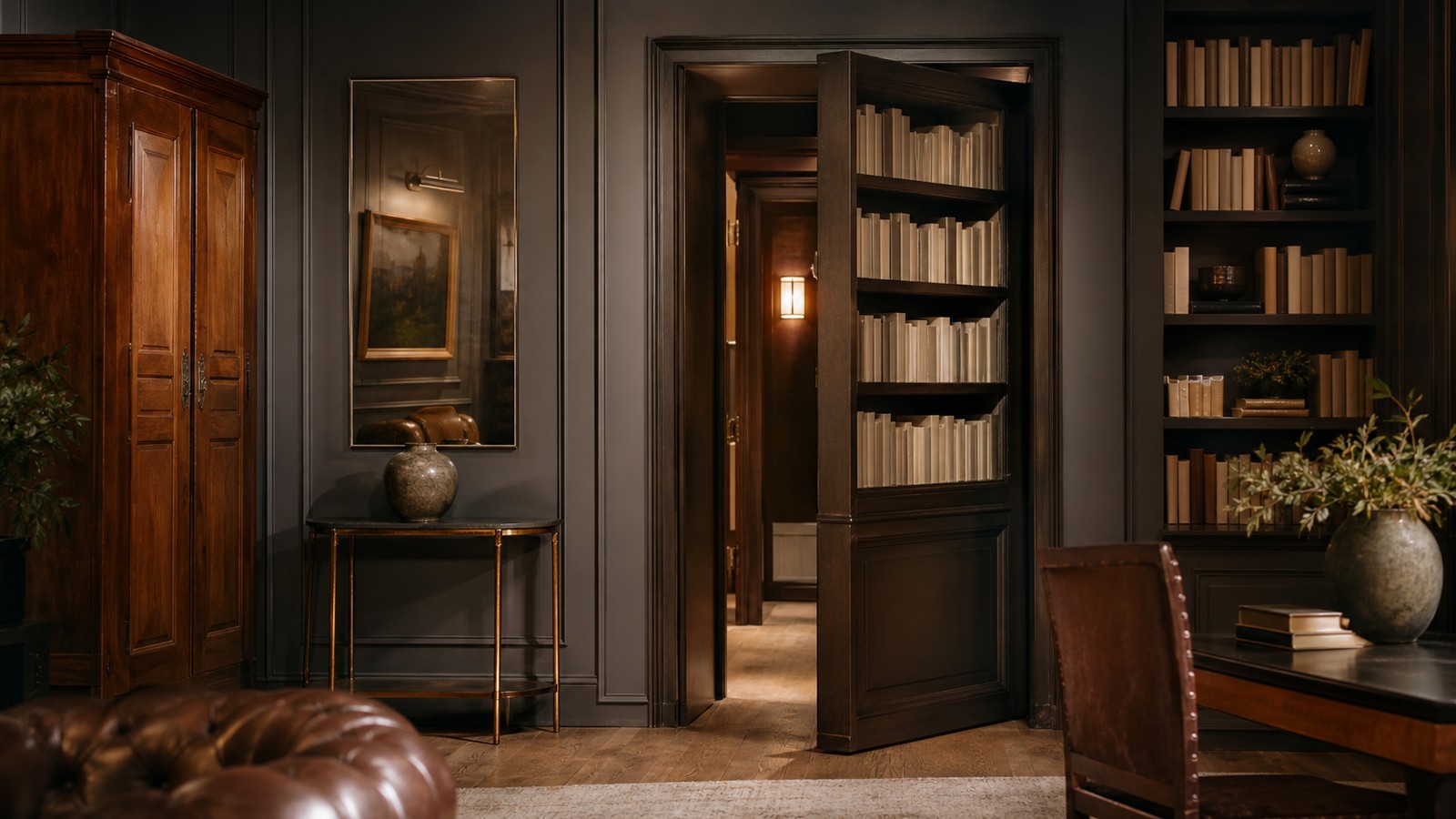
Bookcase doors are famous because they join two forms of secrecy. Books already represent knowledge, and a hidden door behind books turns knowledge into literal access. The reader or viewer senses that the room rewards curiosity.
Panels Suit Mysteries and Manor Houses
Secret panels in fiction often belong to old houses, estates, castles, and locked-room plots. They work because the setting already carries history. A paneled wall can hide family secrets, criminal routes, servants’ circulation, or forgotten rooms.
The panel door is less about spectacle than implication. It suggests that the house has been withholding information for longer than the current characters understand.
Mirrors Turn Hidden Doors Into Identity Questions
Fictional mirrors that open, shift, or lead elsewhere carry a special charge. A mirror already reflects identity. When it becomes a concealed entrance, the story links hidden access with self-knowledge, illusion, vanity, or double lives.
This is why mirror doors feel different from shelves or panels. They ask who is looking and what version of reality the viewer is willing to accept.
A mirror threshold can be magical, psychological, comic, or sinister depending on the story around it.
Secret Lair Entrances Announce Power
Fiction loves lairs because they give villains, heroes, spies, and secret teams a controlled world. The concealed entrance to a lair is often famous because it marks the passage from public cover to private power.
Hidden School Entrances Create Belonging
Fictional hidden schools, academies, and societies often use concealed entrances to make admission feel special. The door may require a phrase, timing, invitation, object, or insider knowledge. The threshold becomes a ritual of belonging.
Readers enjoy this because it turns learning into access. The hidden entrance says there is a community for people who can see what others miss.
Trapdoors Make Vertical Secrecy Physical
Trapdoors remain famous because they move characters down or up without warning. They can create comedy, danger, escape, punishment, or discovery. The sudden vertical shift makes the hidden route feel physical in a way a wall panel may not.
Fiction uses trapdoors to change control quickly. One character knows the floor; another does not.
The effect is simple, which is why it survives across stage plays, novels, cartoons, and adventure stories.
Portal Doors Change the Rules Entirely
Some concealed doors are famous because they do not lead to another room; they lead to another order of reality. Portals, magical arches, secret gates, and impossible thresholds transform the meaning of entry.
Famous Doors Are Easy to Recreate Mentally
A memorable fictional door usually has a strong mental image. The reader can picture the shelf, wardrobe, mirror, panel, elevator, alley, or hatch. The image does not have to be complex. It has to be vivid enough to carry emotion.
This is why overcomplicated mechanisms often fade from memory. The audience remembers the idea more than the engineering.
Adaptations Can Refresh the Threshold
When famous fictional doors move from page to screen, stage, game, or themed environment, designers must decide what to preserve. The mechanism may change, but the emotional function should remain. A door associated with wonder should not feel purely industrial. A door associated with danger should not feel too polite.
Good adaptations protect the threshold’s promise. They understand what the audience came to feel.
This is why some fictional doors survive many versions. The surface changes, but the emotional access remains recognizable.
Real Hidden Doors Often Quote Fiction
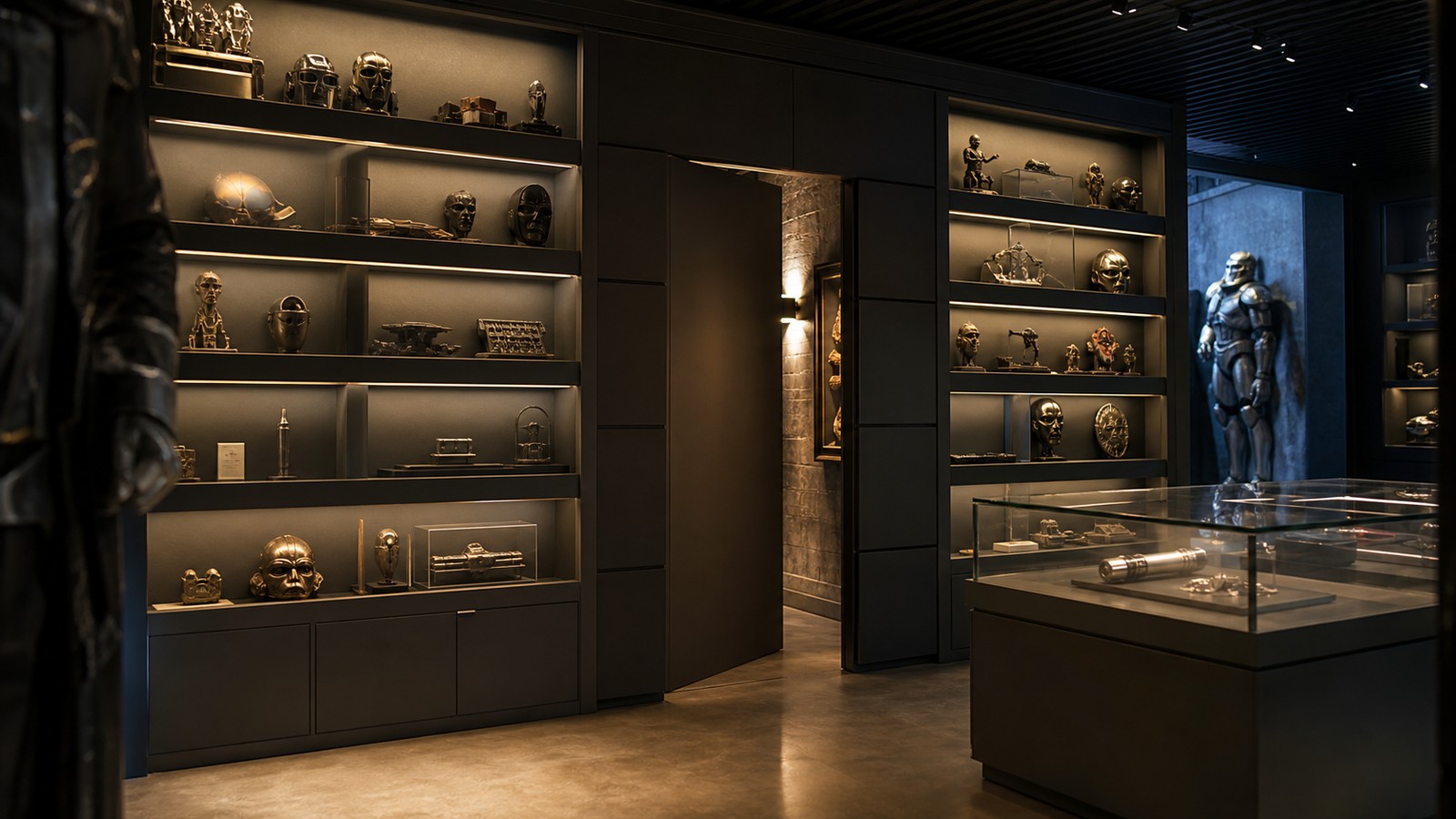
Many real hidden doors borrow fictional archetypes: the bookcase, mirror, panel, wardrobe, false cabinet, hidden elevator, or floor hatch. Homeowners may not be copying a specific story, but they are drawing from a shared cultural library.
The Door Beyond Must Carry the Myth
A famous fictional concealed door is only as strong as what lies beyond it. If the hidden room, world, or route disappoints, the threshold loses power. The reveal creates expectation that the story must honor.
That expectation can be honored through beauty, danger, truth, humor, or emotional change. The hidden space must matter.
This is why famous thresholds usually protect more than scenery. They guard a school, kingdom, headquarters, forbidden memory, private family truth, or alternate rule system. The door becomes famous because the story keeps its promise after the hinge moves.
The Most Famous Doors Invite Return
Fictional doors become beloved when audiences want to return to them. They imagine opening the wardrobe, finding the panel, entering the alley, or discovering the lair themselves. The door becomes a repeatable fantasy.
That return desire explains why hidden doors move so easily into home design, games, fan art, and themed attractions. People do not only remember the scene. They want the threshold.
Fiction Teaches the Value of Symbolic Access
The most famous concealed doors in fiction endure because they make access symbolic. They are not only entrances. They are tests, invitations, betrayals, promises, jokes, and transformations. They let stories turn abstract change into a physical moment.
That is the secret behind their fame. A concealed door can be built from wood, stone, glass, mirrors, shelves, or pure magic, but it becomes memorable only when crossing it means something. Fictional hidden doors last because they let audiences feel that another life, another truth, or another self might be waiting just behind the surface.
The symbol also survives because it is flexible. A hidden door can comfort a lonely child, expose a villain, protect a rebel group, test a student, or shame a powerful family. The audience reads the action quickly, then lets the story decide what kind of threshold it has become.
Genre Determines Which Famous Door We Remember
Adventure stories often make concealed doors feel like invitation. Mysteries treat them as evidence. Fantasy turns them into borders between worlds, while horror makes them proof that a room was never secure. The same basic device becomes famous for different reasons depending on the genre’s emotional contract.
This is why lists of famous fictional doors can feel surprisingly varied. Some are remembered for beauty, some for fear, some for cleverness, and some for the feeling of being chosen. The mechanism matters less than the promise attached to it.
Famous Doors Give Settings a Ritual
A setting becomes easier to love when it has a repeatable ritual of entry. A password, object, gesture, route, or hidden trigger lets audiences imagine returning to the place on purpose. The concealed door becomes a ceremony that belongs to the fictional world.
Ritual also helps a story make secrecy feel organized. The hidden space is not random if entry has rules. Fans can remember those rules, quote them, debate them, and imagine whether they would be admitted.
That imagined admission is part of the fame. The fictional door offers a test the audience secretly wants to pass.
Adaptations Must Protect the Threshold’s Timing
When a famous concealed door moves from page to screen, game, stage, or attraction, the biggest challenge is timing. The reveal must feel earned, not merely shown. A door that was mysterious in prose can become flat if the adaptation rushes the approach.
The Hidden Door Becomes a Memory Device
Audiences often remember fictional worlds through thresholds because thresholds simplify emotional geography. The hidden door tells us where ordinary life ends and the important private world begins. It organizes memory around a single crossing.
That is why the most famous examples remain vivid long after specific plot details fade. People may forget the chapter, episode, or issue, but they remember the wardrobe, bookcase, alley, panel, or hatch. The door carries the world in miniature.
Fame Depends on the Door Feeling Inevitable
The most famous concealed doors in fiction often feel surprising and inevitable at the same time. Before the reveal, the audience does not know exactly where the route is. Afterward, the hidden entrance feels as if it could not have belonged anywhere else.
That sense of inevitability comes from careful setup. The surface fits the world, the method fits the characters, and the destination answers a need the story has already created. A door hidden behind knowledge belongs in a library. A passage hidden inside inheritance belongs in an old house. A secret gate belongs where admission matters.
When those pieces align, the concealed door becomes more than a clever object. It feels like the story discovering its own natural threshold, which is why audiences keep carrying it forward.
The famous examples also tend to remain legible after the surrounding fashions change. The furniture, costumes, effects, or prose style may age, but the emotional geometry stays clear: outside, threshold, inside, transformation. That clarity lets new audiences inherit the moment without needing every reference that older fans carried into it. A concealed door can become famous because it offers a simple crossing that each generation can refill with its own appetite for wonder, danger, or belonging.
The Door Often Becomes a Test of Worthiness
Many famous fictional concealed doors are not open to everyone. They require the right word, object, timing, bloodline, courage, memory, or moral choice. That requirement makes the threshold feel selective, and selective access turns an entrance into a test.
This is one reason audiences love imagining themselves at the door. The hidden route asks a quiet question: would you notice it, understand it, deserve it, or dare to cross? Fiction makes that question thrilling without requiring the reader to leave the chair. The concealed door becomes famous because it lets the audience rehearse entry into a more selective world while remaining safely outside it. The test feels personal even when the doorway is imaginary. That private challenge helps the image last longer.