Spy Stories Turn Concealed Entrances Into Tradecraft
Concealed entrances inspired spy-agency stories because intelligence work depends on movement, privacy, observation, and controlled access. The public imagination often pictures hidden doors in safe houses, embassies, archives, offices, tunnels, and private rooms where information changes hands. Real intelligence architecture is more careful and less cinematic than fiction suggests, but the basic appeal is clear. A concealed entrance represents the ability to appear ordinary while preserving a private route. It turns secrecy into a physical design problem.
A: They turn hidden knowledge and private movement into a clear visual threshold.
A: Real work is usually more procedural and less theatrical than fiction.
A: It symbolizes compartmentalized knowledge, cover, and selective access.
A: Believable ordinary surroundings make discreet movement more plausible.
A: Yes, genre habits make ordinary service routes seem suspicious.
A: It should avoid operational instructions or sensitive present-day details.
A: It creates layers of visibility, access, observation, and privacy.
A: They already contain service routes, basements, and historical complexity.
A: No, procedure, authorization, timing, and oversight matter more.
A: A concealed entrance makes secrecy instantly legible.
Discreet Movement Is a Natural Spy Motif
Espionage stories revolve around who can move unnoticed, who can enter a room, and who can leave without attracting attention. Concealed entrances fit that structure perfectly. They give the story a way to show access without explaining every detail of surveillance, logistics, or institutional control.
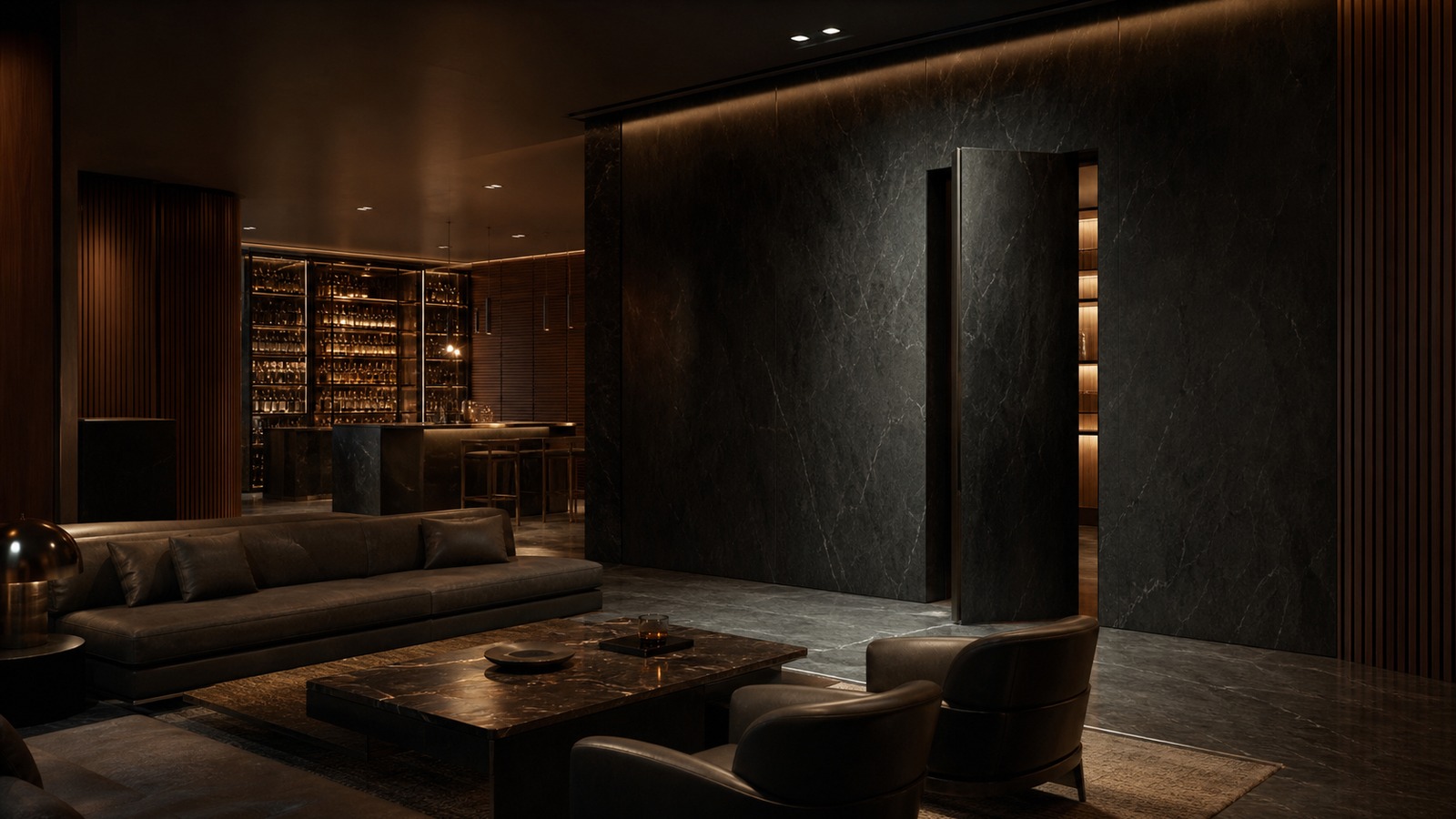
In fiction, a hidden door may open behind a bookshelf or slide out of a paneled wall. In reality, discretion is more often achieved through ordinary-looking routes, access control, timing, and behavior. The image is dramatic because it compresses all of that into one threshold.
The concealed entrance therefore works as shorthand. It tells the audience that the visible room is not the whole story.
That shorthand has shaped spy imagery for generations.
Safe Houses Need Believable Normalcy
A safe route is most useful when it belongs to a believable setting. A plain apartment, office, shop, or corridor can feel safer than an obviously secret room. Concealment in spy stories often depends on normalcy rather than spectacle.
Observation Spaces Create Hidden Access
Spy fiction loves rooms where someone can listen, watch, photograph, or exchange information without being noticed. Concealed entrances support those scenes by separating public space from controlled observation space. The door becomes part of the story’s tension between seeing and being seen.
This motif draws from real architectural possibilities, but responsible discussion should stay broad. The interesting point is not how to build a spy route. It is how stories use hidden access to express caution, mistrust, and selective knowledge.
A concealed entrance in a spy narrative tells the viewer that information has geography. Some people know the route to the room where facts are gathered; others remain in the visible world.
Embassies and Offices Feed the Imagination
Diplomatic buildings, offices, hotels, and official residences all appear in spy stories because they combine public rooms with private work. Service corridors, secure rooms, archives, staff entrances, and restricted floors provide believable inspiration for fictional hidden routes.
The fiction usually heightens reality. A routine staff door becomes a secret passage. A records room becomes an intelligence hub. The concealed entrance gives the setting a private layer without requiring the audience to understand institutional layout.
Tradecraft Is More Than Hardware
The hidden door is only one piece of the spy-agency imagination. Tradecraft also includes timing, cover stories, compartmentalization, signals, observation, memory, discipline, and trust. A concealed entrance is useful in stories because it gives those invisible practices a visible object.
That visible object can mislead if taken too literally. Real security does not depend on clever hardware alone. A hidden route that draws attention, lacks procedure, or fails under stress is not useful.
Spy stories simplify for drama. They make the door open at the perfect moment, reveal the hidden room, and let the plot move quickly. Real institutions would care about maintenance, authorization, legal limits, safety, and documentation.
Those practical limits make the subject more interesting. They show that secrecy is a system, not a gadget.
The concealed entrance remains the symbol because it is easy to understand at a glance.
Secret Doors Signal Compartmentalization
Intelligence stories often divide characters by what they know. A concealed entrance makes that division spatial. The person who knows the door belongs to one layer of the story; the person who does not remains outside it.
Fiction Shapes What People Expect
Movies and novels have trained audiences to expect hidden doors in spy settings. A paneled wall, bookcase, elevator, mirror, or unmarked office can immediately feel suspicious because the genre has taught viewers to look for a second route.
That expectation affects how real buildings are interpreted. People may see ordinary service access and imagine agency intrigue. Fiction does not only borrow from architecture; it changes how architecture is read afterward.
This feedback loop is part of the fun, but it needs limits. Not every discreet entrance is part of intelligence work, and not every intelligence story maps onto reality.
The genre works best when the viewer can enjoy the motif without mistaking it for evidence.
Secure Access Raises Ethical Questions
Spy narratives often glamorize hidden access, but real secrecy sits inside legal and ethical boundaries. Privacy, oversight, safety, rights, and accountability matter. A concealed entrance can serve protection, but it can also symbolize the fear of unaccountable power.
That tension is why the motif remains compelling. The same door can feel protective in one story and threatening in another.
Historical Sites Become Spy Settings
Old cities, wartime buildings, hotels, embassies, theaters, stations, and private clubs provide rich settings for spy stories because they already contain layered circulation. Back stairs, basements, service lifts, courtyards, and archives make hidden movement believable.
When a story places an agency route inside such a building, it borrows the authority of history. The concealed entrance feels plausible because the building already has rooms behind rooms.
The best spy settings do not invent mystery from nothing. They amplify the building’s existing complexity.
Safe Discussion Stays at the Level of Meaning
Concealed entrances and spy agencies should be discussed as design motifs, historical imagination, and broad security principles rather than as operational instructions. That boundary keeps the subject useful and responsible.
The Door Remains a Perfect Spy Symbol
A concealed entrance is a perfect spy symbol because it joins ordinary appearance with hidden access. It tells a story about public cover and private knowledge in one image. The person who passes through it seems to move between worlds.
That is why the motif endures. Even when real intelligence work is mostly paperwork, analysis, communication, and procedure, the secret door gives secrecy a shape the audience can feel.
It is not the whole truth of espionage. It is the architectural metaphor that makes the hidden life visible.
The door opens, and the story becomes layered.
That simple motion is hard for spy fiction to resist.
Real Work Is Usually Less Cinematic
The image of a concealed spy entrance can overshadow the less visible reality of analysis, communication, law, translation, logistics, and paperwork. That contrast is important. The hidden door is memorable because it turns slow institutional work into a single dramatic movement.
Buildings Offer Controlled Transitions
Spy fiction needs transitions between public identity and private mission. Architecture provides them naturally. A character can walk from a lobby into an office, from an office through an unmarked door, and from there into a room where the story changes.
Concealed entrances make those transitions clearer. The wall itself becomes a line between cover and knowledge. Once crossed, the character belongs to a different layer of information.
That is why spy agencies in fiction are so often shown through layered interiors. The building teaches the audience how secrecy is organized.
Cover Depends on Ordinary Detail
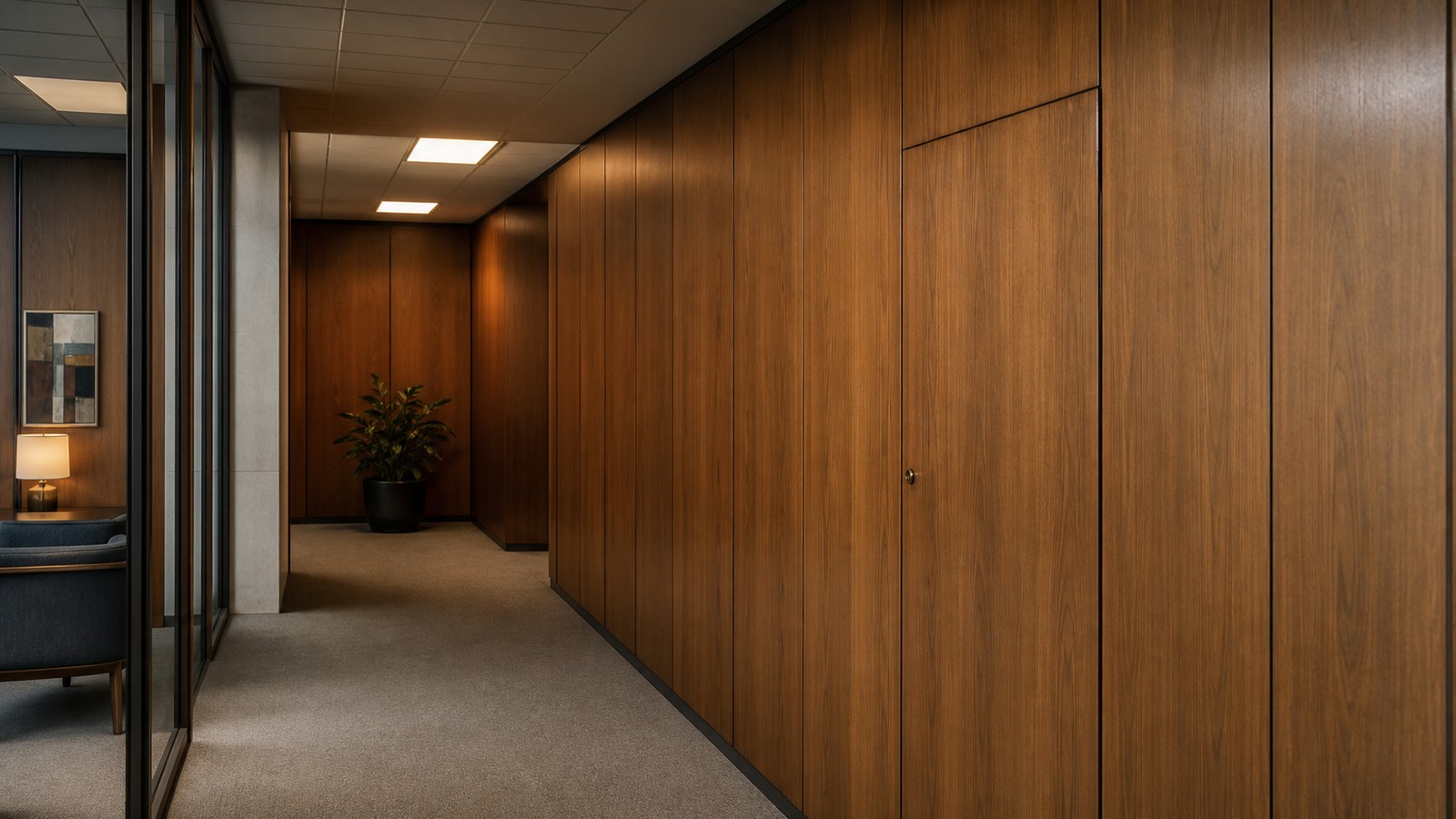
A concealed entrance is believable when the surrounding detail is ordinary. The wrong door in the wrong room attracts attention; a quiet threshold in a believable corridor can disappear. Spy stories understand this even when they exaggerate the mechanics.
Normalcy is the real disguise. A plain office, a storage wall, a service corridor, or a modest apartment can carry more tension than a spectacular lair because it seems possible.
Popular Culture Keeps Refining the Door
Each generation of spy fiction updates the concealed entrance. Early stories favored secret rooms and hidden passages; later films added elevators, secure labs, digital locks, and sleek walls. The motif changes with technology, but the symbolic function remains the same.
The door still divides public appearance from hidden access. It still marks the moment when a character moves into knowledge that others do not have. It still makes secrecy visible.
That flexibility keeps the motif alive. A hidden door can suit a period thriller, a modern agency drama, or a near-future story because it is a basic spatial idea.
The surface changes; the threshold remains.
Restraint Makes the Motif Safer
When discussing concealed entrances and spy agencies outside fiction, restraint is part of the craft. Broad symbolism, genre history, and public architectural principles are enough to explore the subject without drifting into sensitive instruction.
The Hidden Route Expresses Trust
Spy stories often use concealed entrances to show who is trusted. A character is brought through a private door, shown a hidden room, or taught a route others do not know. Access becomes a sign of belonging inside the organization.
That trust can later be tested. If someone misuses the route or reveals the door, the architecture becomes part of betrayal. The hidden entrance carries emotional stakes because it was shared selectively.
This is another reason the motif works so well. A door can hold loyalty, secrecy, temptation, and danger without saying a word.
Architecture Makes Secrecy Legible
The lasting influence of concealed entrances on spy-agency imagery comes from legibility. A viewer may not understand bureaucracy, encryption, diplomacy, or analysis, but a hidden door is immediate. It shows that some knowledge is compartmentalized, some routes are private, and some spaces are meant only for those who have permission to enter.
That clarity makes the concealed entrance one of the genre’s strongest visual tools. It turns the complicated world of intelligence into a threshold, and thresholds are where stories naturally begin.
It also helps audiences feel the cost of secrecy. The person who enters the hidden route gains access, but also responsibility, risk, and possible isolation. A private doorway can be a privilege and a burden at the same time.
That emotional double meaning is why the motif does more than decorate spy stories. It gives architecture a role in character development. The door does not only hide a room; it changes the person allowed to cross it.
Even when the real world is more procedural, the symbol remains useful. It reminds us that intelligence work, in fiction and in broad public imagination, is organized around boundaries of knowledge.
The concealed entrance also lets spy stories show the cost of compartmentalization without stopping to explain it. A character can know the door and still be trapped by what that knowledge requires. The route offers access, but it can also narrow the character’s world.
That is a surprisingly human idea inside a genre known for gadgets. The secret route gives the character options, but it also separates them from people who cannot follow. In spy stories, the hidden door is often freedom and isolation at once. It gives the audience a clean way to feel how access can protect a mission while narrowing a life, and how secrecy can become a place someone has to inhabit alone. That tension keeps the motif emotionally useful and memorable today.