
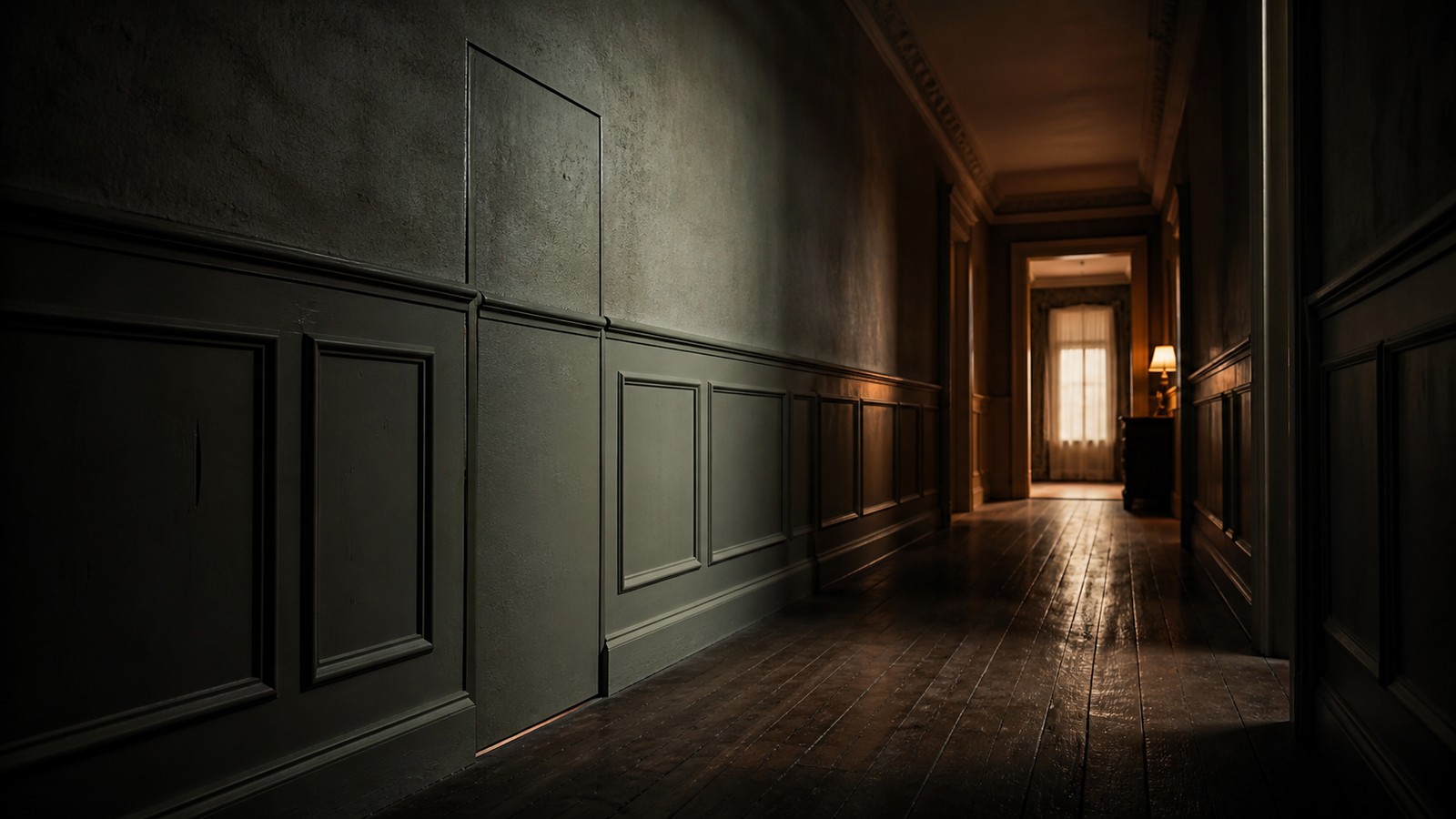
Horror Makes the Wall Untrustworthy
Concealed doors add suspense in horror films because they make the safest-looking surfaces feel unreliable. A room may appear sealed, a hallway may seem empty, or a wall may look ordinary, yet the audience suspects that something can enter, leave, watch, or wait from a hidden route. Horror depends on uncertainty about where danger is located. A concealed door gives that uncertainty a body. The threat might not break the rules of the house; it may know rules the victim has not discovered.
A: They make the visible map unreliable and danger harder to locate.
A: Small noises can make unseen movement feel close and invasive.
A: Secret access inside intimate rooms attacks the feeling of safety.
A: That creates dread, while discovering it with the character creates shock.
A: Setup, misdirection, timing, and a meaningful reveal.
A: They turn past violence, planning, or surveillance into physical evidence.
A: Convenience, weak geography, or a reveal with no consequence.
A: Yes, if safety, clarity, and daily function remain intact.
A: The threat becomes scarier when it knows routes victims do not.
A: A concealed door makes a room frightening by making it incomplete.
The Hidden Door Changes the Map
Suspense often begins when characters and viewers believe they understand the space. A bedroom has one door. A hallway has one exit. A basement is behind the stairs. A concealed door breaks that map. Suddenly the room has another route, and the audience must reconsider every movement.
This is frightening because safety depends on orientation. When the map changes, decisions become uncertain. The victim may run toward danger without knowing it.
Concealment Lets Threats Arrive Late
Horror directors use concealed doors to delay the appearance of danger. The audience may hear something first, see a shadow second, and only later understand where the figure came from. The door extends suspense by withholding the route.
That delay is often stronger than a simple jump. Viewers feel the room becoming wrong before the threat appears.
The hidden doorway gives the scene a reservoir of fear. The audience knows the space has not fully declared itself.
Victims Lose Control of Distance
Distance is crucial in horror. A monster across the yard feels different from one behind a wall. Concealed doors collapse distance without warning. The threat may be closer than the visible room allowed the victim to believe.
Sound Makes Hidden Access Worse
A small click, scrape, breath, floor creak, or muffled thump can make a concealed door terrifying before anyone sees it. Sound invites the audience to imagine movement behind the surface. The door becomes active in the mind.
Silence can be just as effective. A hidden panel that opens without sound suggests precision, supernatural force, or someone who has practiced. Horror uses both noise and absence to make hidden access unsettling.
The Door Can Make the House Complicit
Haunted houses, isolated cabins, old mansions, hospitals, and basements often feel frightening because the building seems to know more than the characters. A concealed door strengthens that feeling. The architecture is not neutral. It has secrets.
This can make the threat feel larger than a single villain. The house itself appears to participate by offering routes, hiding rooms, and preserving old violence.
When the building feels complicit, every surface becomes suspicious. The audience starts watching the walls.
Predator Routes Create Unequal Knowledge
Horror often depends on unequal knowledge. The killer, creature, ghost, or resident knows hidden routes that victims do not. This gives the threat power without needing constant screen time.
Hidden Rooms Hold Backstory
A concealed door may reveal the room where the past has been stored: an old nursery, shrine, surveillance space, laboratory, cell, tunnel, or collection of evidence. The hidden room turns backstory into a physical discovery.
That discovery can change the genre of the scene. What seemed like a chase may become a revelation. What seemed supernatural may become criminal. What seemed accidental may become planned.
Suspense Depends on When the Audience Knows
Sometimes the audience sees the concealed door before the character does. That creates dread because viewers wait for the victim to approach a danger they cannot see. Other times, the audience discovers the door with the character, creating shock.
The choice changes the scene. Suspense comes from waiting; surprise comes from sudden knowledge. Horror films use concealed doors for both.
A director can even shift between them. Show the seam once, let the audience forget, then activate it later.
Light Defines the Hidden Threshold
A thin line of light under a wall, a red glow behind a panel, or a dark rectangle inside a bright room can make a hidden door feel alive. Horror lighting often makes the threshold more disturbing than the room beyond.
False Safety Is the Real Target
Concealed doors are frightening because they attack false safety. The character thinks they have locked the visible door, checked the hallway, or hidden in the only room available. The hidden route proves that safety was based on incomplete information.
This is why horror often places concealed doors in bedrooms, bathrooms, closets, hospitals, and family homes. The more intimate the space, the more disturbing the secret access becomes.
Jump Scares Need Setup
A hidden door can deliver a jump scare, but the scare works best when setup gives it pressure. The audience needs a reason to look somewhere else, a sound that primes expectation, or a story context that makes the sudden entry meaningful.
Without setup, the door is only a loud movement. With setup, it is the release of dread that has been building in the room.
Horror viewers are good at reading tricks. A concealed door has to earn its scare through timing and placement.
Horror Doors Often Reveal Surveillance
Hidden peepholes, panels, and routes can imply that someone has been watching. This is one of the most unsettling uses of concealed access because it rewrites earlier privacy. The character was never alone in the way they believed.
Real Design Should Borrow Caution, Not Fear
Homeowners may enjoy horror aesthetics, but real concealed doors should not create unsafe confusion. A hidden media room or themed basement can use mood, sound, and lighting while keeping exits clear and operation simple.
The useful lesson is awareness of experience. Horror teaches how strongly a threshold can affect emotion. Real design can use that knowledge for drama without importing panic.
A dramatic reveal can still be comfortable when it is predictable to the people who live with it. Clear hardware, dependable lighting, and obvious exit logic keep the theatrical part from becoming a hazard. The best real-life version borrows suspense as atmosphere, not as actual risk.
The Scariest Door Is the One That Explains Too Much
A concealed door can be scarier after it opens because it explains how previous impossible events happened. Footsteps, disappearances, noises, missing objects, or sudden appearances suddenly align. The room was never behaving randomly.
That explanation can intensify fear. It shows that the threat was organized, close, and familiar with the space. The hidden door turns vague dread into a system.
Horror Uses Concealment to Keep Rooms Alive
Concealed doors add suspense in horror films because they keep rooms from becoming fixed. A wall may become an entrance, a closet may become a route, a hallway may become a trap, and a locked room may become porous. The architecture stays alive after the characters think they understand it.
That is why the device remains so effective. Horror does not only ask what is in the room. It asks what the room can become when the lights change, the sound stops, and a hidden seam finally moves. A concealed door gives fear a hinge.
The most unnerving versions leave a residue after the reveal. Once the audience has seen one hidden route, every later room feels provisional. The film has taught viewers to doubt surfaces, and that lesson lingers longer than the single scare.
Editing Rhythm Controls the Door’s Power
A concealed door is rarely frightening by itself. The edit decides whether the reveal feels slow, violent, inevitable, or impossible. A long hold on a blank wall can make viewers search for a seam, while a sudden cut to a newly open panel can make the room feel invaded by information.
Good horror editing also understands restraint. If the camera announces every hidden route too loudly, the audience starts waiting for a trick instead of inhabiting the scene. Suspense grows when the edit gives just enough information to make the room unstable.
Character Behavior Sells the Geography
Concealed doors create suspense only when characters behave as if space matters. A careful hand on a wall, a glance toward a sound, a decision to block the visible door, or a panicked attempt to remember the hallway makes the hidden route meaningful. Viewers need to feel that the character is making choices under pressure.
The best scenes let those choices become painful. A victim may choose the safest-looking room, then discover that safety was based on an incomplete map. The concealed door does not replace character drama; it sharpens it.
This is also why overexplaining the mechanism can weaken fear. Horror needs enough logic to make the route believable, but not so much instruction that the audience begins thinking like a contractor.
The Room Beyond Can Change the Monster
Sometimes the hidden door reveals not only a route but a motive. A concealed shrine, workshop, tunnel, nursery, or surveillance chamber can make the threat feel more intimate and organized. The audience sees evidence that the danger has habits, history, and access.
Suspense Lingers When the Door Remains Possible
A horror film does not need to reopen a concealed door repeatedly for it to remain active. Once the audience knows hidden access exists, the possibility follows every scene in the same building. Even a quiet conversation can feel exposed when viewers remember that walls may not be boundaries.
This lingering possibility is one reason concealed doors are so efficient for horror. A single reveal can change the entire setting for the rest of the film. The house, hospital, motel, bunker, or apartment becomes a place with unseen circulation, and unseen circulation is where fear keeps moving.
The Best Horror Door Makes Logic Feel Cruel
Horror works especially well when the hidden door is believable enough to feel unfair. A secret service corridor, attic crawlspace, priest hole, maintenance shaft, or boarded passage can give the threat a route that makes practical sense. The audience may hate the discovery, but it does not feel arbitrary.
That cruel logic separates a strong concealed-door scene from a random twist. When the route has a reason to exist, the audience can replay earlier moments and understand how danger moved. The reveal becomes a punishment for assuming the visible plan was complete.
By giving fear a hidden path through a plausible building, horror makes architecture feel intimate and hostile at the same time. The door frightens because it belongs there. It feels less like an imported gimmick and more like the building’s private habit, which is why the audience keeps scanning the walls after the scene moves on.
That belonging is what makes the suspense linger after the scare. If the hidden route fits the building, viewers cannot dismiss it as a one-time trick. The hallway, bedroom, basement, or hospital wing remains suspect because the film has shown that the place had a working secret before anyone entered the scene. Horror uses that aftereffect beautifully: the door opens once, but the doubt keeps opening, turning ordinary blocking, silence, and camera movement into fresh warnings. Every later pause seems to ask whether another route is waiting. That question is the genre doing its quietest work.


