
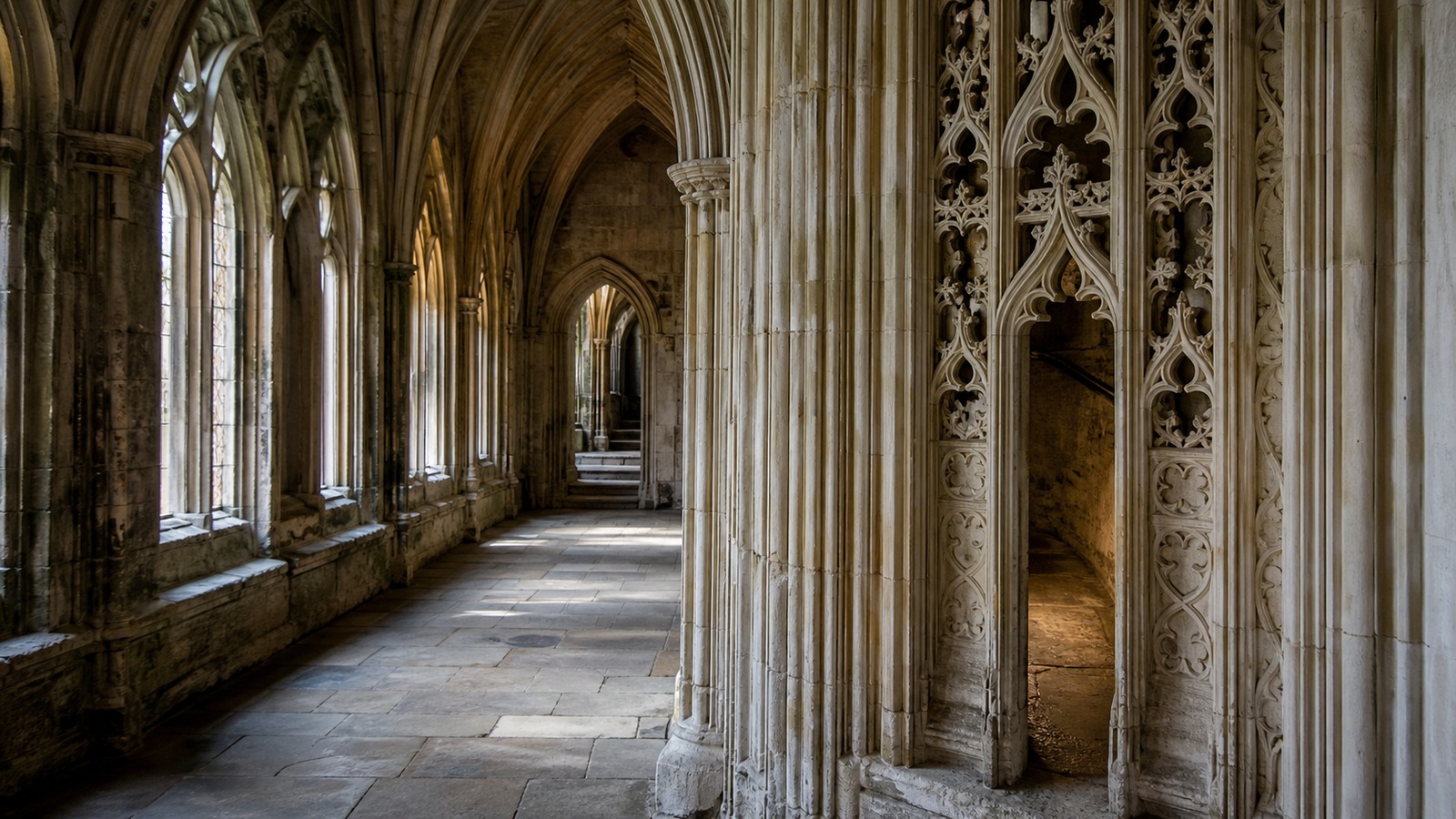
Gothic Passageways Turn Structure Into Atmosphere
Concealed passageways in Gothic architecture fascinate people because the style already feels full of depth. Pointed arches, thick walls, clustered columns, screens, galleries, stair turrets, chapels, vaults, tracery, shadow, and layered stone create buildings that seem to hold more routes than the visitor can see at once. Some hidden or discreet passages were practical. Others are later discoveries, closures, restorations, or legends. Together, they help explain why Gothic spaces feel so charged with mystery: the architecture itself invites the eye to wonder what lies behind the next arch.
A: Their layered spaces, shadows, stairs, and thick walls invite curiosity.
A: Often they were practical restricted routes for worship, maintenance, or storage.
A: A narrow vertical stair structure often used to reach upper levels.
A: It made mystery and medieval atmosphere deliberate design effects.
A: Not alone. They show change, but evidence is needed for claims.
A: Historic routes can be fragile and easily damaged by uncontrolled access.
A: Use depth, paneling, arches, shadow, and useful hidden destinations.
A: Partial views suggest more building beyond immediate sight.
A: No, but they need support from structure, records, or archaeology.
A: Concealment feels strongest when practical depth and atmosphere work together.
Gothic Buildings Are Naturally Layered
Gothic architecture often organizes space through layers: nave and aisle, choir and ambulatory, chapel and screen, tower and stair, hall and service route. This layered planning can make movement feel partially concealed even when it is not secret. A person may disappear behind a pier, ascend a turret, or pass behind a screen without leaving the building.
That quality gives Gothic passageways their atmosphere. The style does not need a dramatic trapdoor to feel hidden. Its depth, shadow, and verticality already create partial knowledge.
Churches Needed Practical Access
Cathedrals, abbeys, and parish churches required routes for clergy, maintenance, ringing bells, reaching galleries, accessing roofs, storing objects, and moving between liturgical areas. Small stairs, wall passages, vestry doors, rood-loft access, and tower routes could be discreet because their purpose was specialized.
Modern visitors may experience these routes as mysterious because they are not part of ordinary public circulation. In their original context, many were work paths. Their secrecy is often a matter of function and restricted access rather than conspiracy.
That distinction makes them more interesting, not less. Hidden labor is one of the great stories inside monumental architecture.
Stair Turrets Create Vertical Secrets
Gothic buildings often hide movement inside narrow stair turrets. These stairs may lead to galleries, roofs, towers, clerestory levels, or defensive positions. From the main space, the route can be almost invisible, yet it allows the building to be maintained and inhabited vertically.
Screens and Panels Shape Visibility
Wood and stone screens can conceal doors, define sacred space, and direct movement. A small opening in a screen may lead to a vestry, stair, chapel, or service area. The passage is not necessarily secret, but it is visually controlled.
Gothic interiors often use this controlled visibility to powerful effect. The visitor sees enough to sense depth, but not enough to understand every route at once.
Castles and Halls Used Gothic Language Too
Gothic is not limited to churches. Castles, colleges, civic halls, and later Gothic Revival houses used pointed arches, tracery, timber roofs, and paneled rooms. In these settings, concealed passageways might serve defense, service, privacy, or theatrical romance depending on the period.
A medieval hall may use discreet service access. A Gothic Revival mansion may add hidden doors because the style itself had become associated with mystery. The same visual language can therefore support different kinds of concealment.
Understanding the building’s date is essential. A passage in a Gothic-looking house may belong to a nineteenth-century romantic imagination rather than the Middle Ages.
Shadow Is Part of the Experience
Gothic spaces use shadow naturally. Deep reveals, carved recesses, screens, and tall volumes create places where edges are not immediately obvious. A concealed passageway can feel more plausible in this atmosphere because the eye expects complexity.
Maintenance Routes Are Easy to Romanticize
Many routes that feel secret today were built so people could repair roofs, reach bells, tend lamps, move objects, or manage the building. When public access changes, those routes become hidden from ordinary visitors. Their mystery increases because their practical purpose is no longer visible.
This is a common pattern in historic architecture. A working route becomes a whispered passage after the work changes. The building’s memory outlasts the use.
Legends Grow Around Sealed Openings
Blocked arches, bricked doorways, inaccessible stairs, and uneven walls invite stories. People naturally want to explain sealed places, and Gothic buildings already carry associations with monks, ghosts, castles, prisons, romance, and forbidden knowledge.
Some legends may preserve real memory. Others may grow from gaps in evidence. The challenge is to enjoy the atmosphere while asking what the architecture can actually support.
A sealed opening is not automatically a secret passage, but it is always a clue to change. Someone altered the building, and that act deserves attention.
Gothic Revival Made Mystery Deliberate
In the eighteenth and nineteenth centuries, Gothic Revival designers often embraced atmosphere consciously. Hidden doors, irregular plans, paneled libraries, mock-medieval details, and romantic ruins could be part of the intended experience. The passageway became a design mood as much as a necessity.
Preservation Requires Careful Interpretation
Historic passageways can be fragile. Opening, restoring, or publicizing them may affect structure, finishes, safety, and conservation. A hidden route that thrills visitors may also need controlled access, documentation, and protection from wear.
Preservation asks different questions than legend. What is original? What was altered? What evidence remains? How can the feature be understood without damaging it?
Domestic Gothic Turns Privacy Into Drama
Gothic-inspired houses often use paneled rooms, stair towers, alcoves, and heavy doors to create mood. A concealed passage in such a house may hide a study, library, service stair, or private retreat. The architecture makes privacy feel theatrical.
This theatrical privacy remains appealing. A modern concealed door with Gothic influence can use shadow, vertical lines, carved wood, and arched forms to make the reveal feel rooted in story.
The danger is excess. If every surface is dramatic, the hidden door may lose focus. Gothic atmosphere works best when details guide the eye rather than overwhelm it.
The Passageway Makes the Building Feel Alive
A Gothic concealed passageway suggests that the building has interior life beyond the main view. People have climbed, served, worshiped, repaired, hidden, or imagined within its thickness. That feeling can be more powerful than a simple secret.
Real Homes Can Borrow Depth Without Imitation
Most homes do not need cathedral stair turrets, but they can borrow the Gothic sense of layered depth. A concealed library door, paneled study entrance, arched wine room, or hidden prayer nook can use proportion, texture, and shadow to create atmosphere.
The design should still serve daily life. Gothic mood is strongest when paired with comfort, safe movement, and a useful destination.
Gothic Concealment Is About Partial Revelation
Concealed passageways in Gothic architecture endure in the imagination because the style excels at partial revelation. It shows enough to invite movement and withholds enough to create desire. The passage may be real, restricted, altered, or legendary, but the feeling comes from the same source: a building that seems deeper than one glance can measure.
That is why Gothic hidden routes remain compelling even when the practical explanation is ordinary. A stair to a roof, a vestry door, or a service path can still feel charged inside a space of arches, shadow, and memory. The concealed passageway becomes a way of reading the building as a living archive, where structure, worship, labor, preservation, and imagination share the same stone.
The most responsible interpretation allows both reactions. A visitor can feel the thrill of mystery and still respect the evidence. Gothic architecture is generous enough to hold practical routes and emotional depth together without forcing one to erase the other.
Small Routes Support Huge Spaces
Large Gothic buildings depend on small access routes. A cathedral’s public volume may feel vast and unified, but behind that unity are stairs, roof paths, service doors, storage rooms, and maintenance points. Concealed or restricted passageways remind us that monumental beauty is maintained through narrow, ordinary routes.
Reuse Changes Meaning
A passage that began as liturgical access can later become storage, tourist curiosity, emergency circulation, or closed heritage fabric. Each change alters how people understand the route. The opening may remain physically similar while its social meaning shifts completely.
This is especially common in buildings that have survived major religious, political, or domestic change. A monastery becomes a school, a chapel becomes a hall, a tower becomes a viewpoint, or a private house becomes a museum. The hidden route becomes a witness to adaptation.
That layered reuse is one reason simple explanations often feel too thin. Gothic passageways can carry several lives at once.
Atmosphere Should Not Replace Evidence
The Gothic mood is powerful enough to make almost any closed door feel suspicious. That is delightful, but it can also lead to careless claims. Good interpretation separates what is known, what is likely, what is possible, and what is legend. Mystery is more durable when it is not asked to carry false certainty.
Modern Gothic Details Need Restraint
Contemporary rooms inspired by Gothic concealment can become heavy if every surface competes for drama. A concealed door works better when arches, paneling, hardware, and shadow are used selectively. The hidden route should have a calm surface to disappear into.
Restraint also protects comfort. A Gothic-inspired hidden study or wine room can feel atmospheric without becoming gloomy or theatrical. The best modern versions borrow depth, proportion, and material richness while keeping the space livable.
The Human Scale Matters Inside Grandeur
Gothic architecture is often remembered for height and spectacle, but concealed passageways bring the scale back to the body. A narrow stair, low door, roof path, or side passage reminds visitors that huge buildings were used by individual people doing specific work. Someone carried keys, climbed steps, moved candles, rang bells, repaired lead, or passed behind a screen.
This human scale keeps the mystery grounded. The hidden route is not only a romantic void in stone. It is a trace of use. When visitors understand that, the building becomes more intimate as well as more impressive.
That intimacy is one reason concealed Gothic spaces linger in memory. They let people imagine the building from within its thickness, not only from the grand view below.
Hidden Routes Make Preservation Personal
A concealed passageway can turn preservation from an abstract duty into a physical encounter. People understand why old buildings matter when they see a worn step, a narrow turn, or a door shaped by hands long gone. Hidden routes make history feel touchable, even when access must remain limited.
The Passageway Changes the Visitor’s Pace
Grand Gothic interiors often make people look upward, but a concealed route changes the pace of attention. Suddenly the visitor studies a side wall, a stair edge, a blocked arch, or a carved screen. The eye moves from spectacle to detail.
That shift is valuable. It teaches that large buildings are made of small decisions. A hidden passageway invites visitors to read joints, repairs, thresholds, and routes with the same seriousness they give to towers and windows. It also restores respect for the people who kept those buildings alive through ordinary movement. Grandeur may draw the first glance, but concealed access often explains how grandeur continued to function day after day, through labor that rarely sought attention but shaped the building’s survival across generations of use, repair, and reinterpretation in changing hands over time and weather alike, patiently and quietly enough to endure intact today.


