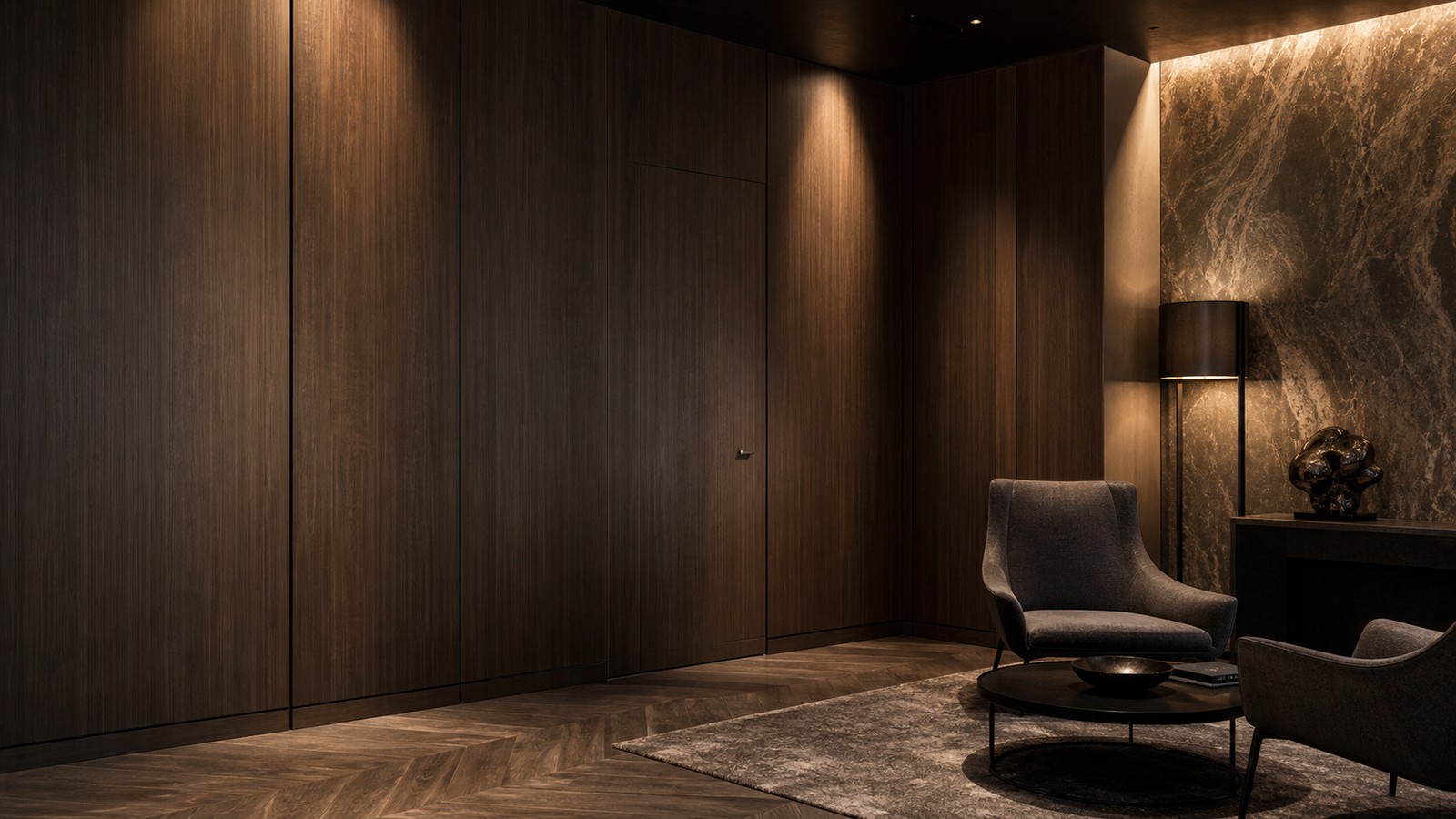
Concealed Entrances Give Suspicion a Shape
Concealed entrances in conspiracy theories are powerful because they make hidden power feel physical. A rumor about influence can be vague, but a secret door gives the rumor a threshold, a route, and a scene. The door seems to promise that someone knows more, moves differently, or controls access to a hidden room where decisions are made out of sight. Some hidden entrances are real and practical; many theories inflate them far beyond evidence. The useful question is not whether every secret door is sinister, but why concealed thresholds so easily become symbols of mistrust.
A: They make hidden influence feel like a physical place and route.
A: Yes, many hidden doors serve ordinary privacy, staff, security, or maintenance needs.
A: Renovations, blocked routes, and missing records can look suspicious without context.
A: Start with plans, dates, records, physical context, and credible corroboration.
A: Yes, careful skepticism asks better questions instead of dismissing the subject.
A: When it targets people, encourages trespass, or spreads accusations without evidence.
A: Photos detached from context can make ordinary features seem dramatic.
A: Separate the existence of a concealed entrance from claims about what it proves.
A: Yes, but importance still needs documentation and context.
A: A concealed entrance is a prompt for inquiry, not proof by itself.
Rumor Starts at Restricted Thresholds
Conspiracy theories often grow around places people cannot enter: government buildings, private clubs, basements, campuses, hotels, archives, old estates, and abandoned facilities. A locked or disguised entrance creates a visible boundary between insiders and outsiders. That boundary can be practical, but it also invites imagination.
The concealed door makes exclusion concrete. People may not know what happens beyond it, so they fill the space with stories that match existing fears. The more powerful the institution, the more dramatic the story can become.
This does not mean every suspicion is invented. It means architectural mystery can magnify uncertainty. A door with limited access becomes a screen for political, social, and personal anxiety.
The first responsible step is to separate the existence of a restricted route from claims about what the route proves.
Hidden Doors Make Power Feel Physical
Power can feel abstract: influence, money, secrecy, bureaucracy, status, and access. A concealed entrance turns those abstractions into a place. It suggests that power has a room, and that only certain people know how to reach it.
Evidence Needs a Slower Pace
A conspiracy-theory claim about a concealed entrance should be slowed down before it is accepted. Does the door exist? What does it connect? When was it built? Who used it? Are there plans, photographs, records, permits, or credible witnesses? Without that slower process, atmosphere can be mistaken for proof.
Many hidden entrances have ordinary explanations. They may serve staff movement, maintenance, storage, privacy, security, theater operations, or preservation. Ordinary does not mean boring. It means the explanation belongs to building use rather than hidden control.
A careful evidence process can preserve curiosity while reducing harm. It lets the door remain interesting without forcing it to carry claims it cannot support.
Real Architecture Feeds Fictional Patterns
Conspiracy stories borrow from real architectural features: service corridors, private lifts, staff doors, utility tunnels, secure rooms, and old escape routes. These features exist in many complex buildings because buildings need backstage circulation. The theory begins when practical access is recast as proof of a secret system.
That borrowing is why the stories can feel plausible. They are not invented from nothing; they exaggerate things people have seen or heard about. The hidden entrance becomes a realistic detail inside an unrealistic claim.
Secrecy Can Be Practical Without Being Sinister
Buildings hide routes for many reasons that do not involve wrongdoing. A museum protects collections, a hotel separates staff circulation, a theater hides backstage movement, a residence protects privacy, and a courthouse controls security. Concealment can be a tool of ordinary order.
Conspiracy theories often skip that middle ground. They treat hidden access as automatically suspicious, which flattens how buildings work. A more careful reading asks what practical needs the door solves before assigning motive.
This does not excuse harmful secrecy where it exists. It simply prevents every concealed threshold from becoming evidence of the same story. Context matters.
Practical secrecy is often boring in the best sense. It keeps people safe, protects work, and reduces disruption.
Recognizing that category makes genuine abuses easier to discuss because the analysis is not diluted by every locked panel in an old wall.
The Locked Door Is a Narrative Device
In conspiracy thinking, the locked door often functions like a plot device. It holds back the explanation, intensifies suspense, and promises that the real story is hidden just beyond public view.
Online Communities Amplify Small Clues
Photos of doors, floor plans, odd corridors, blocked stairs, or maintenance panels can travel quickly online. Removed from context, they become puzzle pieces. People zoom, annotate, compare, and speculate, often before anyone checks the building history.
That process can be playful, but it can also become irresponsible. A shadow line on a wall may turn into a claim about hidden rooms. A service entrance may be linked to named people without evidence. The concealed door becomes a way to accuse from a distance.
Good digital literacy requires patience. Images need source context, dates, location, and alternative explanations. The more dramatic the claim, the more carefully it should be checked.
The door is only evidence when it is connected to a verified story.
Old Buildings Encourage Pattern-Seeking
Older buildings are full of changes: patched openings, blocked fireplaces, former service stairs, altered basements, thick walls, and mismatched materials. These traces are easy to overread. A conspiracy theory may treat ordinary renovation as coded evidence.
Preservation history can help. Once people understand how buildings evolve, many mysterious features become more legible. The wonder remains, but it is attached to use and time rather than unfounded suspicion.
Skepticism Should Not Flatten Curiosity
The answer to every questionable claim should not be a sneer. Concealed entrances are genuinely fascinating, and some restricted spaces do hide important histories. Skepticism works best when it stays curious, specific, and evidence-led.
A good skeptic asks better questions: What is documented? What is inferred? What would disprove the claim? What ordinary building need might explain the feature? These questions keep the subject alive without handing it over to rumor.
Curiosity and caution can work together. The door can be interesting even when the theory around it fails.
Harm Begins When Speculation Targets People
Concealed-door speculation becomes harmful when it names individuals, encourages trespass, spreads accusations, or turns ordinary workers into characters in a fantasy. A hidden entrance is not permission to harass, invade, or invent.
Better Questions Keep the Mystery Honest
Instead of asking what sinister plot a concealed entrance proves, ask what the door physically does. Does it move people, objects, air, utilities, sound, or sightlines? Does it belong to the original design or a later alteration? Is it still in use, sealed, restored, or interpreted?
These questions bring the discussion back to architecture. They also make the story more precise. A service corridor in a private club tells one kind of story; a blocked tunnel under a former factory tells another.
Better questions also protect real mysteries. When every hidden door is forced into one conspiracy frame, the distinct history of each place disappears. Evidence-led curiosity lets every threshold keep its own meaning.
That approach is slower, but it is more rewarding. It turns suspicion into inquiry.
The concealed entrance becomes a starting point, not a conclusion.
The Room Beyond Often Carries the Fear
In many theories, the room behind the concealed entrance matters less than what people imagine it represents. It becomes a chamber of decisions, secrets, meetings, records, or influence. The hidden route gives fear a floor plan, which makes the fear easier to repeat.
Practical Access Can Be Miscast
A staff door, delivery route, archive entrance, or mechanical corridor can look suspicious when its job is not explained. The mistake happens when limited access is treated as proof of hidden control. Many buildings need private circulation simply to function.
That practical explanation should be checked before a larger story is built. If a door lines up with kitchens, storage, utilities, or service stairs, its first meaning may be logistical. The building is solving a work problem.
Good interpretation does not stop at the first ordinary answer, but it gives that answer a fair hearing. Ordinary use is evidence too.
Public Distrust Searches for Architecture
When people distrust an institution, they often look for physical clues that confirm the feeling. A concealed entrance becomes attractive because it seems to prove that public appearances are incomplete. The door says, or appears to say, that something is being routed around view.
This is why the same architectural feature can be ignored in one setting and treated as alarming in another. The interpretation depends on the social atmosphere around the building.
Fiction Supplies the Visual Vocabulary
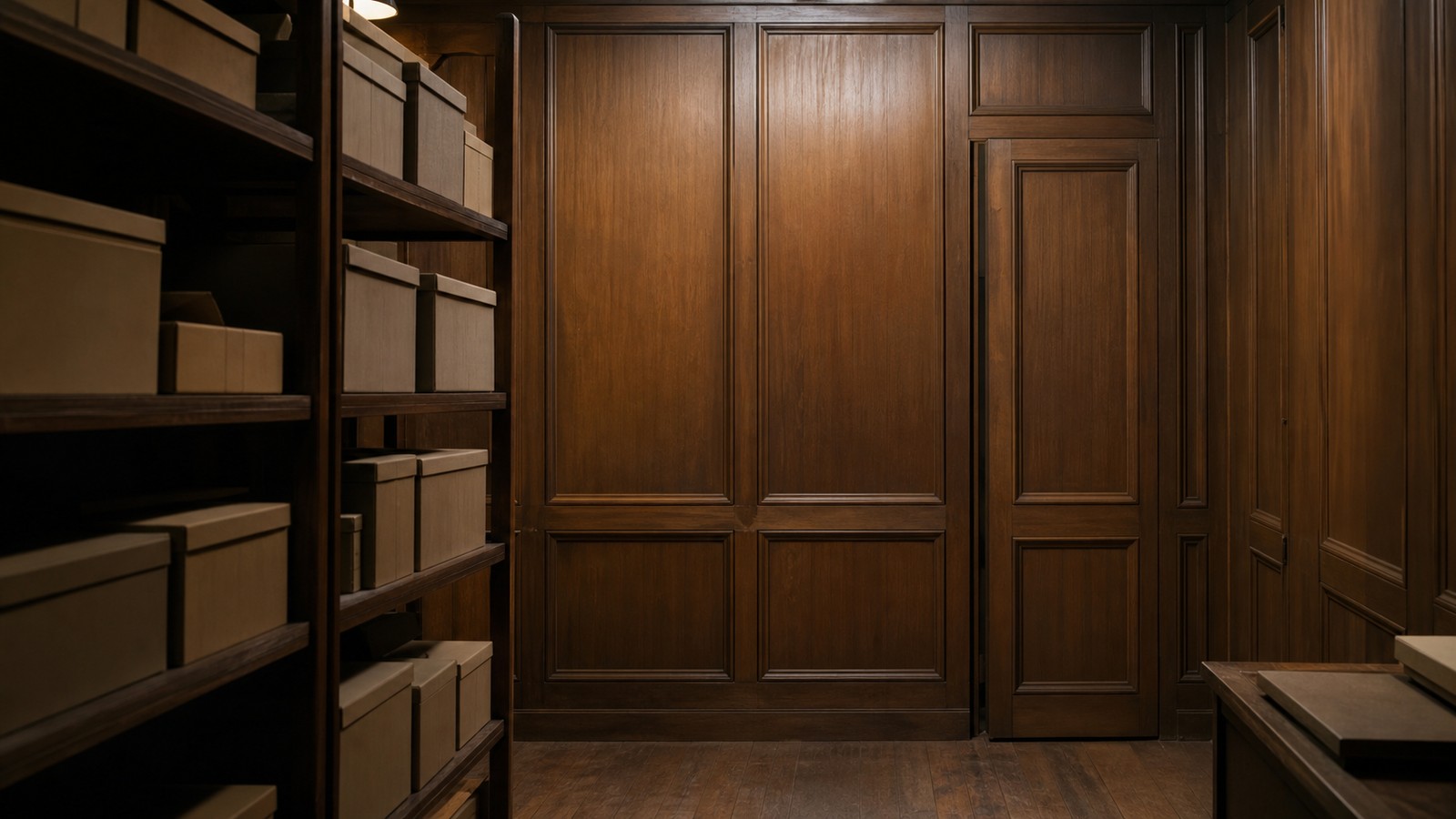
Conspiracy theories often borrow visual habits from thrillers, spy stories, haunted-house tales, and mystery games. A paneled wall becomes a secret chamber because people have seen that reveal before. The genre trains the eye.
Those fictional habits are powerful. They tell people where to look, what to suspect, and how to arrange disconnected clues into a story. The concealed entrance becomes familiar before it is understood.
Recognizing that influence can cool the claim. A detail may feel meaningful because it resembles a story structure, not because it proves the story is true.
The door can be dramatic without being incriminating.
Responsible Curiosity Protects Real People
A building mystery should never become an excuse to target workers, residents, visitors, or named public figures. Concealed entrances can be discussed through architecture and evidence without turning ordinary people into villains inside a rumor.
The Best Explanation May Be Mixed
Some concealed entrances have more than one meaning. A route may be practical, historically interesting, socially exclusive, and symbolically powerful at the same time. A private club’s service stair can reveal labor patterns and also support stories about status.
This mixed reading is often better than a yes-or-no answer. It allows the door to remain complicated without making unsupported claims. The architecture may tell a story about work, hierarchy, preservation, secrecy, and imagination all at once.
That complexity is more satisfying than the theory’s shortcut. It lets the hidden door be specific.
The Symbol Is Stronger Than Many Claims
Concealed entrances remain central to conspiracy theories because they symbolize the fear that power has private routes around public life. That symbol is emotionally strong even when particular claims are weak. People see the door and imagine a hidden system.
Understanding the symbol helps deflate bad claims without dismissing the feeling behind them. The better path is to read the door carefully, respect evidence, avoid harm, and remember that a threshold can be meaningful without proving the theory built around it.
That distinction matters because bad evidence can still point toward a real emotion. People may be responding to secrecy, exclusion, or institutional distance, even when the specific claim fails. The concealed entrance gives that emotion a memorable shape.
A careful reader can therefore hold two ideas together: the theory may be wrong, and the doorway may still reveal something about trust. That balance keeps the topic useful instead of sensational.
This is the most productive way to read concealed entrances in conspiracy theories. They should push us toward better evidence, better architectural context, and better public trust, not toward faster accusation.
When the doorway is handled with that discipline, it becomes less a trap for suspicion and more a prompt for understanding how secrecy, access, and imagination interact with more patience than fear and more care for evidence.